Depersonalization: Feeling Detached From Yourself
What depersonalization is, why you can feel detached from your body or unreal to yourself during anxiety, why it isn't dangerous, and how to reconnect.

It's a strange and unsettling feeling: being detached from yourself. You might feel unreal, like you're watching yourself from outside, like your body isn't quite yours, or like the 'you' observing life has somehow stepped back from it. This is depersonalization — the close cousin of derealization — and while it can be one of the most frightening experiences anxiety produces, it's common, recognised, and not dangerous.
This is a guide to depersonalization: what it is, why it happens, and how to feel like yourself again.
What is depersonalization?
Depersonalization is a sense of being detached from yourself — your body, your thoughts, your feelings, or your sense of identity. People describe feeling unreal, robotic, or numb; like they're observing themselves from the outside; like their hands or face don't quite belong to them; or like there's no solid 'self' there at all. Where derealization is feeling that the world is unreal, depersonalization is feeling that you are. The two often happen together, and both are forms of dissociation.
Why does it happen?
Like derealization, depersonalization is usually a protective response to overwhelm. When anxiety, panic, or stress becomes too intense, the mind can detach you from your own experience as a way of creating distance from something that feels like too much. It's especially common during panic attacks and high anxiety, after stress or trauma, and when you're exhausted. The detachment is the mind's emergency buffer — a way of stepping back from feeling — not a sign that something is fundamentally broken in you.
Why it isn't dangerous
Depersonalization is intensely uncomfortable and often terrifying — it commonly comes with the fear that you're losing your mind, losing yourself, or never coming back. It's important to know: depersonalization is not dangerous, and it doesn't mean you're going mad or disappearing. It's a known, harmless (if horrible) anxiety experience, and the sense of self always comes back. As with derealization, the fear about it tends to feed it, so understanding it's harmless is part of what helps it ease.
How to reconnect with yourself
Because depersonalization is detachment from yourself, reconnecting with your body and the present is the way back. Ground through the body: feel your feet, press your hands together, touch something textured, move or stretch — physical sensation reconnects you with being in your body. Use your senses to anchor in the present. Remind yourself calmly: 'this is depersonalization, it's anxiety, it's harmless, and it will pass.' And ease the underlying anxiety where you can, since depersonalization tends to lift as your overall stress settles. Try not to keep checking whether you feel real — that monitoring tends to deepen it.
When to seek support
Occasional depersonalization during anxiety or panic is common and usually passes. But if it's persistent, frequent, or very distressing — or if it lingers and interferes with your life — it's worth speaking to a doctor or therapist. Ongoing depersonalization can be part of an anxiety disorder or a dissociative experience, and there's effective support for it. Reaching out is sensible, not an overreaction, especially if it keeps returning or won't lift.
The fuller picture
At the centre of depersonalization is one terrifying thought: I'm losing my mind — I'm disappearing, and this time I won't come back. It feels true because the experience is so uncanny: if you can't feel your own realness, the mind reads that missing signal as proof that something has genuinely broken.
But the detachment isn't damage — it's protection. When anxiety or panic becomes too intense, the mind creates distance from an experience that feels like too much, stepping you back from feeling as an emergency buffer. That's a nervous system doing its job under overload, not a self coming apart. However convincing the unreal feeling is, depersonalization is a known, harmless (if horrible) anxiety experience, and the sense of self always returns — it has every previous time, and it will this time. Here's the trap the thought sets: the fear of losing yourself is exactly what feeds the state, and checking do I feel real? over and over deepens it. So the way through isn't to monitor harder or brace against disappearing. It's the quiet, almost boring truth the panic drowns out — this is anxiety, it's harmless, and it will pass — while you gently come back to your body. You are still here. You were the whole time.
Final thoughts
Depersonalization — that frightening detachment from yourself — is your mind's way of buffering you from overwhelm, not a sign you're losing yourself or your mind. It's horrible, but it's harmless, common, and temporary, and your sense of self does return. The way back is gentle reconnection with your body and the present, easing the anxiety underneath, and the calm knowledge that you are still here and you will feel like yourself again. One grounded, embodied moment at a time.
If depersonalization is persistent or distressing, please reach out to a doctor or therapist — it's very treatable with the right support.
Try a gentle practice
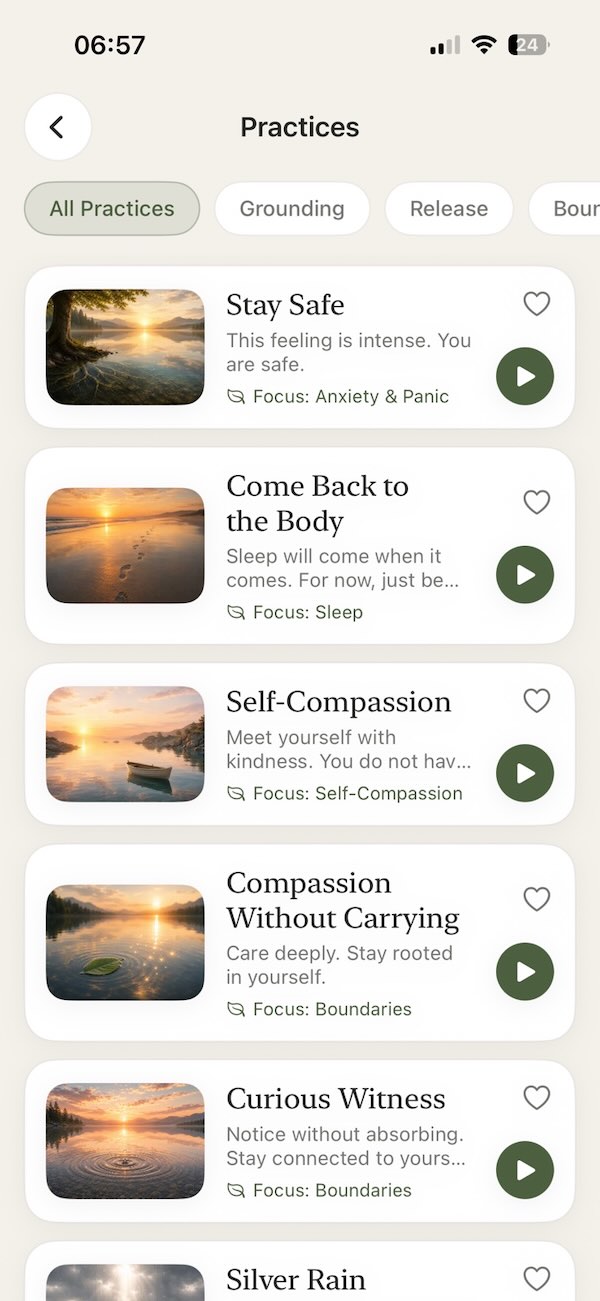
Depersonalization eases as you gently reconnect with your own body and the present. Come Back to the Body is a gentle practice for exactly that — a way to re-establish soft, unforced contact with physical sensation and the here and now, helping you feel back inside yourself when you've become detached from who and where you are.

Try the practice
Come Back to the Body
Come back from thoughts to sensation.
Ready for more support?
Continue your journey in Aira
Access the full library of guided practices, tools, and resources anytime, anywhere.
- 10+Guided Practices
- AnxietyRelief Tools
- SleepSupport
- TrackYour Progress
- OfflineAccess
Available on iPhone and iPad