Derealization: When Everything Feels Unreal
What derealization is, why the world can feel unreal or dreamlike during anxiety, why it isn't dangerous, and how to ground yourself back to reality.

The world looks the same, but it feels wrong — flat, dreamlike, far away, as if you're watching it through glass or a screen. Colours, sounds, and people seem unreal, and you can't quite feel connected to any of it. This is derealization, and while it's one of the most disorienting and frightening experiences anxiety can bring, it's also common, recognised, and — importantly — not dangerous.
This is a guide to derealization: what it is, why it happens, why it isn't dangerous, and how to find your way back to feeling real.
What is derealization?
Derealization is a sense that the world around you isn't quite real. Your surroundings can feel dreamlike, foggy, flat, or distant, as though there's a veil or pane of glass between you and everything else. Things may look strange, two-dimensional, too bright or too dull, and familiar places can feel unfamiliar. Crucially, you know intellectually that the world is real — it just doesn't feel that way. It's a form of dissociation, a kind of disconnection from your surroundings.
Why does it happen?
Derealization is usually the nervous system's way of protecting you from overwhelm. When anxiety, panic, or stress becomes too intense, the mind can create a sense of distance from reality as a buffer — a way of stepping back when things feel like too much. This is why it so often shows up during high anxiety or panic attacks, after prolonged stress, or when you're exhausted and overwhelmed. It's not a sign you're losing your grip on reality; it's a protective mechanism that's gone a little overboard.
Why it isn't dangerous (even though it's terrifying)
Derealization can be genuinely frightening — many people fear it means they're going mad, losing control, or that something is seriously wrong with their brain. It's worth saying clearly: derealization itself is not dangerous, and it doesn't mean you're losing your mind. It's an uncomfortable but harmless perceptual experience, extremely common with anxiety. The fear about derealization — the alarmed 'what's happening to me?' — tends to make it worse and last longer, so understanding that it's harmless is itself part of what helps it pass.
How to ground yourself out of it
Because derealization is a kind of disconnection from reality, grounding — deliberately reconnecting with the real, present world — is the most useful response. Engage your senses firmly: hold something textured, press your feet into the floor, name what you can see and hear, run water over your hands. Reconnect with your body, which anchors you in the real. Remind yourself, calmly, what's happening: 'this is derealization, it's anxiety, it's harmless, and it will pass.' And try not to fight or panic about it, since alarm feeds it — let it be there while you gently bring yourself back to the present.
When to seek support
Brief derealization during anxiety or panic is common and usually passes as your anxiety settles. But if it's persistent, frequent, or seriously distressing — or if it's interfering with your daily life — it's worth talking to a doctor or therapist. Ongoing derealization can be part of an anxiety disorder or a dissociative experience, both of which respond well to support. Reaching out isn't an overreaction; it's a sensible step if the feeling won't lift or keeps returning.
The fuller picture
Underneath the fog is one alarming thought: the world isn't real anymore — I'm losing my grip on reality, something is wrong with my brain, and this might never lift. It feels true because your own perception seems to be reporting it: if everything looks flat and dreamlike, the mind takes the strangeness as evidence that reality itself has broken.
But notice what's actually intact. You still know the world is real — it just doesn't feel that way — and that knowing is precisely the proof you haven't lost your grip on it. Someone truly severed from reality doesn't stand there thinking this feels unreal; you do, which means the observer is fully online. The veil isn't damage to your brain; it's a buffer your nervous system raised when things felt like too much — a perceptual filter turned up too high under overload. It's harmless, common, and temporary, however convincing it is in the moment. And the permanence fear — what if it never lifts? — is the anxiety talking, not a forecast; the alarmed what's happening to me? is the very thing that feeds it and stretches it out. You don't have to force the world back into focus. You let the feeling be there, ground gently through your senses, and let the buffer come down on its own. It always does.
Final thoughts
Derealization — that frightening sense that everything is unreal — is your nervous system putting up a buffer when things feel like too much. It's deeply uncomfortable, but it's harmless, common, and temporary; it doesn't mean you're losing your mind, and it does pass. The way back is gentle reconnection: your senses, your body, the real and present world, and the calm reminder that you're safe. Reality is still there, and so are you. One grounded, present moment at a time.
If derealization is persistent or frightening, please reach out to a doctor or therapist — this is something support can really help with.
Try a gentle practice
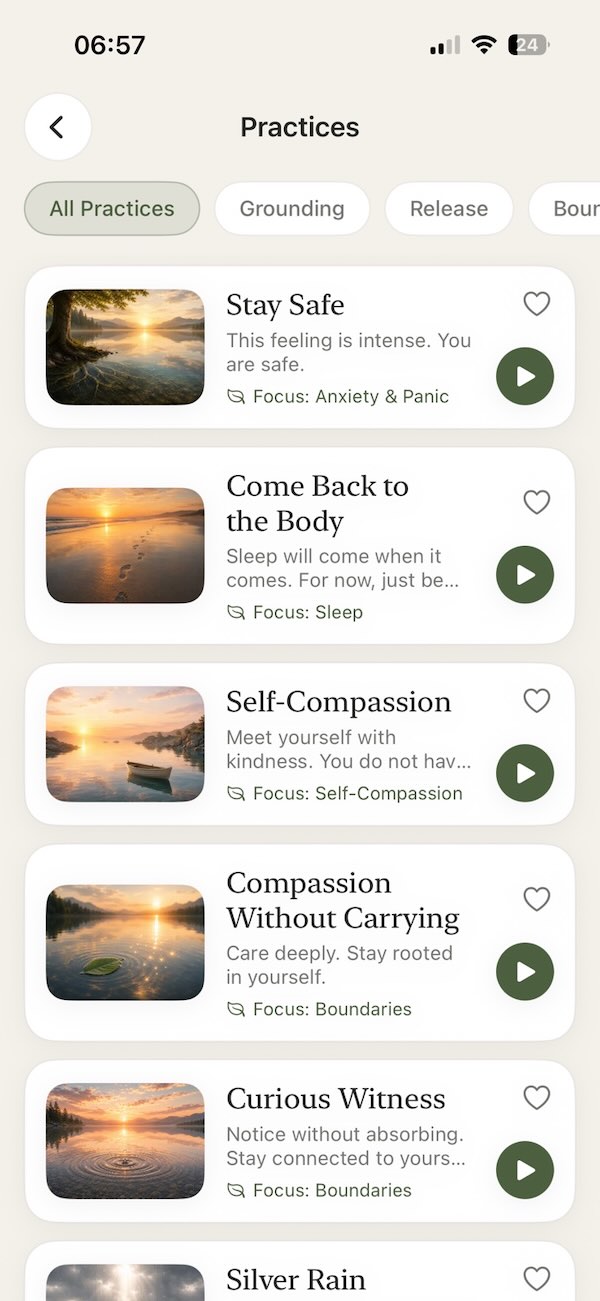
Derealization eases as you reconnect with the real, present world through your body. Come Back to the Body is a gentle practice for exactly that — a way to re-establish soft, steady contact with physical sensation and the here and now, anchoring you back into what's real when the world starts to feel unreal.

Try the practice
Come Back to the Body
Come back from thoughts to sensation.
Ready for more support?
Continue your journey in Aira
Access the full library of guided practices, tools, and resources anytime, anywhere.
- 10+Guided Practices
- AnxietyRelief Tools
- SleepSupport
- TrackYour Progress
- OfflineAccess
Available on iPhone and iPad