The Fear of Having Another Panic Attack
After a panic attack, the fear of the next one can take over. Why anticipatory anxiety happens, how the fear-of-fear cycle works, and how to gently loosen its grip.

You survived the panic attack. The wave rose, peaked, and finally passed. But for many people, that isn't the end of the story — because soon a new fear moves in: "What if it happens again?"
For a lot of people, this fear of the next panic attack becomes harder to live with than the attacks themselves. It can shadow ordinary days, narrow where you go, and keep your body braced even when nothing is wrong. If that's where you are, you're not alone — and this particular fear, though exhausting, is something that can ease.
When the fear outlasts the attack
A panic attack lasts minutes. The fear of another one can last days, weeks, or longer. This is one of the cruel twists of panic: the event itself is brief, but the anticipation of it can become a near-constant background hum. People often describe living "between" attacks in a state of waiting — watching their body, avoiding certain places, bracing for the next surge. The attack was the storm; this is the uneasy weather that lingers after it.
What is anticipatory anxiety?
The fear of having another panic attack has a name: anticipatory anxiety. It's the anxiety you feel in advance of a feared event — here, the next panic attack. Your mind rehearses it, imagines where it might happen, and tries to prepare for or prevent it. Ironically, all that bracing keeps the nervous system switched on, which makes the very sensations you're afraid of more likely to appear. Anticipatory anxiety is the body trying to protect you from panic in a way that quietly feeds it.
The fear-of-fear cycle
At the centre of all this is a loop often called the fear-of-fear cycle. It works like this: a panic attack is so unpleasant that you become afraid of having another. That fear makes you hyper-aware of your body. You notice a slightly fast heartbeat or a moment of dizziness and read it as a warning sign. The alarm rises, the sensations intensify, and sometimes that tips into another attack — which deepens the fear. The fear of panic becomes a cause of panic. Naming this loop matters, because you can't step out of a trap you can't see.
Why we scan our own bodies
After a frightening attack, the brain starts monitoring the body for danger — a process sometimes called hypervigilance. You become acutely tuned to your heartbeat, your breathing, any flicker of dizziness or tension. The problem is that everyone's body produces these sensations all the time; we just don't usually notice them. Once you're watching closely, ordinary signals start to look like threats, and attention alone can amplify them. The scanning feels like safety, but it keeps the alarm primed.
How avoidance makes it worse
When you fear another panic attack, it's natural to start avoiding anything you associate with one — a shop where it happened, a motorway, a crowded room, being far from home. Avoidance brings instant relief, which is exactly why it's so tempting. But each time you avoid, you teach your nervous system that the place really was dangerous and that you only coped by escaping. The world quietly shrinks, and the fear grows stronger. Avoidance is comfort now in exchange for a smaller, more fearful life later.
Why this is so common
If you're caught in this, it doesn't mean you're failing at recovery or that you're unusually fragile. The fear of another panic attack is one of the most common experiences after panic — it's the nervous system doing its job a little too well. Understanding that this is an expected part of the pattern, rather than a personal weakness, often takes some of the sting out of it.
How to ease the fear of another panic attack
Let the fear be there without obeying it
You don't have to make the fear disappear before you live your life. You can notice it — "there's the fear of another attack" — and carry on anyway. Treating the fear as uncomfortable rather than dangerous slowly drains its authority.
Ease off the checking and bracing
Every time you check your pulse, scan your chest, or brace for the next wave, you confirm to your brain that there's something to fear. Gently practising not checking — letting a sensation be there without investigating it — helps the alarm settle.
Reduce avoidance, gently
You don't have to throw yourself into the scariest situation. But slowly returning to the places and activities you've been avoiding, at a pace you can manage, teaches your nervous system that they were safe all along. Each small step you take reclaims a little ground.
Reconnect with safety in the body
Much of this fear lives in the body, so calming the body directly helps. Slow breathing, grounding, and gentle practices remind your nervous system what safety feels like — not as a trick to prevent panic, but as a way of being that makes panic less likely over time.
The fuller picture
Underneath the constant bracing is one urgent belief: if I have another panic attack, something terrible will happen — so I have to stay alert and stop it coming. It feels true because the last attack was genuinely terrifying, and preventing a repeat feels like the only rational response to something that frightening.
But look at what the vigilance actually does. The thing you're scanning for — the racing heart, the dizziness, the surge — is frightening, but it isn't dangerous; a panic attack is a false alarm, not a real emergency, and it always passes on its own. And the watching isn't neutral: monitoring your body keeps the alarm switched on and makes the very sensations you dread more likely, so the bracing meant to protect you is quietly the fuel. That's the trap — the fear of panic is what feeds panic. Which means safety was never going to come from scanning harder or avoiding more; those shrink your life while leaving the fear intact. It comes from the opposite move: letting a fast heartbeat be just a fast heartbeat, uninteresting and unwatched, until your nervous system relearns there was nothing to guard against. You don't have to stop the fear before you live. You only have to stop obeying it.
When to seek support
If the fear of another panic attack is shaping your days, keeping you from places you want to go, or sliding into ongoing dread, it's worth talking to a doctor or therapist. Cognitive behavioural therapy (CBT) is particularly effective for exactly this fear-of-fear cycle, and support can make the path out far gentler. Reaching out isn't a sign things are bad — it's a way to get your life back sooner.
Frequently asked questions
Why am I so afraid of having another panic attack?
Because a panic attack is genuinely frightening, the brain becomes determined to prevent the next one — a response called anticipatory anxiety. It keeps you watching your body and bracing for danger, which keeps the nervous system activated. The fear is your protection system overreacting, not a sign of weakness.
Is it normal to fear panic attacks after having one?
Yes — it's one of the most common experiences after panic. The intensity of an attack naturally makes you want to avoid another, and that fear-of-fear is a normal, expected part of the pattern rather than a setback.
How do I stop the fear of having a panic attack?
The fear eases as you stop treating panic sensations as dangerous: letting the fear be present without obeying it, reducing checking and bracing, and gradually returning to avoided situations. Calming the body through breathing and grounding helps too, and for many people CBT speeds this up considerably.
Does the fear of panic attacks ever go away?
For most people, yes — as the nervous system learns that the sensations aren't dangerous, the fear loosens and often fades. It doesn't always disappear overnight, and setbacks are normal, but the overall direction with support is toward much less fear.
Can the fear of a panic attack cause one?
Yes — this is the heart of the fear-of-fear cycle. Anxiously anticipating an attack keeps the body on alert, which produces more of the sensations you're watching for, and that can tip into another attack. Understanding the loop is the first step to breaking it.
Try a gentle practice
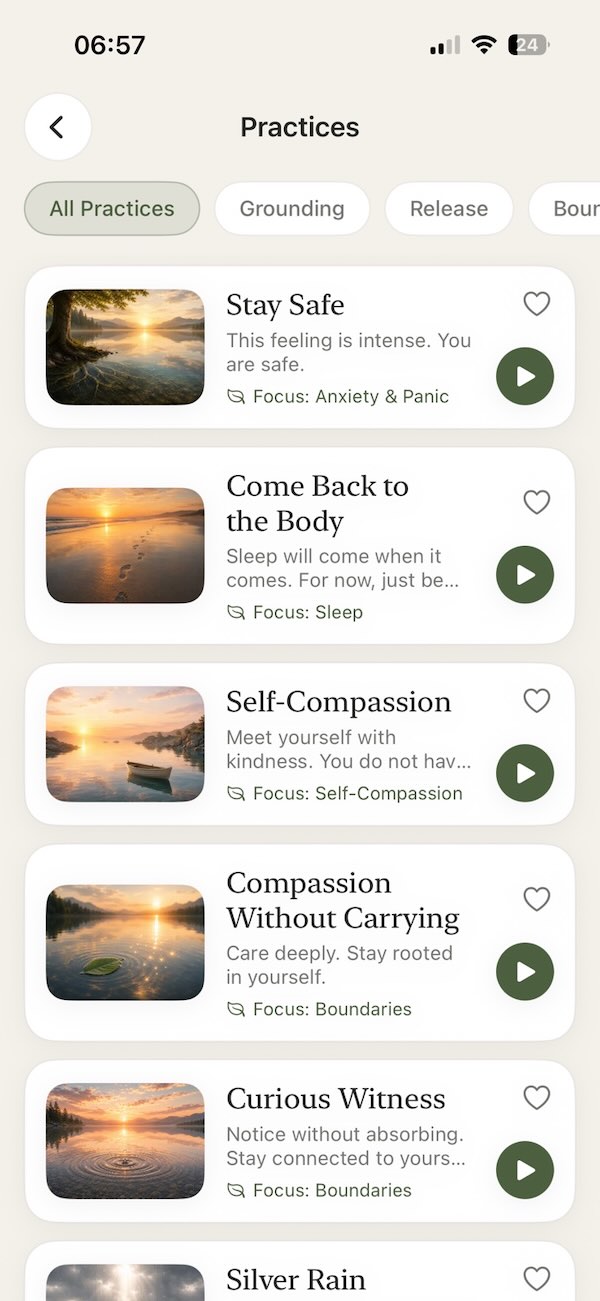
The fear of another panic attack lives largely in a braced, watchful body — so it helps to give the body a different experience. Stay Safe is a gentle guided practice designed to calm the nervous system, slow the breath, and rebuild a felt sense of safety, so you're relating to your body as a place to rest rather than a threat to monitor.

Try the practice
Stay Safe
Find solid ground when panic feels overwhelming.
Ready for more support?
Continue your journey in Aira
Access the full library of guided practices, tools, and resources anytime, anywhere.
- 10+Guided Practices
- AnxietyRelief Tools
- SleepSupport
- TrackYour Progress
- OfflineAccess
Available on iPhone and iPad