Grounding for Panic Attacks: How to Come Back to the Present Moment
How grounding helps during a panic attack — the 5-4-3-2-1 method and techniques using touch, movement and observation to bring your attention back to the present.

One of the most difficult parts of a panic attack is how disconnected from reality it can feel. Your mind races, your body feels out of control, and your attention becomes trapped inside frightening thoughts and sensations. You may feel as though something terrible is happening, or about to happen, or that you need to escape immediately.
In moments like these, grounding can help. Grounding for panic attacks isn't about forcing yourself to calm down — it's about reconnecting with what is actually happening right now. The goal is simple: to bring attention out of fear and back into the present moment.
What is grounding?
Grounding is a collection of techniques designed to help you reconnect with your surroundings, your body, and the present moment. During panic, attention often becomes trapped inside racing thoughts, catastrophic predictions, body sensations, and fear about what might happen next. Grounding shifts attention outward — not to ignore the panic, but to remind the nervous system that there is more happening than the panic itself. This is why grounding exercises are so often recommended by therapists, anxiety specialists, and panic recovery programs.
Why grounding helps during panic
Panic narrows attention. The nervous system becomes focused on danger, and everything begins to feel urgent, important, and threatening. Grounding creates a different experience by gently asking: what else is here? The chair beneath you. The sounds around you. The floor under your feet. The colors in the room. The feeling of your clothing against your skin. These details may seem small, but they help reconnect the brain with the reality of the present moment.
How to ground during a panic attack
If panic is happening right now, start with something simple. Don't try to stop the panic or force yourself to relax — simply begin noticing. Look around. Notice three things you can see, two things you can hear, and one thing you can physically feel. This small shift often helps interrupt the spiral of fear.
The 5-4-3-2-1 technique
One of the most effective grounding techniques is the 5-4-3-2-1 method, which engages multiple senses at once:
- 5 things you can see — look around slowly; notice shapes, colors, light, objects
- 4 things you can touch — the floor, your chair, your clothing, your hands
- 3 things you can hear — distant sounds, nearby sounds, quiet sounds
- 2 things you can smell — if no scent is obvious, simply notice the air around you
- 1 thing you can taste — a sip of water can help, or simply notice the taste in your mouth
This exercise helps move attention away from catastrophic thinking and back toward reality.
A gentle reality check
During panic, the mind often predicts disaster. Grounding can create a gentle reality check. Ask yourself: What do I know for certain right now? What is actually happening around me? Am I physically safe in this moment? What evidence do I have that I can get through the next minute? You don't need perfect answers — the purpose is simply to reconnect with reality rather than fear.
Grounding through touch
Touch is one of the fastest ways to reconnect with the present. Try placing both feet firmly on the floor, holding a cool glass of water, touching a textured object, wrapping yourself in a blanket, or placing a hand over your heart. Physical sensation reminds the nervous system that you are here, now — not in the imagined future panic is creating.
Grounding through movement
Sometimes sitting still feels impossible during panic, and that's okay — grounding can involve movement. Try slowly walking, stretching, gently pressing your feet into the floor, rolling your shoulders, or noticing each step as you walk. Movement can help release some of the energy panic activates.
Grounding through observation
Panic often turns attention inward; observation turns it outward. Try looking around the room and naming five blue objects, three round objects, four things made of wood, or anything with a specific texture. Simple observation gives the mind something concrete to focus on.
Grounding through the body
Many people try to escape physical sensations during panic. Grounding often involves doing the opposite — noticing them. For example: "My chest feels tight. My hands feel shaky. My heart is beating fast." Then add: "And I'm still here. And I can feel my feet on the floor. And this moment is continuing." This approach helps reduce the fear surrounding the sensations themselves.
What if grounding doesn't work immediately?
This is important: grounding is not a magic trick, and it doesn't instantly erase panic. Sometimes people become discouraged because they try a grounding exercise and still feel anxious. That doesn't mean it failed. Grounding isn't about eliminating panic immediately — it's about creating stability while panic moves through the nervous system. Even if anxiety remains, grounding is helping.
Practicing before panic happens
Grounding becomes easier when practiced regularly, and you don't have to wait for a panic attack. Try grounding during ordinary moments — while drinking coffee, walking, sitting outside, or taking a break at work. The more familiar grounding becomes, the easier it is to access during distress.
A different goal
Many people use grounding with one goal: "make the panic stop." A gentler goal may be: "help me stay connected while panic is here." This shift often changes everything, because grounding isn't about winning a fight against panic — it's about staying connected to reality while the wave passes.
Final thoughts
Panic can make the world feel small. It can pull you into fear, catastrophic thinking, and frightening body sensations. Grounding creates another option: it brings attention back to what is real, what is present, what is here right now. The floor beneath your feet. The air in your lungs. The room around you. This moment — not the future, not the fear. And sometimes, that is where calm begins.
Try a gentle practice
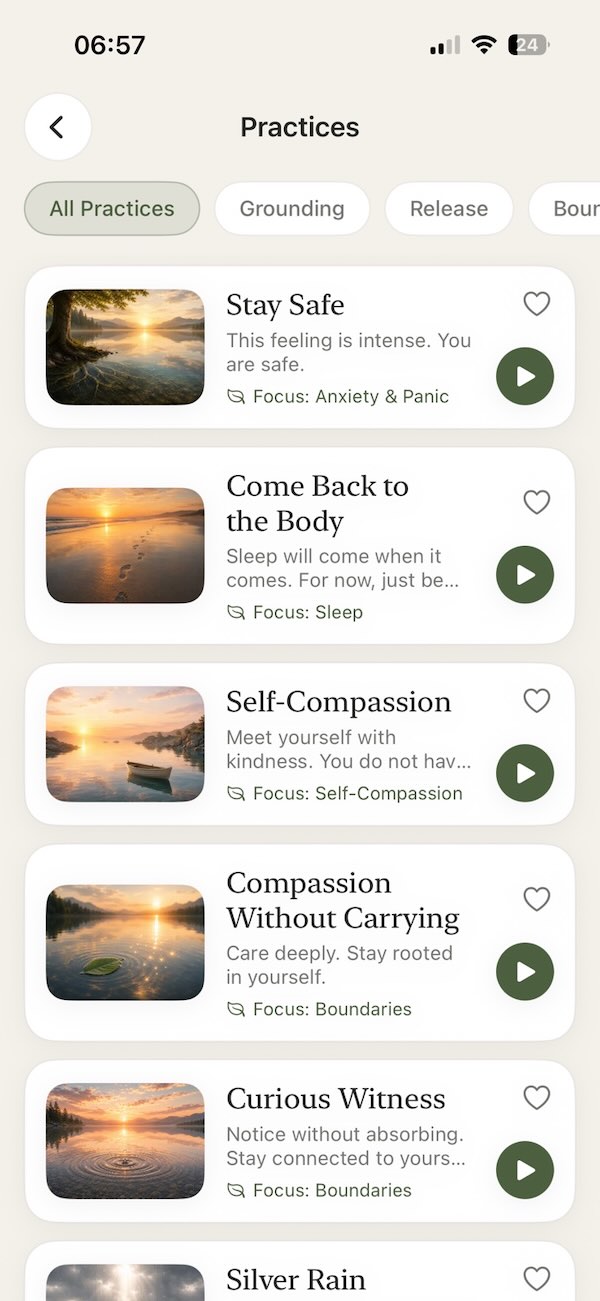
During a panic attack, the mind can feel pulled into fear, urgency, and worst-case scenarios. Grounding offers a different direction — not into the future, not into the fear, but back to what is here right now. Ground is a gentle guided grounding practice designed to help you reconnect with your body, your surroundings, and the present moment when panic feels overwhelming. One sensation, one breath, one moment at a time.

Try the practice
Ground
Let's come back to what's real
Ready for more support?
Continue your journey in Aira
Access the full library of guided practices, tools, and resources anytime, anywhere.
- 10+Guided Practices
- AnxietyRelief Tools
- SleepSupport
- TrackYour Progress
- OfflineAccess
Available on iPhone and iPad