Why Do I Keep Having Panic Attacks?
If panic attacks keep coming back or have become frequent, here's the cycle that keeps them going, what commonly feeds it, and how recurring panic can settle.

You understand that panic can happen. What's harder to understand is why it keeps happening — again and again, sometimes for weeks, sometimes most days. If you find yourself asking "why do I keep having panic attacks?", you're asking a slightly different question from "what causes a panic attack?" You're asking what keeps the cycle going.
The encouraging part is that recurring panic usually isn't a sign that something is seriously wrong with you. More often, it's a sign that a self-sustaining loop has formed — and loops can be interrupted.
Why panic attacks keep coming back
A single panic attack is often set off by stress, exhaustion, or an overloaded nervous system. But once you've had one, something new can take over: the fear of having another. That fear keeps your body on alert and your attention fixed on physical sensations, which makes more attacks likely. So while the first attack may have had a clear cause, the repeated ones are often driven less by the original trigger and more by the cycle that grew around it.
The cycle that keeps panic going
Recurring panic is usually maintained by a loop with three moving parts. First, fear of panic — after a frightening attack, you dread the next one. Second, hypervigilance — that dread makes you monitor your body closely, so ordinary sensations like a fast heartbeat start to look like warning signs. Third, avoidance and bracing — you avoid situations or tense up in anticipation, which keeps the nervous system activated. Each part feeds the next, and round it goes. The trigger that started things may be long gone; the loop keeps running on its own.
What commonly feeds frequent panic attacks
Alongside the cycle, a few ongoing factors can keep the nervous system primed and make attacks more frequent:
- chronic or unrelenting stress with little recovery
- poor or disrupted sleep
- high caffeine, nicotine, or other stimulants
- unprocessed emotions or difficult circumstances running in the background
- physical exhaustion or burnout
- using avoidance as the main way to cope
None of these are character flaws. They're load on a system that's already sensitised — and easing them takes weight off the alarm.
When panic becomes frequent or daily
For some people panic arrives occasionally; for others it becomes frequent, even daily. Daily panic attacks usually mean the nervous system has become highly sensitised and the fear-of-fear loop is running strongly — not that the danger is greater. It's exhausting and demoralising, but frequency is a sign of an over-tuned alarm, not of fragility. Frequent panic is also a clear signal that support would help, rather than something to keep weathering alone.
"Why do I keep having panic attacks for no reason?"
When attacks recur without an obvious trigger, it's natural to conclude they happen "for no reason." But recurring panic usually has reasons — they're just not single, visible events. A sensitised nervous system, accumulated stress, broken sleep, and the fear-of-fear loop can together keep panic coming without any one identifiable cause in the moment. The absence of an obvious trigger doesn't mean the absence of a cause.
When it might be panic disorder
If you're having recurring, sometimes unexpected panic attacks, and persistent worry about them has started to shape how you live, this pattern has a name: panic disorder. That can sound daunting, but it's actually one of the most treatable anxiety conditions, precisely because so much of it is driven by the fear-of-fear loop. Recognising the pattern isn't a diagnosis — only a professional can give that — but it can point you toward help that works.
What helps when panic keeps recurring
Breaking the cycle usually means working on the loop rather than chasing each individual attack. That includes reducing the fear of panic by learning that the sensations aren't dangerous, easing off body-checking and bracing, gradually reducing avoidance, and lowering the background load through sleep, less caffeine, movement, and recovery. Calming the body directly — through breathing and grounding — helps too. Most powerfully of all, support such as CBT targets the exact mechanisms that keep panic recurring.
The fuller picture
When panic keeps returning, the mind draws a frightening conclusion: they keep coming back — something must be seriously wrong with me, and it's only getting worse. It feels true because repetition looks like escalation, and an attack that arrives "for no reason" seems to prove the problem is deep and beyond your control.
But recurrence isn't evidence of a worsening danger or a broken self — it's evidence that a loop has formed, which is a very different thing. The first attack may have had a clear cause; the repeated ones are mostly the cycle running on itself — fear of the next one keeps the body on alert, which produces the sensations, which feed the fear. That's a mechanism, not a verdict on you, and mechanisms can be interrupted. Frequency says the same: daily panic means an over-tuned alarm, not greater danger or greater fragility. And "for no reason" is a misread — a self-sustaining loop doesn't need a fresh trigger to keep going, so the absence of an obvious cause isn't the absence of a cause. So the recurrence isn't proof you're getting worse. It's a signpost showing exactly what to work on — the loop — which is precisely why this pattern responds so well to help.
When to seek support
If panic attacks keep returning, have become frequent, or are affecting your daily life, please consider talking to a doctor or therapist. Recurring panic responds very well to the right support, and you don't have to untangle the loop on your own. And because intense physical symptoms can occasionally have other causes, a medical check for anything new or unexplained is always reasonable.
Frequently asked questions
Why do I keep having panic attacks?
Recurring panic is usually kept going by a self-sustaining loop: fear of another attack makes you watch your body closely and brace or avoid, which keeps the nervous system activated and triggers more attacks. The original cause may be long gone while the cycle keeps running on its own.
Why am I having panic attacks every day?
Daily panic usually means the nervous system has become highly sensitised and the fear-of-fear cycle is running strongly, often on top of ongoing stress, poor sleep, or stimulants. It's exhausting, but it reflects an over-tuned alarm rather than greater danger — and it's a strong sign that support would help.
Why do I keep having panic attacks for no reason?
They rarely happen for no reason — the reasons just aren't single, visible events. A sensitised nervous system, accumulated stress, broken sleep, and the fear-of-fear loop can keep panic recurring without an obvious trigger in the moment.
Does having frequent panic attacks mean I have panic disorder?
Not necessarily, but recurring, sometimes unexpected attacks plus ongoing worry about them is the pattern that defines panic disorder. Only a professional can diagnose it — and reassuringly, it's one of the most treatable anxiety conditions.
How do I stop having repeated panic attacks?
The key is working on the cycle rather than each attack: reducing the fear of panic, easing off body-checking and avoidance, and lowering background load through sleep, less caffeine, and recovery. Support such as CBT targets these mechanisms directly and is highly effective.
Try a gentle practice
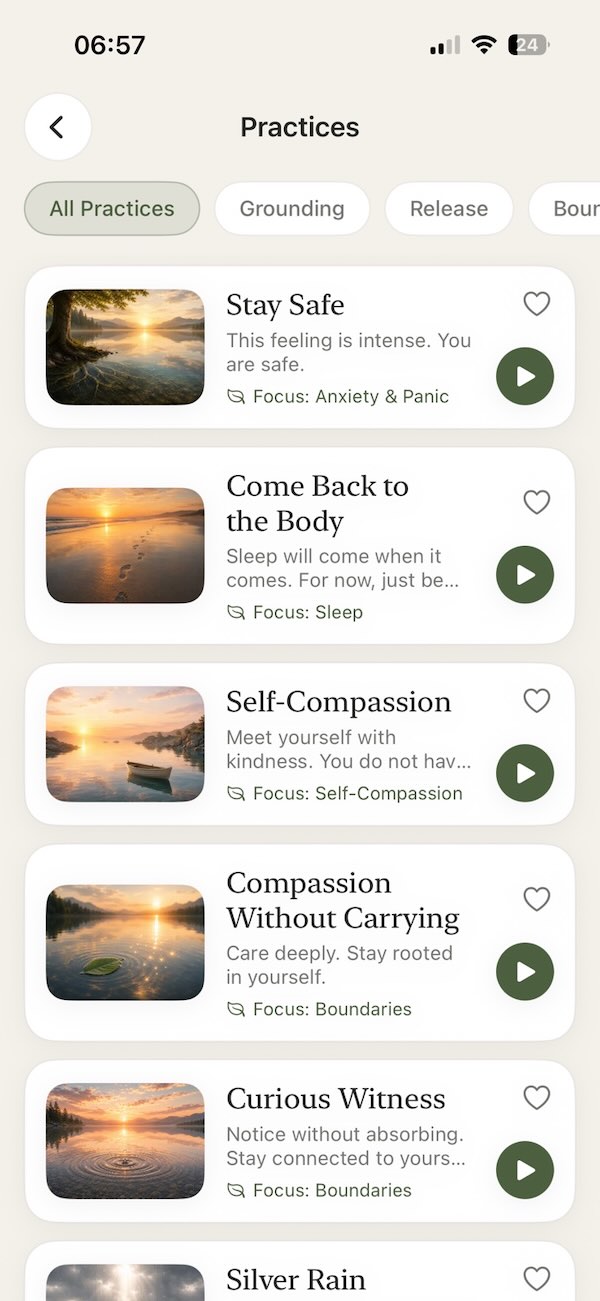
Recurring panic is held in place by a body that stays on alert — so teaching the body to stand down matters. Stay Safe is a gentle guided practice designed to calm the nervous system, slow the breath, and rebuild a sense of safety, helping to interrupt the cycle one steadying moment at a time.

Try the practice
Stay Safe
Find solid ground when panic feels overwhelming.
Ready for more support?
Continue your journey in Aira
Access the full library of guided practices, tools, and resources anytime, anywhere.
- 10+Guided Practices
- AnxietyRelief Tools
- SleepSupport
- TrackYour Progress
- OfflineAccess
Available on iPhone and iPad