Panic Attack Help: How to Stop a Panic Attack Right Now
A calm, practical guide to getting through a panic attack — what's happening in your body, coping skills that help in the moment, and how to care for yourself once the wave passes.

If you're looking for panic attack help right now, take a moment and hear this: you are not alone. And although what you're experiencing may feel frightening, a panic attack is not dangerous.
It can feel overwhelming. It can feel intense. It can feel like something is terribly wrong. But panic attacks are temporary. They pass. And you can get through this moment.
What is happening during a panic attack?
A panic attack occurs when the nervous system suddenly shifts into a high-alert state. Your body begins preparing for danger, even when there is no immediate threat.
This can create intense symptoms such as:
- a racing heart
- chest tightness
- dizziness
- shaking
- nausea
- sweating
- shortness of breath
- feeling detached from reality
- fear of losing control
These sensations are real. But they are signs of a highly activated nervous system — not signs that you are in immediate danger. Understanding this is often the first step toward relief.
How to stop a panic attack
One of the most common questions people ask is: "How do I stop a panic attack?"
The answer may feel surprising. The goal is not to fight the panic — it's to help your nervous system feel safe enough to settle. Trying to force panic away often creates more fear. Instead, try responding with calm attention. The coping skills below can help.
1. Slow your breathing
During panic, breathing often becomes quick and shallow, which can make symptoms feel stronger. Try this simple exercise:
- Inhale gently through your nose for 4 seconds
- Exhale slowly through your mouth for 6 seconds
- Continue for several minutes
Don't try to breathe perfectly, and don't force relaxation. Simply allow your exhale to become longer than your inhale. This sends a signal of safety to the nervous system.
2. Ground yourself in the present
Panic pulls attention into frightening thoughts and sensations. Grounding brings it back to reality. Look around and notice:
- 5 things you can see
- 4 things you can touch
- 3 things you can hear
- 2 things you can smell
- 1 thing you can taste
This is one of the most effective forms of immediate help, because it reconnects you with your environment.
3. Remind yourself what is happening
During panic, the mind often creates frightening stories — "Something is wrong." "I'm losing control." "What if this gets worse?"
Try gently reminding yourself: "This is a panic attack. My nervous system is activated. These sensations will pass. I am safe enough right now."
You don't need to convince yourself perfectly. You're simply helping the brain understand what is happening.
4. Let the wave rise and fall
Panic attacks often feel endless, but they are not. Like a wave, panic rises, peaks, and eventually begins to fall.
Many people accidentally intensify panic by fighting it. Instead, try saying: "I don't like this feeling, but I can allow it to be here. My body knows how to move through this. I don't have to make it stop immediately."
Acceptance often reduces the secondary fear that keeps panic going.
5. Reduce additional stimulation
If possible, give your nervous system a little less to process. You might:
- silence notifications
- move to a quieter space
- dim bright lights
- sit down if you're standing
- place both feet firmly on the floor
Small reductions in stimulation can help create a sense of stability.
What to do in the moment
If you're in the middle of a panic attack right now, focus only on the next few minutes. Not tomorrow, not next week — just this moment.
Try to remember:
- You are not dying.
- You are not losing your mind.
- Your nervous system is activated.
- The sensations will pass.
- You do not need to solve everything right now.
Sometimes panic becomes more manageable when we stop treating it as an emergency.
Why panic feels so intense
Many people are surprised by how physical panic feels. That's because panic is a full-body response: the heart beats faster, breathing changes, muscles tighten, attention narrows. The body is preparing to protect you.
The problem is that the alarm has been triggered when no immediate danger exists. The sensations feel real because they are real. The danger is not.
After the wave passes
When the panic begins to settle, you may feel tired, emotionally drained, shaky, sensitive, or exhausted. This is normal — your nervous system has been working hard.
Give yourself permission to recover. Drink some water. Move gently. Rest if possible. Speak to yourself kindly. Support isn't only about getting through the attack; it's also about caring for yourself afterward.
You don't have to handle this alone
If panic attacks happen frequently or are affecting your daily life, additional support may help. Many people benefit from:
- therapy
- panic-focused CBT
- mindfulness practices
- breathing exercises
- nervous system regulation skills
- support groups
Seeking support is not weakness — it's a form of self-care. And if you ever feel unsafe or in crisis, please reach out to a local crisis line or emergency services.
Final thoughts
If you're searching for panic attack help, chances are you're carrying a lot right now. Take a breath. Notice your surroundings. Feel your feet on the ground.
You don't need to make the panic disappear this second. You only need to move through this moment. One breath. One exhale. One small step at a time.
The wave will pass. And you will still be here.
Frequently asked questions
How do I stop a panic attack?
You can't force a panic attack to stop, but you can help your nervous system feel safe enough to settle. Slow your breathing so the exhale is longer than the inhale, ground your attention in your senses and surroundings, and remind yourself that the sensations are a false alarm that will pass. Fighting panic usually adds fear; meeting it calmly lets the wave fall.
What should I do during a panic attack?
Focus only on the next few minutes. Lengthen your exhale, place your feet on the floor, name a few things you can see, hear, and touch, and remind yourself: "this is panic — uncomfortable, but not dangerous, and it will pass." You don't need to fix anything; just move through the moment one breath at a time.
How long does a panic attack last?
Most panic attacks peak within about ten minutes and then begin to ease, though you may feel drained or shaky for a while afterward. Panic physically cannot sustain its peak — by its nature it rises, crests, and falls, even if you do nothing.
Are panic attacks dangerous?
Panic attacks feel frightening but are not dangerous in themselves. The racing heart, dizziness, and shortness of breath come from your body's stress response switching on, not from anything being medically wrong. If you have new or unexplained physical symptoms, it's always reasonable to get them checked by a doctor for peace of mind.
What helps a panic attack in the moment?
The most reliable in-the-moment tools are a slow, lengthened exhale and grounding through your senses — both signal safety to the nervous system faster than trying to think your way calm. Reducing extra stimulation, such as moving to a quieter space, dimming bright lights, or sitting down, can help too.
Try a gentle practice
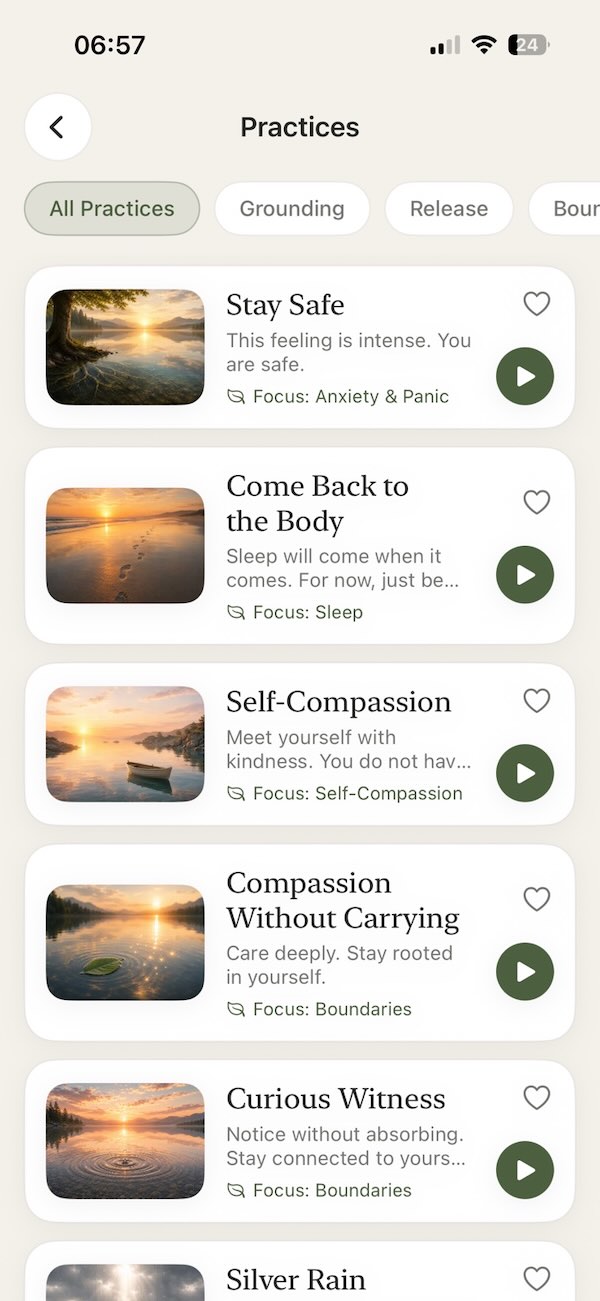
If panic feels present right now, you don't have to navigate it alone. Stay Safe is a guided calming practice designed for moments of panic, overwhelm, and intense nervous system activation — a gentle space to breathe, ground, and reconnect with safety.

Try the practice
Stay Safe
Find solid ground when panic feels overwhelming.
Ready for more support?
Continue your journey in Aira
Access the full library of guided practices, tools, and resources anytime, anywhere.
- 10+Guided Practices
- AnxietyRelief Tools
- SleepSupport
- TrackYour Progress
- OfflineAccess
Available on iPhone and iPad