Grounding in Nature: How the Outdoors Brings You Back
Why being in nature calms the nervous system, what grounding outdoors means, and simple ways to use the natural world to come back to the present.

There's a reason a walk outside can clear your head when nothing else will. Being in nature — on grass, among trees, near water, under open sky — has a settling effect on the nervous system that's hard to replicate indoors. Grounding in nature combines two calming things at once: the present-moment anchoring of grounding, and the quiet restoration of the natural world.
This is a guide to grounding in nature: why the outdoors calms us, and simple ways to use it to come back to the present.
Why does nature calm the nervous system?
Nature has a measurable soothing effect on the body and mind. Natural settings tend to lower stress, slow the heart, ease tension, and quiet the busy mind, shifting the nervous system toward calm. Part of it is sensory — the soft, non-demanding input of leaves, birdsong, water, and open space gives overstimulated attention a place to rest. Part of it is simpler: away from screens, noise, and pressure, the system finally gets a chance to settle. Whatever the mechanism, time outdoors is one of the most reliable ways to bring a wound-up nervous system down.
What is grounding in nature?
Grounding in nature means using the natural world as your anchor to the present moment. Instead of grounding against the contents of a room, you use what's around you outdoors — the feel of the ground underfoot, the sound of wind or water, the sight of trees and sky, the smell of earth or rain. It pairs the present-moment focus of grounding with nature's own calming effect, which is part of why it can feel especially restorative. (Some people also use 'earthing' — direct skin contact with the ground, like bare feet on grass — as part of this.)
Ways to ground outdoors
There are many simple ways to ground in nature. Feel the earth: stand or walk on grass, sand, or soil — barefoot if you like — and notice the contact and support beneath you. Use your senses: listen to the layers of natural sound, look slowly at the shapes and colours around you, breathe in the outdoor air. Walk mindfully: take a slow walk with your attention on each step and the world around you, rather than on your thoughts. Touch the natural world: the bark of a tree, a leaf, a stone, cool water. Simply sit: rest somewhere green or open and let your senses take it in, without needing to do anything. The aim is to let nature hold your attention in the present.
Making nature part of how you settle
You don't need wilderness for this — a park, a garden, a single tree, a patch of sky out the window all count. What matters is regular, attentive contact with the natural world: a daily walk, a few minutes outside with your morning coffee, a pause to actually notice the weather. Even short, frequent doses add up, gently lowering your baseline stress over time. When you can't get outside, natural sounds, plants, or a view can offer a smaller version of the same calm. Nature works best not as a one-off escape, but as a steady thread woven through your days.
Final thoughts
Grounding in nature brings together two of the simplest sources of calm there are: the present moment and the natural world. Whether it's bare feet on grass, a slow walk among trees, or a quiet minute under the sky, letting nature anchor your attention gives your nervous system a deep, easy way to settle. It asks almost nothing of you — just to go outside, and notice. One breath of fresh air, one step on the earth at a time.
Try a gentle practice
Grounding in nature is, at heart, the same act of coming back to solid ground and the present — outdoors. Ground is a gentle practice for exactly that — a guided way to feel the earth beneath you and your connection to it, settling you into the steady, present contact that nature offers so freely.

Try the practice
Ground
Let's come back to what's real
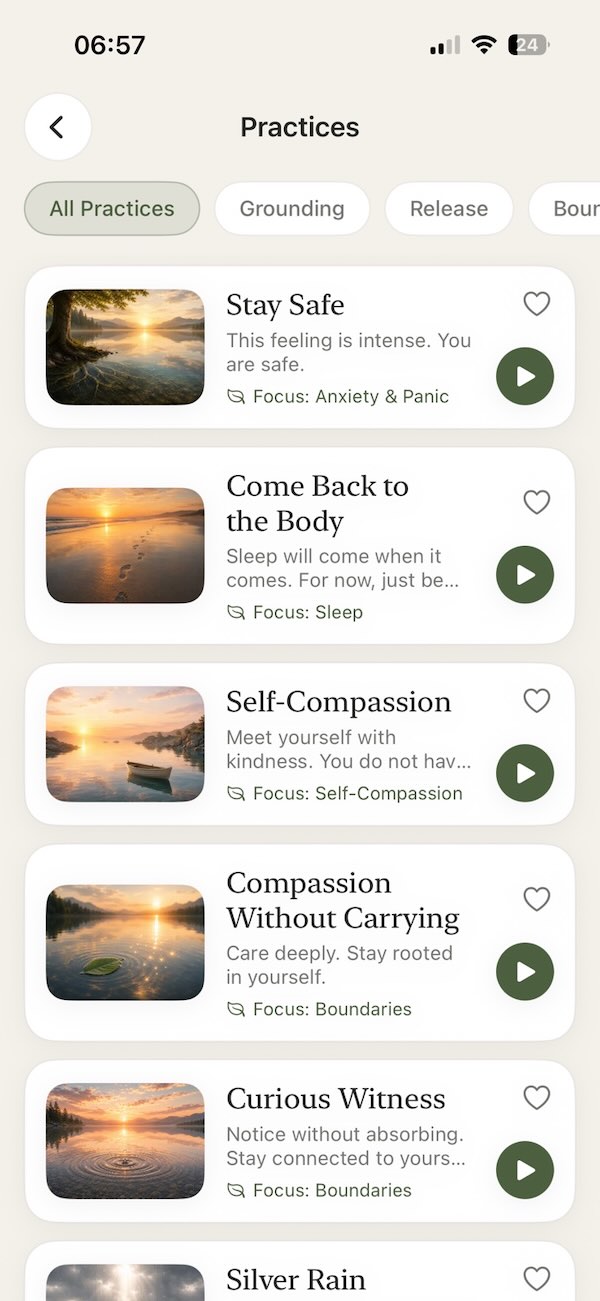
Ready for more support?
Continue your journey in Aira
Access the full library of guided practices, tools, and resources anytime, anywhere.
- 10+Guided Practices
- AnxietyRelief Tools
- SleepSupport
- TrackYour Progress
- OfflineAccess
Available on iPhone and iPad