Grounding Techniques for Anxiety: How to Come Back to the Present
What grounding is, why it calms anxiety, and the most effective techniques to try — the 5-4-3-2-1 method, physical and mental grounding, and grounding anchors.

When anxiety takes over, it pulls you out of the present moment — into worst-case futures, racing thoughts, or a strange sense of being disconnected from your surroundings. Grounding is the simple, practical antidote: a set of techniques that bring your attention out of your head and back into your body and the world around you. They're quick, they need nothing but your own senses, and you can use them almost anywhere.
This is a guide to grounding techniques for anxiety — what grounding is, why it works, and the most effective exercises to try. (For grounding during a panic attack specifically, there's a separate guide; here the focus is everyday anxiety, overwhelm, and a racing mind.)
What grounding is and why it works
Grounding means deliberately anchoring your attention in the present moment, usually through your physical senses. It works because anxiety lives in thought — in what might happen, what did happen, what something means. Your senses, by contrast, only ever report what's happening right now. When you direct attention to what you can see, hear, or feel in this moment, you gently interrupt the anxious thought-loop and give your nervous system evidence that, right here, you are safe. You're not arguing with the anxious thoughts; you're stepping out of them.
The 5-4-3-2-1 technique
The best-known grounding exercise walks you down through your senses. Look around and name five things you can see, then four things you can hear, then three things you can feel — your feet on the floor, the chair, your clothing — then two things you can smell, and one thing you can taste. Move slowly and actually notice each one rather than rushing to finish. The point isn't to complete a checklist; it's that paying genuine attention to real sensory detail leaves less room for the spiral. If you can't find a smell or taste, don't worry — the seeing, hearing, and feeling steps carry most of the effect.
Physical grounding
Sometimes the fastest route back is straight through the body. Press your feet firmly into the floor and notice the contact. Feel the weight of your body in the chair. Hold a cool object, run your hands under cold water, or notice the temperature of the air on your skin. Squeeze and release your hands, or press your palms together. These physical anchors are especially useful when anxiety feels overwhelming and your thoughts are moving too fast for a longer exercise — sensation is immediate in a way that thinking is not.
Mental grounding
When your environment is limited — a meeting, a crowded train — quiet mental grounding can do the same job. Slowly count backwards from 100 by sevens, name animals or cities alphabetically, or describe a familiar routine to yourself in detail, step by step. The aim is to give your mind a simple, neutral task that occupies the same mental space anxiety wants to fill. It doesn't have to be interesting; in fact, slightly dull works best.
Grounding objects and anchors
Many people find it helpful to carry a small grounding object — a smooth stone, a textured keyring, a piece of fabric — and turn their full attention to how it feels in the hand: its weight, temperature, and texture. Having a physical anchor you can reach for makes grounding easier in public, or in moments when remembering a technique feels like too much. The object isn't magic; it's simply a reliable place to send your attention.
How to get the most from grounding
Like any skill, grounding works better with a little practice. Try the techniques when you're calm so they feel familiar when you need them. Go slowly — the effect comes from genuine attention, not speed. Expect anxious thoughts to keep returning, and simply guide your focus back to your senses each time; that returning is the practice, not a sign you're failing. And experiment to find your own anchors: some people respond most to sight, others to touch or temperature. There's no single right way to ground.
The fuller picture
If you've tried grounding and walked away thinking I still feel anxious, so it didn't work — these techniques just don't work for me, that's a really common place to land. It comes from expecting a tool to switch the feeling off completely, like flicking a light.
But that was never grounding's job. It isn't meant to delete anxiety in one move — it's meant to loosen its grip a notch and bring a little of you back to the present. "Still anxious, but a bit more here" isn't failure; that's the technique doing exactly what it does. And when the anxious thoughts drift back halfway through, that's not you getting it wrong either — noticing and guiding your attention back, again and again, is the practice. Small and partial still counts.
When to use grounding (and when to reach for something else)
Grounding is most useful when anxiety pulls you into your head, when you feel disconnected or unreal, during overwhelm, or when racing thoughts won't settle. It pairs naturally with slow breathing — many people ground first to interrupt the spiral, then breathe to settle the body. If grounding alone doesn't fully calm you, that's normal; it's one tool among several, and a partial easing still counts. And if anxiety is frequent and interfering with daily life, grounding works best alongside other forms of support rather than on its own.
Try a gentle practice
Knowing the steps helps, but in an anxious moment it's often easier to be guided than to remember them yourself. Ground is a gentle guided grounding practice for exactly those moments — a way to step out of the spiral, reconnect with your body and senses, and come back to what's real, here and now.

Try the practice
Ground
Let's come back to what's real
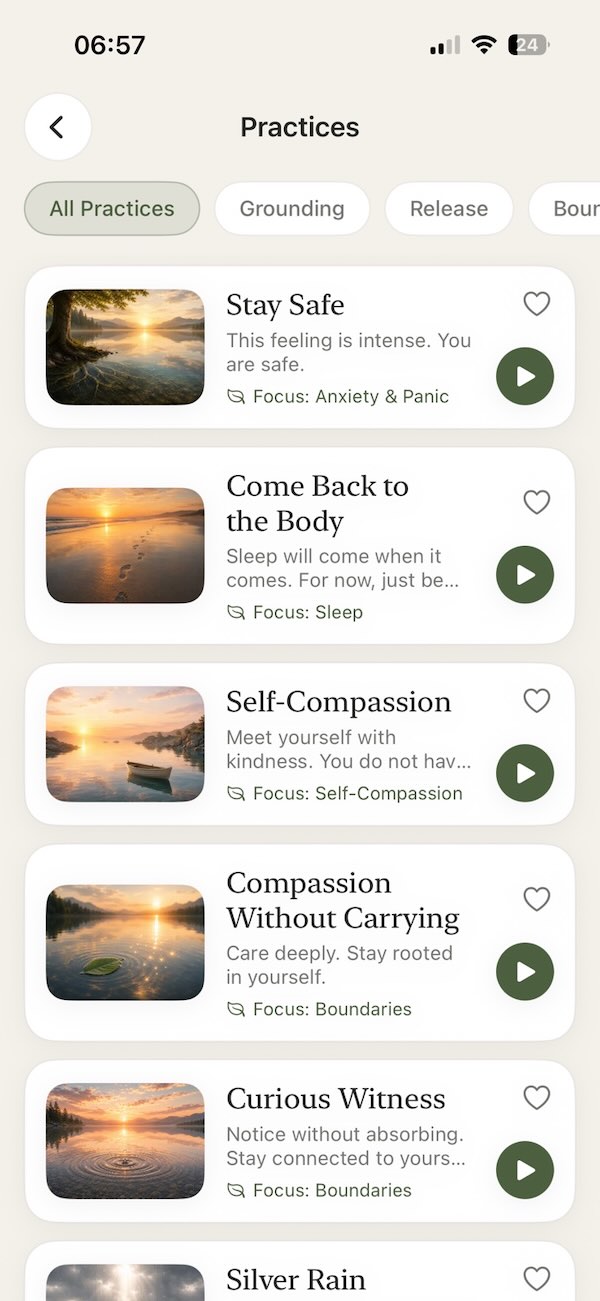
Ready for more support?
Continue your journey in Aira
Access the full library of guided practices, tools, and resources anytime, anywhere.
- 10+Guided Practices
- AnxietyRelief Tools
- SleepSupport
- TrackYour Progress
- OfflineAccess
Available on iPhone and iPad