How to Forgive Yourself: Letting Go of Regret and Self-Punishment
Why self-forgiveness is so hard, the difference between accountability and self-punishment, and how to forgive yourself for past mistakes and let go of regret.

There's something you can't seem to put down. A mistake, a choice, a moment you'd give anything to redo — and years later you're still carrying it, still replaying it, still quietly punishing yourself for it. You may have apologised, made amends, even been forgiven by everyone involved. The one person who won't forgive you is you.
This is a guide to self-forgiveness: why forgiving yourself can be so much harder than forgiving anyone else, and how to begin letting go of regret without pretending the past didn't matter.
Why self-forgiveness is so hard
Self-forgiveness is uniquely difficult because you can't get distance from yourself. You can walk away from someone who hurt you; you can't walk away from the person who made the mistake — they come with you everywhere. There's also a hidden belief that keeps the punishment going: that holding onto guilt is the responsible thing to do, that forgiving yourself would mean letting yourself off the hook. So self-punishment quietly masquerades as accountability, and the suffering starts to feel almost moral — as if enough pain might somehow pay the debt.
Self-forgiveness isn't forgetting or excusing
It helps to be clear about what self-forgiveness is not. It isn't pretending the thing didn't happen, deciding it didn't matter, or letting yourself off without accountability. Real self-forgiveness includes the opposite: honestly acknowledging what happened, taking responsibility, making repair where you can, and learning from it. Forgiveness is what comes after that — the decision to stop adding punishment once the lesson has been learned and the amends have been made. You can take something completely seriously and still stop torturing yourself over it.
Why self-punishment doesn't work
Punishing yourself feels productive, but it changes nothing about the past and rarely improves the future. Endless guilt doesn't undo what happened, doesn't help the person affected, and doesn't make you a better person — it usually just keeps you stuck, too consumed by the old mistake to grow past it. There's a strange truth here: people actually become more responsible and more capable of repair from a place of self-compassion than from a place of self-attack. Shame makes you hide; forgiveness frees up the energy to do better.
Regret and the weight of the past
Much of what keeps self-forgiveness out of reach is regret — the ache of I should have known better, I should have done it differently. But you're judging a past version of yourself with knowledge, hindsight, and calm that they didn't have in the moment. They acted with the awareness, resources, and pain they had then. That isn't an excuse; it's context — and context is exactly what self-forgiveness restores. Letting go of regret doesn't mean deciding the past was fine. It means ending the demand that a past self should somehow have been a present self.
How to forgive yourself
Self-forgiveness is less a single decision than a practice you return to.
Name what actually happened
Without minimising or exaggerating, state the truth of it plainly. Clarity is kinder than the vague, sprawling guilt that grows in the dark.
Take real responsibility — then stop
Make whatever repair is possible. Once you've done what can be done, recognise that continued punishment is no longer accountability; it's just suffering with no recipient.
Speak to the past self with compassion
Picture the version of you who made the choice — what they were facing, what they didn't yet know. Offer them the understanding you'd give a friend who had been there.
Let the feeling move
Regret and guilt don't vanish on command; they soften as you stop feeding them. Each time you choose understanding over punishment, you loosen the grip a little more.
Self-forgiveness is a journey, not a switch
It's worth knowing that self-forgiveness rarely happens all at once. It's more of a journey than a single moment of release — some days the old guilt returns, and forgiving yourself again is part of the process, not a sign you failed. Healing here is gradual and repeatable: you don't have to do it perfectly or permanently. You only have to keep choosing, on the days you can, to stop punishing the person you're stuck being.
The fuller picture
What keeps the punishment running is one belief: if I forgive myself, I'm letting myself off the hook — holding onto the guilt is the responsible thing to do. It feels true because the suffering feels moral, as though enough pain might pay the debt, and easing it would be a kind of cheating.
But look at what the guilt is actually doing. Self-punishment quietly masquerades as accountability while achieving none of its aims: it doesn't undo the past, doesn't help the person affected, doesn't make you better — it just keeps you too consumed by the old mistake to grow past it. Real accountability already happened, or still can — acknowledge it, repair what's repairable, learn from it. Forgiveness is simply what comes after that: the choice to stop adding pain once the lesson is learned and the amends are made. And here's the part that overturns the belief — people become more responsible, and more capable of repair, from self-compassion than from self-attack. Shame makes you hide; forgiveness frees the energy to do better. You can take what happened completely seriously and still stop torturing the person you're stuck being.
Final thoughts
If you can't seem to forgive yourself, it doesn't mean you're being appropriately hard on yourself — it usually means you're a person with a conscience who got caught in the belief that suffering equals responsibility. It doesn't. You can hold what happened with honesty and still set down the punishment. You're allowed to have made a mistake, to have been human, to not have known then what you know now — and to move forward anyway. One honest look, one breath, one act of self-forgiveness at a time.
Try a gentle practice
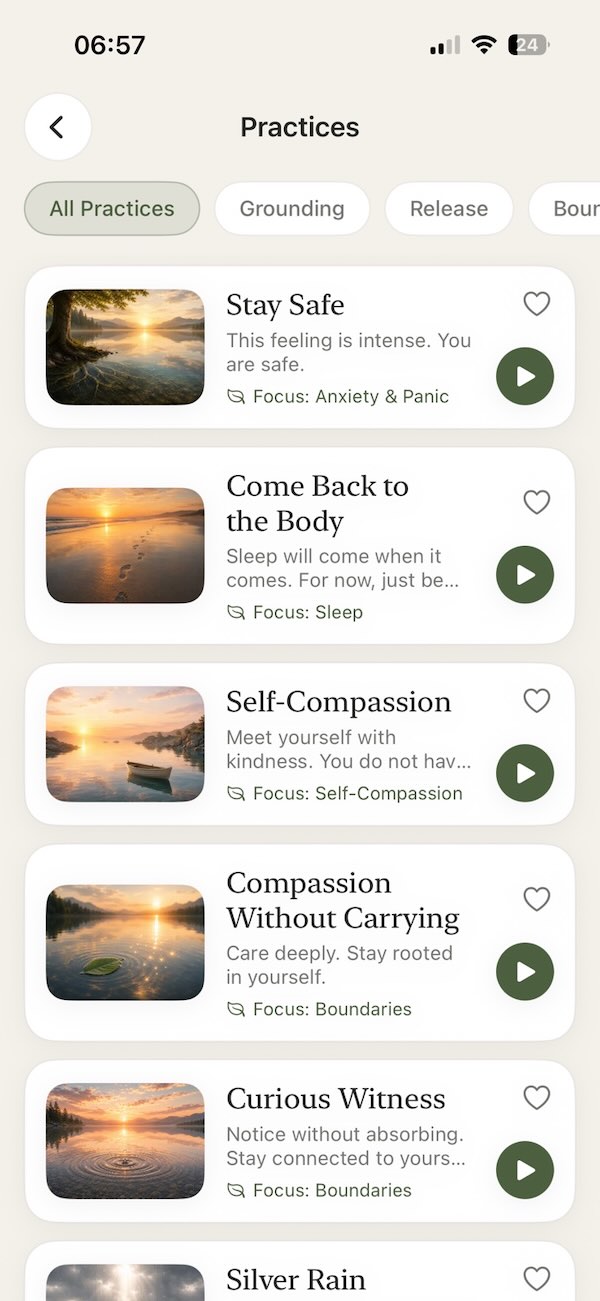
Forgiveness is less something you decide than something you set down — a weight you finally stop carrying. Silver Rain is a gentle practice for exactly that — a way to name the regret you've been holding, let it be gently washed away, and release what no longer needs to be carried, without pretending it never mattered.

Try the practice
Silver Rain
Let everything be exactly as it is.
Ready for more support?
Continue your journey in Aira
Access the full library of guided practices, tools, and resources anytime, anywhere.
- 10+Guided Practices
- AnxietyRelief Tools
- SleepSupport
- TrackYour Progress
- OfflineAccess
Available on iPhone and iPad