How to Release Tension From Your Body
Where stress hides as physical tension, why releasing it calms the mind, and simple ways to let go of the tension your body holds.

Stress and tension are almost the same thing in the body. When you're under pressure, your muscles tighten — shoulders creeping up, jaw clenching, stomach gripping — and that held tension keeps signalling to your brain that something's wrong, which keeps you stressed. Learning to release physical tension is one of the most direct ways to interrupt that loop and feel better in your body.
This is a guide to releasing tension from your body: where stress hides, why it gets stuck, and how to let it go.
Why stress lives in the body as tension
When your nervous system senses stress, it tightens your muscles as part of the body's readiness to act — bracing you to fight, flee, or protect yourself. That's useful in a real threat, but in everyday stress the tension has nowhere to go, so it simply builds and stays. Over time, you can hold tension chronically without even noticing, until it shows up as tight shoulders, headaches, a clenched jaw, or a knotted stomach. The body and the stress response are a two-way street: tension feeds stress just as stress feeds tension.
Where people hold tension
Stress tends to collect in predictable places. The shoulders and neck are the classic spot — hunched, tight, aching. The jaw is another, often clenched or grinding, especially during sleep. Many people hold tension in the face and around the eyes, in the chest and shoulders (which also tightens the breath), in the stomach and gut, and in the hands, fists, and lower back. Noticing your own tension map — where you personally tend to grip — is the first step to releasing it.
Why releasing tension helps
Releasing physical tension does more than ease the ache. Because the body and nervous system are linked, softening tight muscles sends a direct signal of safety upward, helping switch off the stress response — you can actually calm your mind by relaxing your body. It also frees up the breath, eases pain and fatigue, and breaks the feedback loop where a tense body keeps you feeling stressed. Letting go of tension is one of the simplest ways to tell your whole system that it's safe to come down.
How to release tension
There are many simple ways to let tension go. Scan and soften: move your attention through your body, find where you're gripping, and consciously let those muscles loosen. Drop and release: deliberately drop your shoulders, unclench your jaw, soften your stomach and hands — spots people hold without realising. Tense and let go: briefly tighten a tense muscle, then release it fully, which often relaxes it more completely (the basis of progressive muscle relaxation, which has its own guide). Move and stretch: gentle stretching, rolling your shoulders, or shaking out your limbs discharges stored tension. Breathe into it: slow breaths, with a long exhale, help the body release as you let the breath out. Warmth and touch: a warm bath, a hand on a tense spot, or massage all help muscles let go.
Making tension release a habit
Because tension builds up quietly through the day, it helps to release it regularly rather than waiting until you're stiff and aching. Quick check-ins — dropping your shoulders and softening your jaw a few times a day — stop tension from accumulating. A longer release in the evening helps you unwind and sleep. Over time, you also get better at catching tension early, before it sets in. Think of it as letting off pressure little and often, so it never builds to the point of pain.
Final thoughts
The tension your body holds isn't just a physical nuisance — it's stress made solid, and releasing it is a direct way back toward calm. By noticing where you grip and gently letting go — softening your shoulders, unclenching your jaw, breathing tension out — you break the loop between a braced body and a stressed mind. Your body wants to let go; often it just needs a little permission and attention. One softened muscle, one release at a time.
Try a gentle practice
Releasing tension is, simply, letting your body soften what it's been holding. Soften is a gentle practice for exactly that — a guided way to find the tension you carry and let it melt, easing both body and mind toward calm.

Try the practice
Soften
Let's release what you are holding
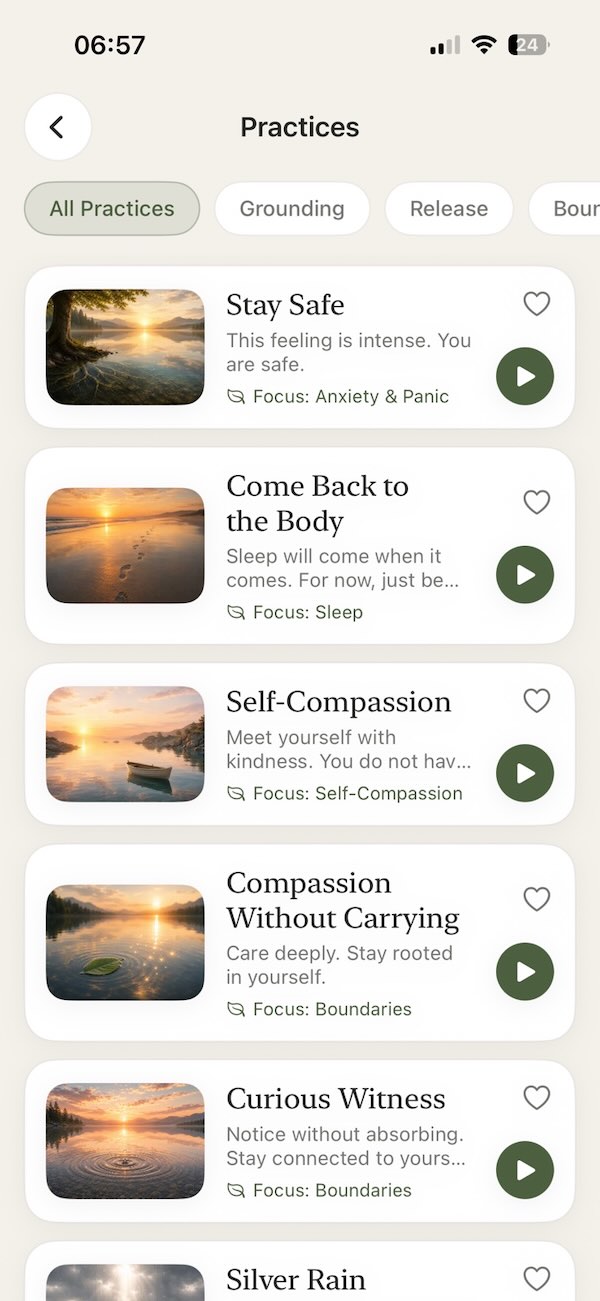
Ready for more support?
Continue your journey in Aira
Access the full library of guided practices, tools, and resources anytime, anywhere.
- 10+Guided Practices
- AnxietyRelief Tools
- SleepSupport
- TrackYour Progress
- OfflineAccess
Available on iPhone and iPad