Stress Relief: How to Relieve Stress and Calm Your Body
What stress relief really means, why stress builds up, and practical ways to relieve stress and calm your body and mind — in the moment and over time.

Stress is one of the most universal human experiences — and one of the most draining. Whether it's a single overwhelming day or a low hum that never quite switches off, stress takes a real toll on the body and mind. The good news is that stress relief isn't complicated or mysterious: there are simple, practical, proven ways to calm your system, both in the moment and over the longer term.
This is a guide to stress relief: what stress actually is, why it builds up, and how to relieve it — fast when you need to, and sustainably over time.
What is stress, really?
Stress is your body's natural response to demand or threat — a surge of activation that prepares you to cope with a challenge. In short bursts it's useful, sharpening focus and energy. The problem comes when stress is too intense, too frequent, or never switches off, so the body stays activated long after the demand has passed. Much of what we call 'stress' is this state of being stuck in activation — wound up, tense, on edge — without enough recovery. (The deeper mechanism is your nervous system's stress response, which has its own guide.)
Why stress builds up
Stress accumulates when demands outpace your capacity to recover from them. Modern life makes this easy: constant input, pressure, and busyness keep the system switched on, with few real pauses. Without enough recovery between stressors, activation stacks up rather than clearing, and you drift into chronic stress — a baseline of tension that becomes your normal. Understanding this points to the cure: stress relief is largely about helping the body discharge activation and recover, again and again.
How to relieve stress in the moment
When stress spikes, the fastest relief comes through the body, not the mind. The most reliable tool is slow breathing with a long exhale, which directly tells your system to calm down. Grounding through your senses, feeling your feet and your weight, releasing physical tension, and stepping away from the stressor even briefly all help bring activation down quickly. These in-the-moment techniques won't solve what's stressing you, but they settle your system enough to think and cope — and each has its own dedicated guide in this section.
How to relieve stress over time
Lasting stress relief comes from how you live day to day, not just emergency tools. Regular recovery — real rest, sleep, downtime — lets activation clear instead of stacking. Movement discharges stress and builds resilience. Relaxation practices, time in nature, and connection with people all lower your baseline. And reducing the sources of stress where you can — through boundaries, pacing, and saying no — addresses the cause, not just the symptom. Sustainable stress relief is really about building a life with enough recovery woven through it.
When stress becomes too much
Some stress is normal, but it's worth paying attention when it stops easing. If stress is constant, overwhelming, or starting to affect your sleep, health, mood, or ability to function, it may have tipped into chronic stress or be heading toward burnout, and it deserves more than quick fixes. Persistent stress that won't lift is worth talking to a doctor about. Stress relief matters not just for comfort but because long-term unrelieved stress genuinely wears the body down.
Final thoughts
Stress relief isn't about eliminating stress entirely — some is part of being alive — but about helping your body and mind recover from it, so it doesn't pile up and wear you down. With simple in-the-moment tools and enough recovery built into your days, even a stressed, wound-up system can settle. You're not stuck with constant tension; you can meet stress with something that genuinely helps. One long exhale, one real pause at a time.
If stress feels constant or is affecting your health, please consider speaking with a doctor — ongoing stress is worth taking seriously.
Try a gentle practice
The fastest way to relieve stress in the moment is the slow, long exhale. Breathe is a gentle practice for exactly that — a simple guided way to lengthen your out-breath and switch on your body's natural calming response, bringing stress down whenever you need quick relief.

Try the practice
Breathe
Help me slow down and find calm.
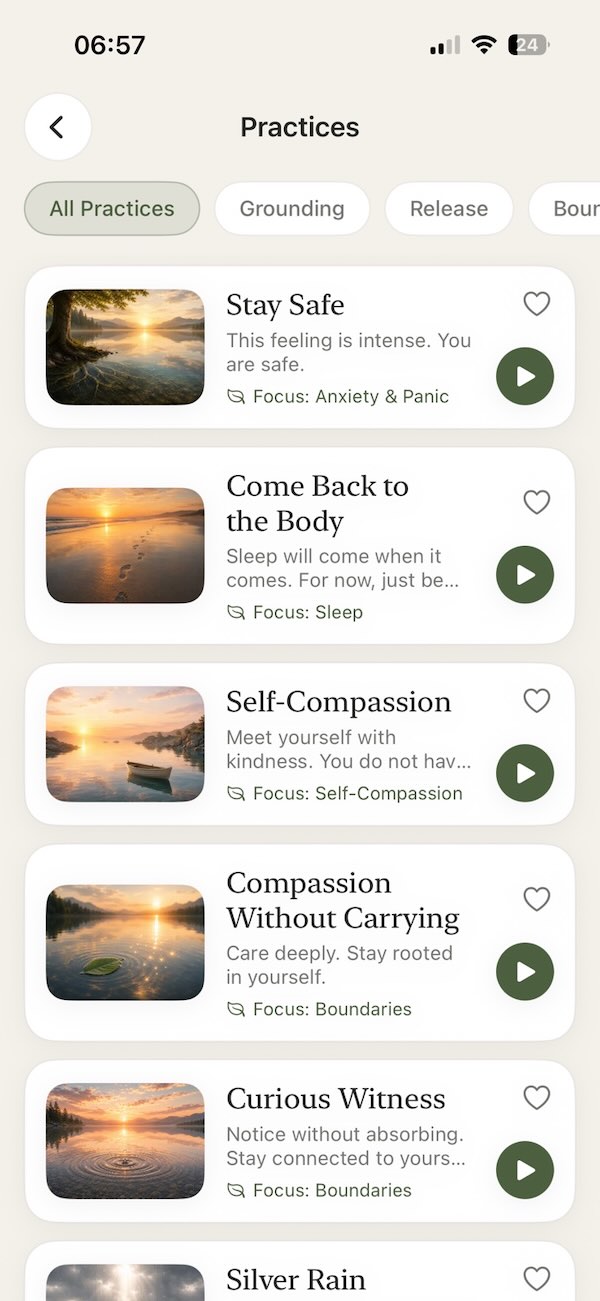
Ready for more support?
Continue your journey in Aira
Access the full library of guided practices, tools, and resources anytime, anywhere.
- 10+Guided Practices
- AnxietyRelief Tools
- SleepSupport
- TrackYour Progress
- OfflineAccess
Available on iPhone and iPad