Inner Critic: Why That Harsh Voice in Your Head Feels So Convincing
The inner critic speaks in your own voice with total certainty — which is exactly why it feels like truth. What the critic is, where it comes from, and how to stop believing everything it says.

Most people can recognise criticism when it comes from someone else — a harsh teacher, a demanding boss, a judgmental relative. But many people carry another critic with them everywhere they go: the inner critic, the voice that says you should have done better, you're falling behind, you always mess things up, what's wrong with you, you should know this already. For some people that voice becomes so familiar it no longer registers as criticism at all. It simply sounds like the truth.
What is the inner critic?
The inner critic is the part of the mind that constantly evaluates, judges, and points out perceived mistakes or shortcomings. It tends to show up as negative self-talk, self-critical thoughts, perfectionistic pressure, constant self-judgment, and harsh internal standards. It rarely sounds supportive. Its language is usually urgent, demanding, impatient, critical — and often impossible to satisfy, because the moment one demand is met, it moves on to the next.
Why the inner critic feels so convincing
Here's what makes the critic so powerful: it speaks in your own voice, with total certainty, about things it claims to know for sure. Because it's familiar, and because it's been repeating the same lines for years, it stops sounding like an opinion and starts sounding like fact. But certainty is not the same as truth. A harsh inner voice can be completely convinced and completely wrong. You always mess things up feels like an honest assessment in the moment — yet it's a sweeping, absolute judgment that no fair observer would actually make. The critic's confidence is not evidence; it's just volume.
Why am I so hard on myself?
Many people assume they criticise themselves because they lack confidence. Often the opposite is true. The inner critic usually develops as a form of protection. At some point the mind learned: if I stay vigilant enough, maybe I'll avoid mistakes; if I push myself harder, maybe I won't fail; if I criticise myself first, no one else can hurt me. The critic genuinely believes it's helping. The problem is that it runs on fear — and fear, used as fuel day after day, comes at a real cost to your wellbeing.
The inner critic and perfectionism
Perfectionism is one of the most common sources of a harsh inner critic. The voice insists good isn't good enough, you should have done more, you can't make mistakes, you should be further along by now. No matter what you achieve, the goalpost moves; the critic rarely celebrates progress, focusing instead on what's missing and what still needs fixing. This is why perfectionism so often feels exhausting rather than motivating. (The deeper link between perfectionism, self-worth, and anxiety has its own article, which explores where that pressure really comes from.)
The inner critic and anxiety
The critic and anxiety tend to feed each other: anxiety raises uncertainty, the critic responds by growing louder, the added pressure activates the nervous system further, and anxiety climbs again. What starts as self-protection can quietly become self-perpetuating stress. (How that cycle works, and how to interrupt it, is covered in the article on anxiety and self-criticism.)
Can you silence the inner critic?
Many people try to get rid of the critic entirely — but fighting it usually just creates another struggle. A more helpful question than how do I silence it? is how do I stop believing everything it says? The goal isn't to eliminate every critical thought. It's to recognise that a thought is a thought — not a fact, not a command, not an emergency. The critic can speak without being the only voice in the room, and without being the one you automatically obey. That small shift, from the critic is right to that's just the critic talking, is where its grip starts to loosen.
How to quiet the inner critic
The first step is awareness. Start noticing the voice: what does it actually say, when does it get loud, what situations trigger it, and what happens in your body when it appears? Naming it — that's the critic — creates a small gap between you and the words, and in that gap you regain a choice. Then try the friend test: if someone I loved was struggling with this exact thing, would I speak to them the way I'm speaking to myself? Almost no one would. The distance between how you'd treat a friend and how you treat yourself reveals the critic for what it is — not honesty, just a worn habit.
The fuller picture
The reason the critic runs your day is one assumption: it speaks in my own voice, with total certainty — so it must be telling the truth about me. It feels true precisely because it's familiar; a voice that's repeated the same lines for years stops sounding like an opinion and starts sounding like fact.
But certainty is not truth. A harsh inner voice can be utterly convinced and completely wrong — you always mess things up is a sweeping, absolute judgment no fair observer would actually make. The critic's confidence isn't evidence; it's just volume. And notice what it actually is: not honesty, but an old protection that learned if I attack myself first, maybe I'll avoid mistakes, or at least beat everyone else to it. It runs on fear, and it believes pressure is the only thing keeping you from falling apart. That belief is wrong too — people usually become more resilient, motivated, and steady when harshness is replaced with understanding, not less. So you don't have to silence the voice or win the argument. You only have to stop mistaking its certainty for truth: a thought is a thought, not a verdict, and that's just the critic talking is where its grip begins to loosen.
Try a gentle practice
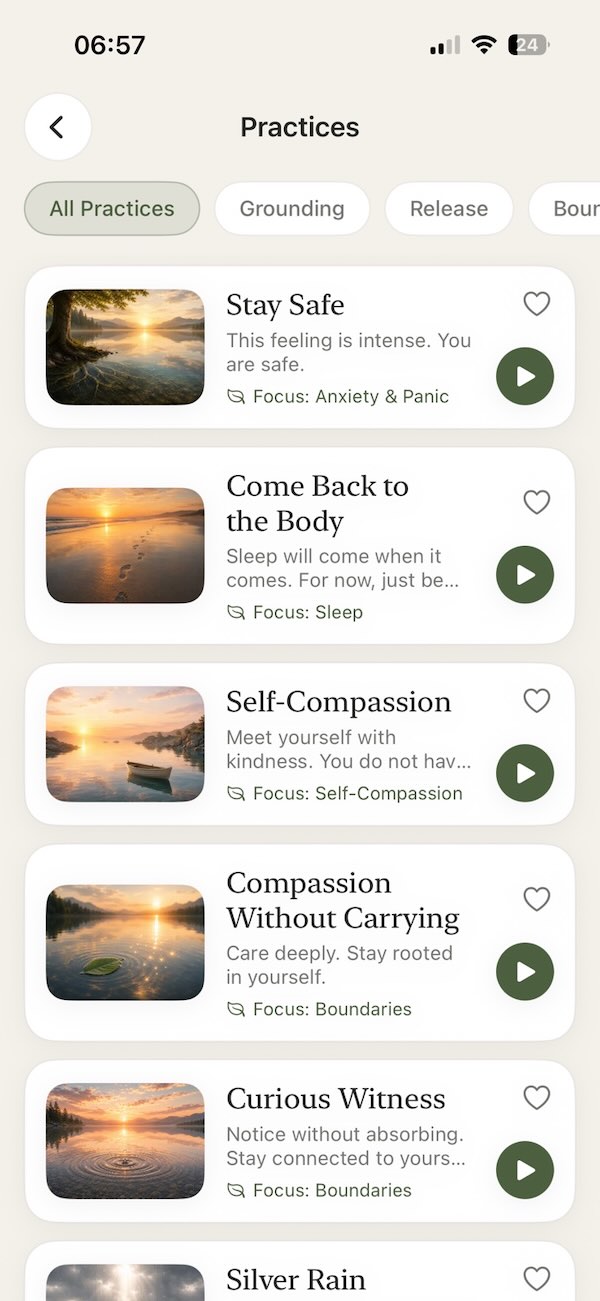
You don't have to win an argument with the inner critic or force it into silence. Self-Compassion is a gentle practice for the moments when that harsh voice grows loud — a way to notice the pressure, loosen your belief in the criticism, and meet yourself with understanding instead of judgment.

Try the practice
Self-Compassion
Offer yourself the kindness you need.
Ready for more support?
Continue your journey in Aira
Access the full library of guided practices, tools, and resources anytime, anywhere.
- 10+Guided Practices
- AnxietyRelief Tools
- SleepSupport
- TrackYour Progress
- OfflineAccess
Available on iPhone and iPad