Low Self-Esteem: Why It Happens and How to Build It
What self-esteem is, the signs and causes of low self-esteem, how it differs from self-worth, its link to anxiety, and how to genuinely build it (not via affirmations).

Self-esteem is one of the most talked-about and least understood ideas in everyday psychology. People want more of it, worry they lack it, and try to boost it — often without a clear sense of what it actually is. At its simplest, self-esteem is how you evaluate yourself: how capable, worthy, and good you judge yourself to be. This is a look at what low self-esteem is, where it comes from, and how it's genuinely built — which, it turns out, isn't through forced positivity.
What is self-esteem?
Self-esteem is your overall evaluation of yourself — a sense of how much you like, value, and trust who you are. Healthy self-esteem isn't believing you're better than everyone; it's a stable, realistic, generally positive view of yourself that can hold steady through ups and downs. It's worth distinguishing from self-worth: self-worth is the belief that you matter simply as a person, while self-esteem is more of an assessment of your qualities and abilities. The two are linked, but self-esteem tends to rise and fall more with circumstance.
Signs of low self-esteem
Low self-esteem often shows up as harsh self-judgment, difficulty accepting compliments, assuming the worst about how others see you, fear of failure or judgment, comparing yourself unfavourably, struggling to make decisions or assert your needs, and a persistent sense of not being good enough. It can be loud or quiet — some people with low self-esteem look confident on the outside while privately doubting themselves almost constantly.
What causes low self-esteem?
Self-esteem is largely learned, and its roots usually reach back. Early experiences — criticism, comparison, bullying, conditional approval, or environments where you rarely felt good enough — shape the baseline view you carry into adulthood. Later experiences like failures, rejections, or difficult relationships can reinforce it. None of this means low self-esteem is permanent: a self-evaluation that was learned from experience can be reshaped by new experience.
Low self-esteem and anxiety
Low self-esteem and anxiety feed each other closely. If you doubt your worth and ability, the world feels more threatening — more situations look like chances to fail or be judged — so anxiety rises. And anxiety, in turn, gets read as further proof that you can't cope. The harsh inner voice tying it all together is usually the inner critic, narrating a running case against you.
Why you can't just think positive
The classic advice — repeat affirmations, think positively — tends to fall flat, because if you don't believe I am amazing, saying it just starts an argument with yourself. Self-esteem isn't built by overriding your view with slogans. It's built more slowly, through evidence and action: doing things that show you you're capable, treating yourself decently, and updating the old story with lived experience rather than forced cheer.
How to build self-esteem
Self-esteem grows from the ground up, and confidence tends to follow it.
Act, then let it count
Competence builds esteem. Doing hard things — and, crucially, letting yourself credit the result — gives the mind real evidence to revise its view.
Soften the inner critic
Low self-esteem is largely a harsh inner narrator. Noticing that's the critic, not the truth loosens the running judgment.
Stop outsourcing your worth
Esteem built only on others' approval or on comparison stays fragile. Anchoring it in your own values and standards makes it steadier.
Treat yourself as worth the effort
Keeping small promises to yourself, meeting your own needs, and speaking to yourself with respect slowly rebuild self-trust — the quiet core of healthy self-esteem and self-confidence.
The fuller picture
Underneath low self-esteem is one quiet assumption: this low opinion of myself isn't a mood — it's just an accurate read of who I am. It feels true because the verdict is so familiar and so constant; a judgment you've carried for years starts to feel like simple fact rather than opinion.
But self-esteem was never a measurement of your actual worth — it's an evaluation, and evaluations are learned. Yours was built from old experiences: criticism, comparison, conditional approval, environments where you rarely felt good enough. That means what's speaking isn't the truth about you; it's the residue of what happened to you, narrated now by a harsh inner critic that mistakes itself for objectivity. And here's the freeing part: because it was learned from experience, it can be reshaped by new experience. Not by arguing I'm amazing — that just starts a fight you don't believe — but slowly, by acting, letting your efforts actually count, and treating yourself as worth the effort. The verdict isn't fixed, and it isn't fact. It's the loudest voice, and loud is not the same as right.
Final thoughts
If your self-esteem is low, it isn't a fixed fact about who you are — it's a learned evaluation, built from old experiences, and what was learned can be rebuilt. You don't do it by forcing yourself to feel impressive; you do it slowly, by acting, letting your efforts count, and treating yourself with respect along the way. The harsh inner verdict isn't the truth about you; it's just the loudest voice, and it can be turned down. One action, one kinder word, one piece of evidence at a time.
Try a gentle practice
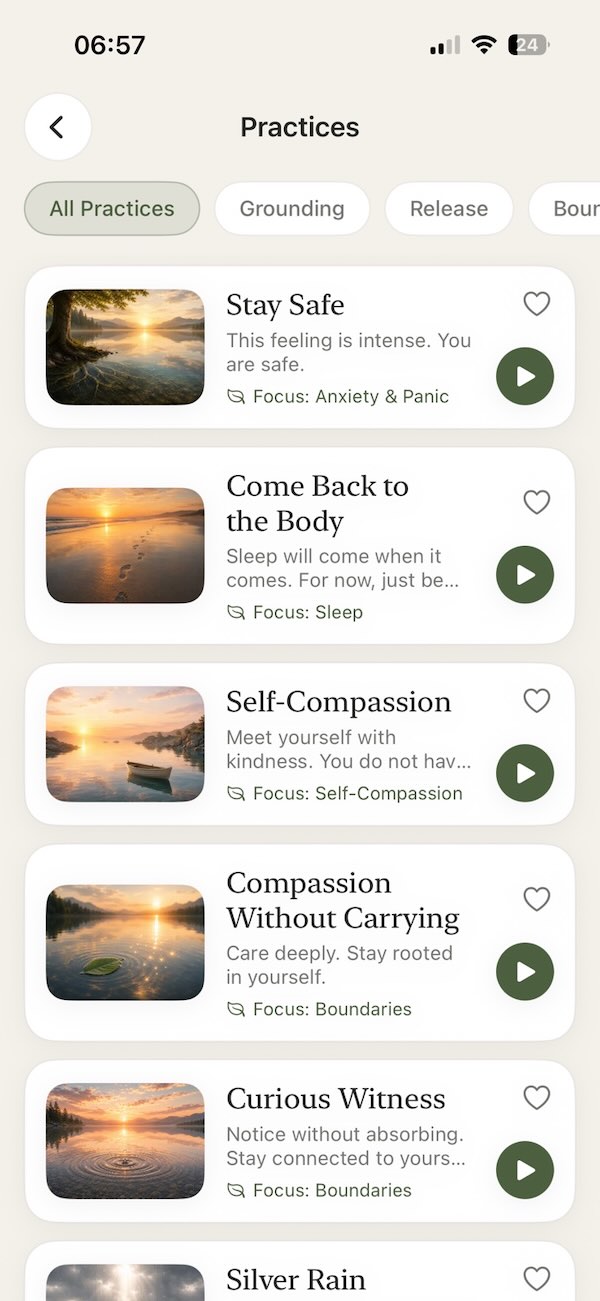
Low self-esteem lives largely in a harsh inner narrator. Self-Compassion is a gentle practice for softening that voice — a way to step out of the running self-judgment, speak to yourself with respect, and slowly rebuild the steadier, kinder relationship that healthy self-esteem grows from.

Try the practice
Self-Compassion
Offer yourself the kindness you need.
Ready for more support?
Continue your journey in Aira
Access the full library of guided practices, tools, and resources anytime, anywhere.
- 10+Guided Practices
- AnxietyRelief Tools
- SleepSupport
- TrackYour Progress
- OfflineAccess
Available on iPhone and iPad