When Noise Makes Sleep Impossible for a Sensitive System
Why noise hits a sensitised nervous system so hard at night, why worrying about it makes it worse, and what actually helps you sleep when you can't control the sound.

A door closes down the hall. A neighbour's music thuds through the wall. A car passes, a dog barks, someone upstairs moves a chair — and you're wide awake, heart tapping, every nerve listening for the next sound. For a nervous system that's already sensitised, noise at night isn't a minor annoyance; it can feel like it makes real sleep impossible. If you lie awake bracing against every sound, or dread bedtime because you can't control what you'll hear, this is why — and there are things that genuinely help.
This is a guide to noise and sleep when your system is sensitive: why sound hits so hard at night, why worrying about it makes it worse, and what actually helps.
Why noise hits a sensitised system so hard
Even in sleep, your nervous system keeps one channel open for threat — and sound is the sense it never fully switches off, because hearing is how we evolved to detect danger in the dark. When your system is already stressed and sensitised, that threat-detection runs hot: it treats sudden or unpredictable sounds as things to react to, jolting you toward alertness to check whether you're safe. So a noise that a settled system would sleep straight through instead snaps a sensitised one wide awake. It isn't that you're a uniquely light sleeper by nature; it's that a system on guard is listening more closely than it needs to.
Why worrying about noise makes it worse
Here's the cruel twist: the anxiety about noise amplifies the noise. Once you've had nights ruined by sound, your system starts anticipating it — lying in bed listening for the neighbour, braced for the bang you're sure is coming. That anticipatory vigilance keeps you activated, which makes you even more reactive to any sound that does come, which confirms the fear. The listening itself becomes the thing keeping you awake, as much as the noise. This is why two people can hear the same sound and only the braced one is thrown by it — the difference isn't the decibels, it's the guard standing watch.
Why sleep is the one you can least afford to lose
For a sensitive or recovering nervous system, sleep isn't just rest — it's the foundation everything else is built on. It's when the system does its deepest repair and widens its capacity to handle the next day. Lose it, and the sensitivity gets worse, the reactivity climbs, and noise bothers you even more the following night. This is exactly why protecting sleep is worth treating as a genuine priority rather than a nice-to-have: it's the single input that most determines how wide or narrow your window will be tomorrow.
What helps: managing the sound
Start with what you can control on the outside, because reducing the actual input takes real pressure off the guard. Masking sound often helps more than chasing silence — a fan, white or pink noise, or gentle background sound gives your threat-detection a steady, unthreatening blanket to rest against, so a sudden bang doesn't stand out as sharply. Earplugs help many people. Where you can, make where you sleep as protected as possible: the quietest room, soft furnishings that absorb sound, a bed away from the shared wall. You won't control every noise, but shifting the odds in your favour matters.
What helps: calming the guard
The deeper work is with the vigilance, because that's often the real culprit. Since it's the listening-and-bracing that keeps you awake as much as the sound, the aim is to lower the guard rather than win a war against noise. A long, slow exhale signals safety and takes the edge off the alertness. Letting go of the fight helps too — the more you struggle to force silence and sleep, the more alert you become, whereas allowing that a stray sound might come, and that you'll be okay if it does, paradoxically lowers the reactivity. And accepting in advance that one imperfect night is survivable takes away some of the pressure that keeps you wired. You're not trying to stop caring about noise; you're trying to stop standing guard over it.
The fuller picture
Underneath the sleeplessness is usually one belief: I can't sleep until it's completely silent — the noise is the problem, and until it stops, I have no chance. It feels true because the sound is real and you can point to it every time you're jolted awake.
But notice what the belief leaves out. Plenty of people sleep through the very sounds that throw you, which means the decibels alone aren't the whole story — the difference is the guard your system has posted, listening and bracing for the next one. The noise is real, but it's the vigilance around it that's keeping you awake, and the vigilance is something you can work with even when the noise isn't. So the goal was never perfect silence, which you can't guarantee anyway; it's a system settled enough that a stray sound doesn't detonate the whole night. You don't have to control every noise to sleep. You have to help the part of you that's standing watch finally stand down.
When to seek support
If noise is wrecking your sleep night after night and you can't settle no matter what you try — or if the sleeplessness is affecting your health, mood, or ability to function — it's worth getting support. A doctor can help with persistent insomnia, and a therapist can help with the anxiety and hypervigilance that keep a sensitised system on guard at night. If sound sensitivity is severe or painful, it's also worth having your hearing checked. Struggling this much with sleep is worth taking seriously, not pushing through alone.
Final thoughts
When your system is sensitised, noise at night can feel genuinely impossible to sleep through — and that's not weakness or fussiness, it's a nervous system on guard doing its job too well. The way through is both practical and internal: soften the sound you can, and gently lower the vigilance you can't hear but can definitely feel. You won't silence the world, but you can help the part of you that's listening for danger learn that it's safe to rest. One masked sound, one long exhale, one guard lowered at a time.
Try a gentle practice
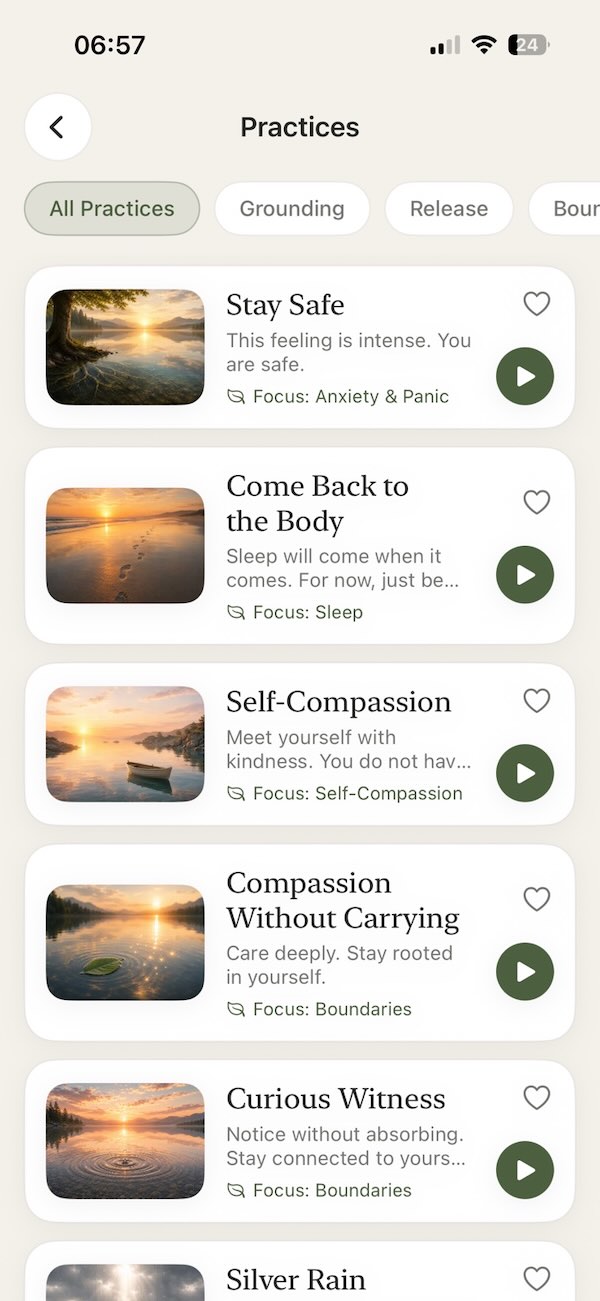
When your system is braced against every sound, it needs a soft, safe signal to settle toward. Silver Rain is a gentle practice for exactly that — a calming, soothing wind-down that gives an alert nervous system something quiet and steady to rest against, helping the guard lower so sleep has room to arrive even when the world outside isn't perfectly quiet.

Try the practice
Silver Rain
Let everything be exactly as it is.
Ready for more support?
Continue your journey in Aira
Access the full library of guided practices, tools, and resources anytime, anywhere.
- 10+Guided Practices
- AnxietyRelief Tools
- SleepSupport
- TrackYour Progress
- OfflineAccess
Available on iPhone and iPad