Sleep and Nervous System Regulation: How Anxiety, Stress, and Sleep Affect Each Other
How anxiety, stress, and sleep all run through the nervous system, why poor sleep and anxiety feed each other, and why safety — not effort — restores rest.

Sleep and anxiety are often treated as separate problems. One is about rest. The other is about worry. One happens at night. The other happens during the day. But in reality, they are deeply connected, and the nervous system sits at the center of both. When the nervous system feels safe, sleep becomes easier. When the nervous system feels overwhelmed, sleep often becomes more difficult. And when sleep suffers, the nervous system can become even more sensitive.
This is why anxiety and sleep often influence each other in powerful ways. Understanding this relationship can help explain experiences that many people find confusing — why anxiety keeps them awake, why stress affects sleep, why poor sleep makes anxiety feel worse, and why recovery often requires supporting the nervous system rather than simply forcing more sleep.
The nervous system's primary job
The nervous system has one essential responsibility: to help keep you safe. Throughout the day, it constantly scans for information — physical sensations, emotions, stress, social interactions, environmental changes. Most of this happens automatically. You do not consciously decide whether something feels safe; your nervous system is already making those assessments. When it detects safety, you may feel calm, connected, present, and relaxed. When it detects danger, you may feel anxious, tense, restless, and hypervigilant. Sleep depends heavily on which state the nervous system is experiencing.
Why anxiety affects sleep
One of the most common questions people ask is "why does anxiety affect sleep so much?" The answer is surprisingly simple. Sleep requires letting go. Anxiety requires staying alert. These two states pull in opposite directions. When anxiety is present, the nervous system often behaves as though it still needs to monitor, prepare, and protect. The brain continues asking what if something goes wrong? what have I forgotten? what should I do tomorrow? Even if your body feels tired, your nervous system may still feel responsible for keeping watch. This is why anxiety keeps many people awake — the body wants sleep, but the nervous system still wants vigilance.
Stress and sleep
Stress and sleep have a powerful relationship. Short periods of stress are normal — the nervous system is designed to handle challenges. But when stress becomes chronic, recovery becomes more difficult. The body remains activated. Muscles stay tense. Thoughts become busier. The nervous system spends less time feeling truly settled. As a result, sleep often becomes lighter, shorter, or more interrupted. Many people notice difficulty falling asleep, waking during the night, waking up anxious, restless sleep, and feeling tired despite sleeping. These are common signs that the nervous system may be carrying more stress than it can comfortably process.
Sleep and emotional regulation
Sleep is not simply physical recovery — it is also emotional recovery. During healthy sleep, the brain processes experiences from the day. Emotions are integrated, memories are organized, and stress responses settle. This is one reason sleep and emotional regulation are so closely connected. After a poor night of sleep, many people notice increased anxiety, irritability, emotional sensitivity, difficulty concentrating, and feeling overwhelmed. The nervous system becomes less flexible, and things that normally feel manageable may suddenly feel much harder.
Nervous system dysregulation and sleep
When people hear the phrase "nervous system dysregulation," it can sound complicated. In simple terms, it means the nervous system is having difficulty finding balance. It may spend too much time in states of activation, too much time preparing for danger, too much time remaining alert. Common signs include chronic anxiety, hypervigilance, difficulty relaxing, racing thoughts, sleep difficulties, and emotional overwhelm. The problem is not that the nervous system is broken — it's that it has been working very hard for a very long time.
Why poor sleep can increase anxiety
Many people assume anxiety causes sleep problems. This is true, but the relationship works both ways: poor sleep can also increase anxiety. After inadequate sleep, the nervous system often becomes more reactive, and the brain becomes more sensitive to uncertainty, stress, emotional challenges, and physical sensations. This is why anxiety often feels stronger after a difficult night — the nervous system has fewer resources available.
Sleep recovery and anxiety
Many people approach sleep as though it must be perfect. If they sleep badly, they worry. If they wake up, they worry. If they feel tired, they worry. Unfortunately, worry itself can make recovery harder. The nervous system often responds better to support than pressure. Sleep recovery usually begins when we stop treating sleep like a performance. The goal is not perfect sleep — it's creating conditions where the nervous system can gradually settle.
Calming the nervous system before sleep
Many people focus entirely on what happens in bed, but nervous system regulation begins long before bedtime. Helpful practices include:
Gentle movement
Walking, stretching, and yoga help release accumulated stress.
Exposure to daylight
Natural light helps regulate sleep-wake rhythms.
Periods of rest
Not every moment needs to be productive. The nervous system benefits from pauses.
Reducing overstimulation
Constant input can keep the nervous system activated. Quiet moments matter.
Consistent routines
Predictability often helps the nervous system feel safer.
What the nervous system needs most
Many people believe their nervous system needs more control, more planning, more certainty, more effort. Often it needs something different: safety, recovery, connection, compassion, rest. These are not luxuries — they are biological needs. The nervous system functions best when it receives enough of them.
The fuller picture
When sleep won't come, the mind reaches for the only tool it trusts: I just need to try harder — more control, more planning, more effort, and I'll make myself sleep. It feels true because effort works for almost everything else in your life, so surely it should work here too.
But sleep is the one place effort backfires. Trying is a form of alertness — every push to force sleep is a signal to the nervous system that something still needs handling, which is the opposite of the safety sleep requires. You can't will your way into letting go; the willing is itself a kind of holding on. So the real question was never "how do I make myself sleep?" but "how do I help my system feel safe enough to rest?" — and that's a different kind of work, softer rather than harder. You don't have to earn sleep or force it. You only have to stop standing guard long enough for it to arrive on its own.
Final thoughts
Sleep and nervous system regulation are deeply connected. When the nervous system feels overwhelmed, sleep often suffers. When sleep suffers, anxiety often increases. And a cycle begins. The good news is that this cycle can move in both directions: supporting the nervous system improves sleep, improved sleep supports emotional regulation, and emotional regulation reduces anxiety. Recovery becomes possible. You do not need to force your body into rest. You do not need to earn sleep. And you do not need to fix everything tonight. Your nervous system has been working hard. It deserves support, recovery, and the chance to remember what safety feels like. One breath. One night. One gentle return to rest at a time.
Try a gentle practice
Rest becomes easier when the nervous system no longer feels the need to stay on guard. Sleep is not something you force — it is something you allow when there is enough safety, softness, and space. Soften is a gentle practice for nervous system regulation, bedtime tension, chronic stress, and difficulty unwinding at the end of the day, designed to help you soften out of doing, release what no longer needs your attention, and create the conditions for rest to emerge naturally.

Try the practice
Soften
Let's release what you are holding
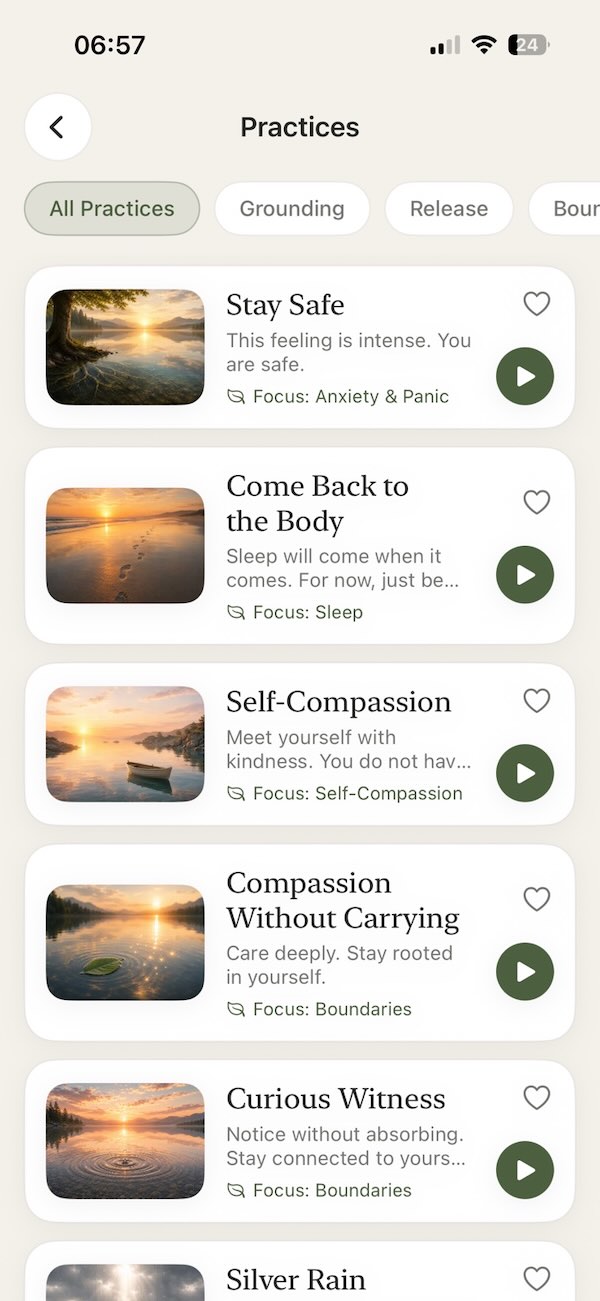
Ready for more support?
Continue your journey in Aira
Access the full library of guided practices, tools, and resources anytime, anywhere.
- 10+Guided Practices
- AnxietyRelief Tools
- SleepSupport
- TrackYour Progress
- OfflineAccess
Available on iPhone and iPad