Overthinking in Relationships: Why You Read Into Everything (and How to Stop)
Why you overthink texts, silences, and what someone 'really' meant, how reassurance and reading into things keep the loop going, and how to ease it.

They take an hour longer than usual to reply, and your mind is already off — are they upset with me? did I say something wrong? are they losing interest? A short text, a slightly flat tone, a pause in the conversation, and you're analyzing it from every angle. If your closest relationships are also where your mind spins hardest, you're far from alone. Overthinking in relationships is one of the most common and most exhausting forms of overthinking there is.
This is a guide to relationship overthinking — why the people we care about most trigger the most analysis, what keeps the loop going, and how to loosen its grip. The thinking usually isn't about a lack of love or trust; it's about a mind trying to manufacture certainty in the one area of life where certainty is never fully available.
What overthinking in relationships looks like
Relationship overthinking is the habit of over-analyzing interactions, words, tone, and silences with the people you're close to. It can look like replaying a conversation to decode what someone really meant, reading too much into a short text or a delayed reply, scanning for signs that something is wrong, rehearsing what to say next, or needing repeated reassurance that you're okay with them. The content varies, but the engine is the same: the mind treating a relationship like a puzzle that has to be solved.
Why we overthink the people we care about most
It's not an accident that overthinking concentrates on close relationships. The more something matters, the more the brain wants to protect it — and the more uncertainty around it feels threatening. With a stranger, an ambiguous tone means nothing; with someone whose closeness you value, the same ambiguity feels like a problem to solve immediately. So the depth of the analysis is often a reflection of how much the relationship means, not evidence that something is wrong with it.
Overthinking texts and silences
Some of the most common relationship overthinking happens over the smallest signals. A one-word reply, a message left on read, a longer-than-usual silence, a slightly different tone — and the mind fills the gap with a story, almost always a worried one. The difficulty is that a text or a silence carries almost no context: there's no face, no voice, no body language to tell you the person is simply busy, tired, or distracted. The mind hates that blank, so it writes its own caption, and an anxious mind tends to write a frightening one. The reply that took an hour usually means nothing more than that the person was doing something else.
The reassurance trap
When relationship overthinking gets loud, the natural move is to seek reassurance — to ask are we okay? are you upset with me? and feel the relief when the answer is yes. The relief is real, but brief. Reassurance soothes the specific worry for a moment while quietly teaching the mind that it needs reassurance to feel safe, so the next doubt arrives a little sooner. This is why no amount of reassurance ever fully settles an overthinking mind: the loop isn't short on answers, it's short on tolerance for not knowing.
Reading into things
Overthinking turns interpretation into a constant activity. A neutral comment gets weighed for hidden meaning; a change in routine becomes a sign; a facial expression gets analyzed long after the moment has passed. The mind confuses possible with true — because you can imagine that someone's shorter reply means they're pulling away, it starts to feel as though they are. But an interpretation isn't information. Most of the stories overthinking writes about other people's inner states are guesses dressed up as facts.
When overthinking starts shaping the relationship
Left unchecked, relationship overthinking doesn't just stay in your head — it can start to affect the relationship itself. Constant reassurance-seeking, testing, withdrawing to protect yourself, or reacting to a story you've constructed rather than to what actually happened can create the very distance you were afraid of. This isn't a reason to judge yourself; it's a reason to be gentle, because the overthinking was trying to protect the connection even when it strained it. (Anxiety's broader effect on relationships and closeness is worth understanding in its own right, and has its own guide.)
How to ease relationship overthinking
The aim isn't to stop caring or to never notice anything — it's to stop treating every signal as a problem to decode. A few shifts help. Notice when you've slipped from observing into interpreting, and label it: this is a story I'm writing, not something I know. Resist the urge to seek reassurance for every doubt; let some questions stay open and watch them pass. Where a worry is genuinely important, a direct, honest question is usually kinder to you than days of private analysis — real information beats imagined information. And come back to the actual relationship in front of you, rather than the one your mind is rehearsing. Most of what overthinking fears never happens, and most silences mean far less than the story attached to them.
The fuller picture
Underneath the spinning is one leap: they took an hour to reply, their tone was off — something is wrong, they're pulling away. It feels true because the mind confuses possible with true: because you can imagine the shorter reply means distance, it starts to feel as though it does.
But an interpretation isn't information. A text or a silence carries almost no context — no face, no voice, no body language — and the mind hates that blank, so it writes its own caption, and an anxious mind writes a frightening one. The story feels like knowledge, but it's a guess dressed up as a fact. And notice where the analysis concentrates: on the people you care about most. That depth isn't evidence something's wrong — it's a measure of how much the relationship means to you. The reply that took an hour almost always means only that they were doing something else. You don't have to decode every signal. Most of them mean far less than the story your mind attaches to them.
Final thoughts
If you overthink your relationships, you're not broken and you're not destined to drive people away. You're a person with a sensitive, protective mind trying to navigate the one area of life that offers no guarantees. The texts, the silences, the tones — they rarely carry the weight your mind assigns them. As you practice letting questions stay open and meeting people as they are rather than as your worry imagines them, the analysis softens, and there's more room to simply enjoy being close. One conversation, one breath, one open question at a time.
Try a gentle practice
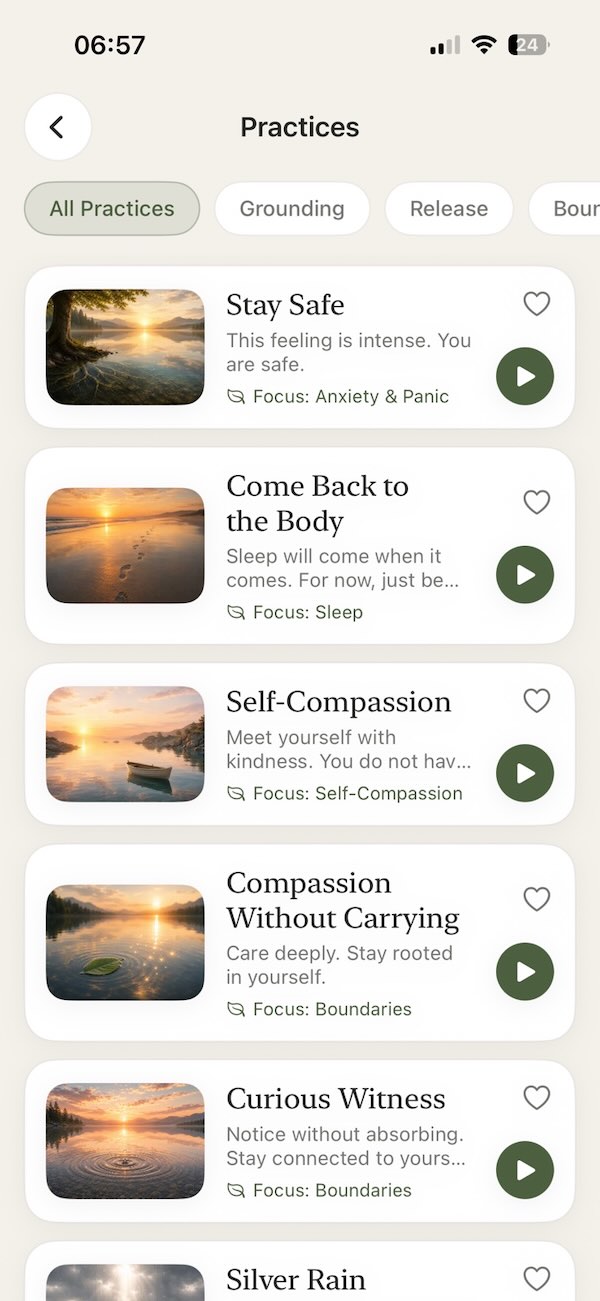
So much relationship overthinking is the mind caught up in someone else's possible reactions — what they meant, what they feel, whether you're okay with them. Curious Witness is a gentle practice for exactly that: a way to let go of other people's reactions, come back to yourself, and let a relationship simply be what it is without needing to decode every part of it.

Try the practice
Curious Witness
Notice without needing to change.
Ready for more support?
Continue your journey in Aira
Access the full library of guided practices, tools, and resources anytime, anywhere.
- 10+Guided Practices
- AnxietyRelief Tools
- SleepSupport
- TrackYour Progress
- OfflineAccess
Available on iPhone and iPad