Why Do I Keep Replaying Conversations in My Head?
Why your mind replays conversations long after they end, why social anxiety intensifies the loop, and how to let an interaction be over without solving it.

Have you ever left a conversation feeling fine, only to replay it repeatedly hours later? Maybe you keep thinking: "Why did I say that? Did that sound weird? What if they misunderstood me? I should have said something different."
For many people, conversations don't end when the conversation ends — the mind keeps revisiting them long afterward. This experience is extremely common, especially among people who struggle with anxiety, perfectionism, or social anxiety.
What is conversation rumination?
Conversation rumination is the habit of mentally replaying social interactions after they happen. The mind reviews what was said, what wasn't said, facial expressions, tone of voice, awkward moments, possible mistakes, and how other people might have interpreted the interaction. The replay often feels important — it feels like the brain is trying to learn something — but in reality it often becomes an endless loop.
Why do I replay conversations?
Most people replay conversations for one simple reason: the brain is searching for certainty. Social interactions contain uncertainty — you can't fully know what someone thinks of you, how they interpreted your words, whether you made a mistake, or what they felt afterward. For an anxious mind, uncertainty feels uncomfortable, so the brain tries to solve it by reviewing the conversation again and again.
Why it happens more with social anxiety
People with social anxiety often place enormous importance on social performance. After an interaction, the brain becomes a critic, asking: did I sound stupid? did I talk too much? did I offend someone? did I seem awkward? did they notice I was nervous? The conversation becomes evidence that must be analyzed — but no amount of analysis creates certainty.
Replaying embarrassing conversations
Embarrassment is one of the strongest triggers for mental replay. Even small moments can become stuck: forgetting someone's name, saying something awkward, misunderstanding a joke, interrupting someone, feeling socially uncomfortable. The brain treats the moment as important and flags it for repeated review — and unfortunately, the replay often makes the embarrassment feel bigger than it actually was.
The truth about what other people notice
One reason conversation replay becomes so exhausting is that we assume other people are thinking about us as much as we are. Most of the time, they're not. Just as you're focused on your own thoughts, concerns, and insecurities, other people are usually focused on theirs. Research consistently shows that people dramatically overestimate how much others notice their mistakes. What feels unforgettable to you may barely register for someone else.
Why replaying conversations never feels finished
The brain keeps replaying because it believes the next review might finally provide certainty. But social situations rarely offer perfect certainty. Questions such as "did they like me?" or "did I sound weird?" often can't be answered completely, so the mind keeps searching for an answer that doesn't exist, and the replay continues.
How to stop replaying conversations
The goal isn't to force the thoughts away. The goal is to stop treating them as problems that must be solved.
Notice the replay
When you catch yourself reviewing a conversation, gently name it: "I'm replaying." Not "something is wrong" — just "I'm replaying."
Allow uncertainty
You may never know exactly what another person thought, and that's normal. Most healthy relationships survive uncertainty.
Stop looking for the perfect conversation
No conversation is perfect. No social interaction is flawless. Humans are messy, and connection doesn't require perfection.
Shift from analyzing to observing
Instead of diving deeper into the content of the thought, notice the process itself. Observe the replay. Observe the urge to solve. Observe the need for certainty. The moment you step back, the loop begins to lose its power.
The fuller picture
The replay runs on one promise: if I go over it enough times, I'll finally work out how it really landed — whether I embarrassed myself, what they thought of me. It feels true because reviewing feels like learning, as if one more pass will deliver the verdict.
But look at what it's chasing. Did they like me? Did I sound weird? are questions with no available answer — you can't see inside someone else's head — so the mind keeps searching for a certainty that was never on offer, and the loop can't close. And the replay doesn't just fail to help; it distorts. Going over an awkward moment makes it loom larger than it did in the room. Here's the part the loop forgets: other people barely noticed. They were as wrapped up in their own thoughts as you are in yours, and people consistently, dramatically overestimate how much others catch their stumbles. What felt unforgettable to you likely didn't register for them. You don't have to reach a verdict to put it down. You only have to let the conversation be over — unsolved, and fine.
The bottom line
Replaying conversations is usually not a sign that something went wrong. It's often a sign that your mind is trying very hard to protect you from social rejection, embarrassment, or uncertainty. The problem is that endless reviewing rarely provides the reassurance you're seeking. Sometimes the most helpful step isn't finding the perfect answer — it's learning to let the conversation be over.
Try a gentle practice
When your mind keeps replaying what was said, what should have been said, or what someone might have thought, it can feel impossible to move on. The conversation may be over, but the replay continues. Observe is a gentle practice for conversation rumination, social overthinking, and post-conversation anxiety, designed to help you step out of endless analysis, notice thoughts without getting pulled into them, and create space between yourself and the stories your mind keeps repeating.

Try the practice
Observe
Let's step back and see more clearly
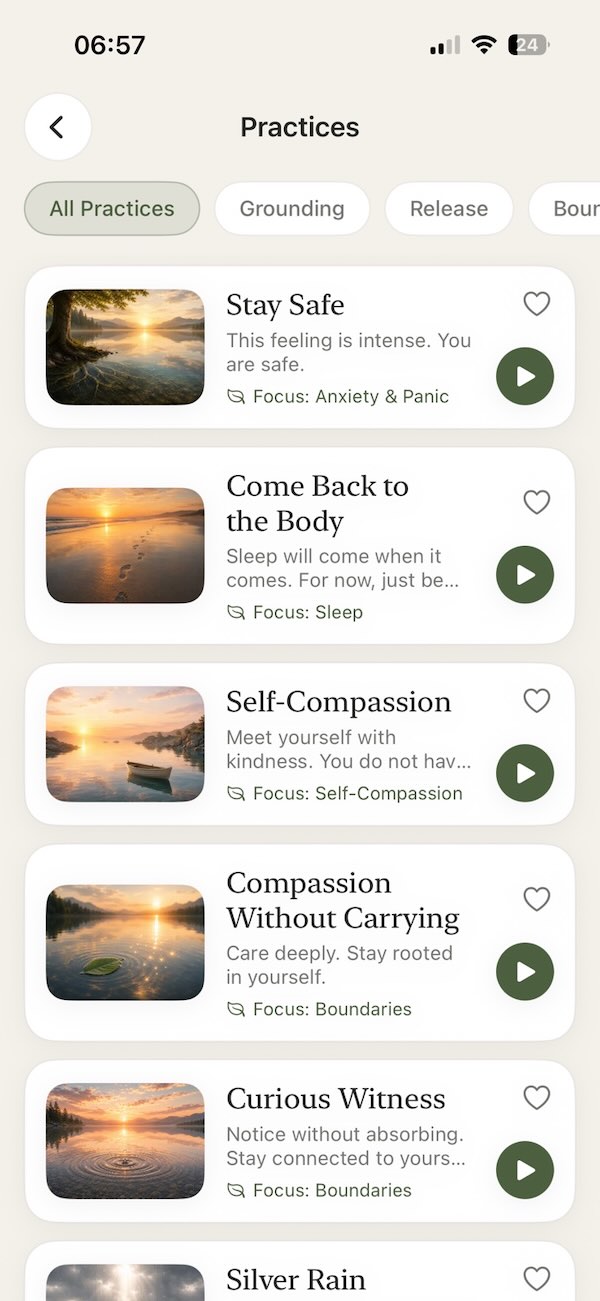
Ready for more support?
Continue your journey in Aira
Access the full library of guided practices, tools, and resources anytime, anywhere.
- 10+Guided Practices
- AnxietyRelief Tools
- SleepSupport
- TrackYour Progress
- OfflineAccess
Available on iPhone and iPad