Panic Attack Recovery: What Happens After a Panic Attack?
The part of panic no one warns you about: the exhausting, anxious aftermath. Why it happens, how long it lasts, and what gently helps your nervous system recover.

For many people, the most surprising part of a panic attack isn't the panic itself — it's what happens afterward. The racing heart settles, the intense fear fades, the attack is over. And yet something still feels different. You may feel exhausted, shaken, emotionally raw, hyperaware of every sensation in your body. You may even wonder: "Am I okay?" "Will this happen again?" "How long until I feel normal?" If you're recovering from a panic attack, these questions are completely understandable — and you're not alone.
What happens after a panic attack?
Most people expect panic to end the moment the symptoms stop. In reality, recovery often continues long after the attack itself. A panic attack places significant demands on the nervous system — intense adrenaline release, increased heart rate, rapid breathing, muscle tension, heightened alertness, emotional distress. Even when the immediate panic passes, the nervous system may still need time to settle. This period is often called the aftermath.
The panic attack aftermath
The aftermath can feel confusing. Many people expect relief but instead experience fatigue, shakiness, emotional sensitivity, brain fog, muscle tension, feeling "off," difficulty concentrating, or lingering anxiety. This doesn't mean something is wrong — it often means your nervous system is recovering. Just as the body needs time to recover after intense physical exertion, it often needs time to recover after intense nervous system activation.
The "panic attack hangover"
Many people use the phrase panic attack hangover to describe the hours or days following an attack: exhaustion, feeling drained, low energy, increased emotional sensitivity, feeling fragile, difficulty focusing, lingering tension. It's not a medical diagnosis, but it accurately describes what many people experience. Your system has been through something intense, and recovery takes energy.
How long does recovery take?
The answer varies. Some people feel better within hours; others need several days before their nervous system feels fully settled. Recovery time depends on stress levels, sleep quality, overall anxiety, nervous system sensitivity, and how frightening the experience felt. There's no perfect timeline. Recovery is not a race — your nervous system will settle at its own pace.
Why do I still feel anxious afterward?
This is one of the most common experiences after panic: the attack ends, but anxiety remains. Often this happens because the mind begins monitoring for another attack — checking your heartbeat, paying close attention to breathing, scanning for symptoms, worrying about panic returning. This response is understandable; the nervous system is trying to protect you. Unfortunately, constant monitoring can keep anxiety active. Recovery often begins when the nervous system slowly learns that the danger has passed.
Fear of the next panic attack
Many people find that the first panic attack is frightening, but the fear of a second one can be even more difficult. You may start avoiding certain places, situations, activities, or physical sensations — not because they're dangerous, but because they remind you of panic. This is a very common stage of recovery. The goal isn't to force yourself into situations before you're ready; it's to rebuild trust in yourself and your nervous system, one step at a time.
Healing from panic attacks
Healing is rarely about eliminating every anxious feeling. It's usually about changing your relationship with panic. At first, panic may feel like an enemy — something dangerous that must never happen again. Over time, many people come to understand something important: panic is frightening, but it isn't harmful; the sensations are intense, but they're temporary. This shift often becomes a turning point in recovery.
What helps during recovery?
Recovery often begins with supporting the nervous system rather than fighting it.
Rest
Your body may need more recovery than usual. Allow yourself time to slow down.
Gentle movement
Walking, stretching, or light movement can help the nervous system complete its stress response.
Consistent sleep
Sleep is one of the most powerful forms of nervous system regulation.
Grounding practices
Bringing attention back to the present moment can reduce fear about future attacks.
Self-compassion
Many people criticize themselves after panic. Try speaking to yourself as you would to a close friend. Your nervous system has been through a lot, and it deserves support.
Panic disorder recovery
Some people experience a single panic attack; others experience recurring panic or panic disorder. If panic has become a recurring part of your life, recovery is still possible. Many people recover through therapy, cognitive behavioral therapy (CBT), nervous system regulation skills, gradual exposure, mindfulness, and breathing exercises. Recovery doesn't always mean never feeling panic again — it often means no longer living in fear of panic.
Signs that recovery is happening
Panic recovery is often quieter than people expect. You may notice less fear of body sensations, fewer panic-related thoughts, faster recovery after anxious moments, more confidence in yourself, greater ability to stay present, and less avoidance. These changes may seem small, but they're signs that healing is happening.
A gentle reminder
If you're recovering from a panic attack right now, remember: you don't need to force yourself to feel okay, you don't need to rush the process, and you don't need to prove your strength. Your nervous system has been working very hard. Recovery isn't weakness — it's part of healing.
Final thoughts
A panic attack can leave you feeling shaken long after the symptoms fade. The aftermath can be confusing, the exhaustion surprising, the fear lingering. But none of this means you're broken — more often, it means your nervous system is recovering from an intense experience. Give yourself permission to rest. Give yourself permission to heal. And remember: the way you feel today is not necessarily the way you'll feel forever. Many people recover from panic. Many people heal. Many people learn to trust themselves again. One breath. One day. One gentle step at a time.
Try a gentle practice
A panic attack can leave behind more than physical exhaustion — it can leave fear, self-doubt, and the feeling that something is wrong with you. What if, instead of pushing yourself to recover faster, you offered yourself a little kindness? Self-Compassion is a gentle guided practice for the moments after panic, helping you meet yourself with understanding, soften self-criticism, and reconnect with a sense of safety and care.

Try the practice
Self-Compassion
Offer yourself the kindness you need.
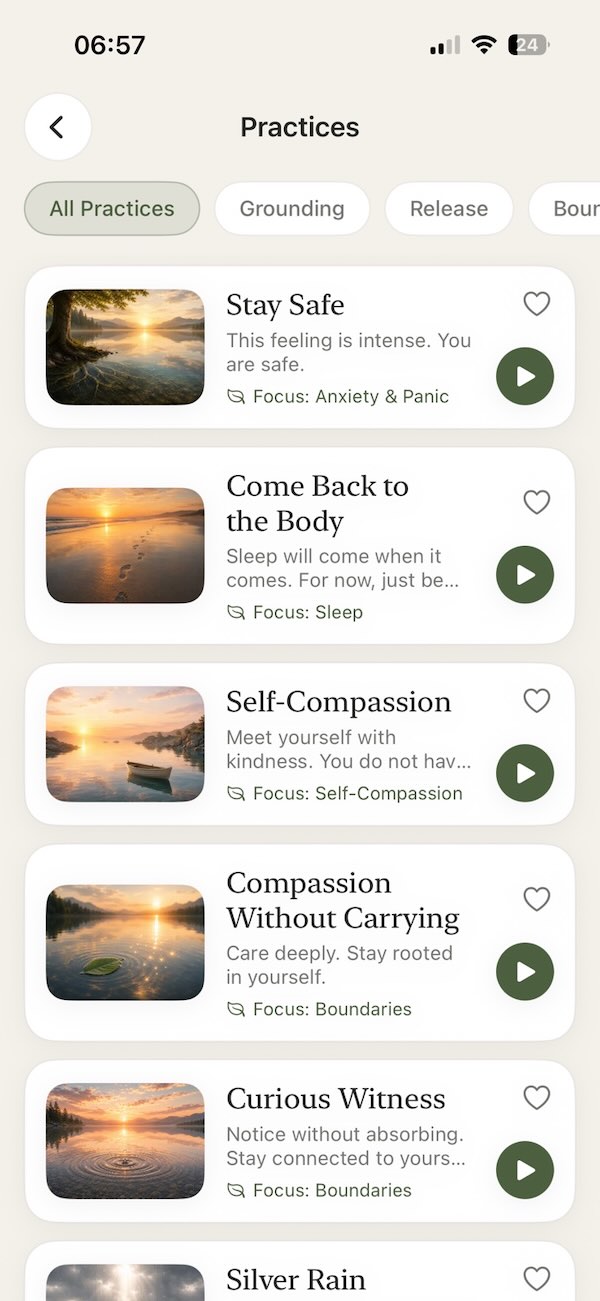
Ready for more support?
Continue your journey in Aira
Access the full library of guided practices, tools, and resources anytime, anywhere.
- 10+Guided Practices
- AnxietyRelief Tools
- SleepSupport
- TrackYour Progress
- OfflineAccess
Available on iPhone and iPad