My First Panic Attack: Understanding What Happened and What Comes Next
If you've just had your first panic attack: what was happening in your body, why it can feel like it came from nowhere, whether it will happen again, and gentle steps to take afterward.

If you've recently had your first panic attack, you may still be trying to make sense of what happened. Many people describe it as one of the most frightening experiences of their lives. One moment everything feels normal; the next, your heart is racing, your chest feels tight, your breathing changes, and your body feels out of control. A terrifying thought may appear: "Something is seriously wrong."
If this was your first time, know this: you are not alone, and what happened is far more common than many people realize.
What does a first panic attack feel like?
A first panic attack often feels completely unexpected. You may have been driving, working, shopping, relaxing at home, falling asleep, or spending time with friends — and then, suddenly, intense symptoms appear. Many people experiencing panic for the first time believe they are having a heart attack, losing control, fainting, going crazy, or having a medical emergency. That reaction makes sense; the physical sensations can feel incredibly intense.
Common first panic attack symptoms
Although everyone's experience differs, common symptoms include:
- racing heart
- chest tightness
- shortness of breath
- dizziness
- shaking
- sweating
- nausea
- tingling sensations
- feeling detached from reality
- overwhelming fear
- fear of dying
- fear of losing control
The symptoms are real. The sensations are real. The fear is real. But a panic attack is often the result of an activated nervous system rather than immediate danger.
What happens during a panic attack?
The body's survival system becomes highly activated and behaves as though danger is present. Stress hormones are released, the heart beats faster, breathing changes, muscles tense, and attention narrows as the body prepares to protect you. This is the fight-or-flight response. The challenge is that the alarm activates even when no physical threat exists — your body is responding to a false alarm.
Why did I have a panic attack?
This is usually the first question people ask. Sometimes there's an obvious trigger — stress, exhaustion, conflict, major life changes, health worries, emotional overwhelm. Other times it feels completely random, and many people can't identify a specific cause. That can be confusing, but panic attacks rarely appear from nowhere. Often the nervous system has been carrying more pressure than it can comfortably manage. The attack may feel sudden; the buildup leading to it often is not.
Unexpected panic attacks
One of the most unsettling experiences is panic that arrives when "nothing bad was happening" — when you were actually feeling okay. The nervous system doesn't only respond to the present moment; it also responds to accumulated stress, unresolved emotions, chronic anxiety, lack of sleep, and nervous system overload. Sometimes the body reaches a point where it can no longer carry the pressure quietly, and the alarm finally sounds.
What happens after the first one?
Many people assume the panic attack itself is the hardest part, but sometimes the aftermath is equally difficult. You may experience fear of another attack, hyperawareness of body sensations, worry about your health, increased anxiety, loss of confidence, or avoidance of certain situations. This is very common — after a frightening experience, the nervous system becomes more alert and starts scanning for signs that panic might return.
Am I going crazy?
This is one of the most common fears after a first panic attack. The answer is no. Panic can create intense sensations and frightening thoughts, but it is not a sign that you're losing your mind — it's a sign that your nervous system became highly activated. Many people who experience panic fear they're the only one; in reality, millions of people have had the exact same fear.
Will it happen again?
Possibly. But having one panic attack doesn't automatically mean you'll develop panic disorder. Many people experience one or several attacks during particularly stressful periods and never develop chronic panic. What matters most is how you respond afterward — understanding what happened often reduces fear, and reducing fear helps the nervous system feel safer.
What to do after a first panic attack
Try to focus on support rather than self-criticism. Helpful steps include getting adequate sleep, reducing unnecessary stress, practicing breathing exercises, learning about panic attacks, talking with someone you trust, and seeking professional support if needed. Most importantly, don't blame yourself. Panic attacks aren't evidence that you're weak or broken — they're often evidence that your nervous system has been carrying a lot.
The fuller picture
After a first attack, one conclusion tends to settle in: something is seriously wrong with me — my body just betrayed me out of nowhere, and nothing feels safe now. It feels true because it was so sudden and so physical: if your heart can race and your chest can seize with no warning, it seems obvious the fault must be in you, and that your body can't be trusted anymore.
But what happened wasn't your body malfunctioning or turning on you — it was your survival system doing exactly what it's built to do, just at the wrong moment. The fight-or-flight response fired a false alarm; that's a system working too well, not a body breaking down. And "out of nowhere" is usually a misread: the nervous system responds to accumulated stress, tiredness, and unresolved tension, not only to the present moment, so the attack can feel sudden even when the pressure behind it built for weeks. One attack doesn't define you, and it doesn't mean you now 'have' panic — many people have one in a hard stretch and never another. So the more useful question isn't "what's wrong with me?" but "what has my nervous system been carrying lately?" — that one invites care instead of alarm. And notice the quietest fact of all: whatever it felt like in the moment, you survived it. You're here, reading this.
Final thoughts
A first panic attack can feel frightening, confusing, and overwhelming. It can make you question your body, your mind, your sense of safety. But understanding what happened can begin to reduce that fear. The sensations were real, the experience was real — and you survived it. Many people find that the more they understand panic, the less power it has over them. You don't need every answer today. For this moment, one breath is enough. One moment is enough. One small step at a time.
Frequently asked questions
Did I just have a panic attack?
If you felt a sudden wave of intense fear with physical symptoms — racing heart, chest tightness, shortness of breath, dizziness, shaking — that peaked within minutes and then began to ease, it may well have been a panic attack. It can be hard to be certain the first time, so if the symptoms were severe or unusual for you, it's always reasonable to get checked by a doctor.
Why did I have a panic attack out of nowhere?
First attacks often feel like they come from nowhere, but the nervous system responds to accumulated stress, tiredness, and unresolved tension — not only the present moment. The attack can feel sudden even when the pressure behind it built up gradually over days or weeks.
Will I have another panic attack?
Maybe, but one panic attack doesn't mean you'll develop panic disorder. Many people have one or a few attacks during a stressful period and never experience chronic panic — and how you respond afterward matters most, because understanding what happened tends to lower the fear that fuels more panic.
What should I do after my first panic attack?
Be gentle with yourself: prioritise sleep, ease unnecessary stress, try slow breathing, and talk to someone you trust. Avoid self-blame — a panic attack isn't a sign of weakness, but a sign your nervous system has been carrying a lot. If attacks recur or start affecting daily life, consider speaking with a doctor or therapist.
Does a panic attack mean something is medically wrong?
Usually not — the frightening sensations come from the body's alarm response, not from a dangerous medical event. That said, because panic can mimic other conditions, a one-time check with a doctor for new or unexplained symptoms can rule things out and bring peace of mind.
Try a gentle practice
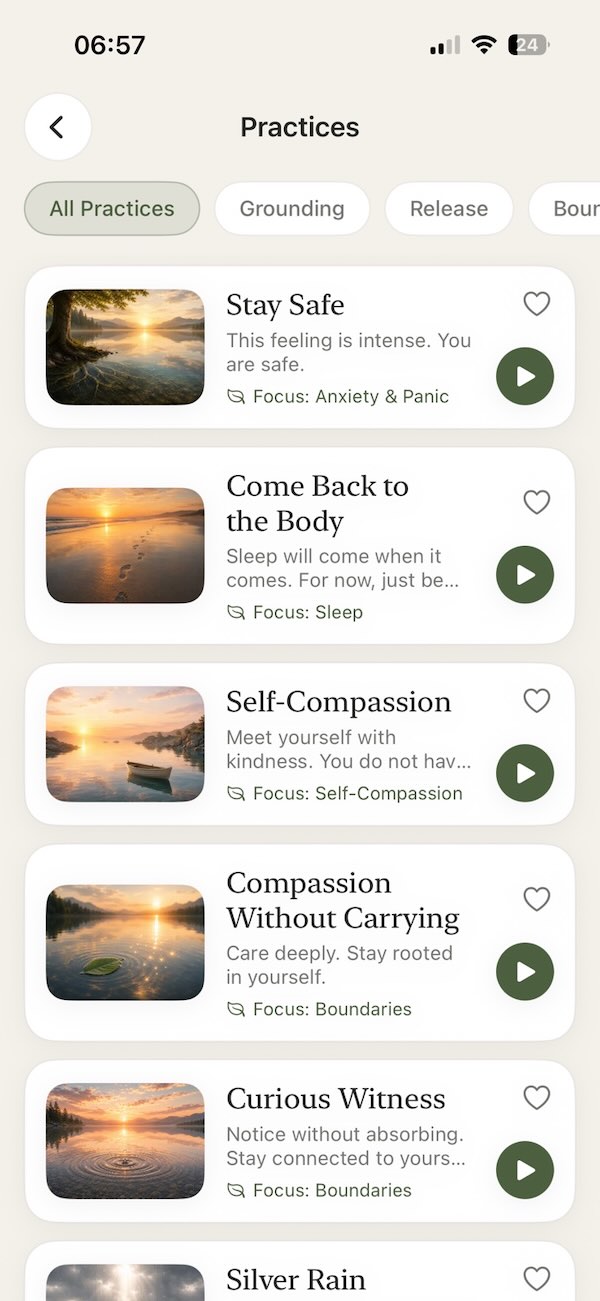
If your first panic attack has left you feeling shaken or uncertain, start with something gentle. Stay Safe is a calming guided practice designed to help settle the nervous system, ease fear, and create a sense of safety after panic — a place to begin reconnecting with yourself.

Try the practice
Stay Safe
Find solid ground when panic feels overwhelming.
Ready for more support?
Continue your journey in Aira
Access the full library of guided practices, tools, and resources anytime, anywhere.
- 10+Guided Practices
- AnxietyRelief Tools
- SleepSupport
- TrackYour Progress
- OfflineAccess
Available on iPhone and iPad