Panic Attacks: What They Are and Why They Happen
The bigger-picture view of panic attacks — what a panic attack actually is, why it happens, whether it's dangerous, and how to get through one.

Almost everyone has heard of panic attacks, and a great many people have had one — yet in the moment, a panic attack can feel like the most frightening thing imaginable, as though your body has turned on you or something is badly wrong. The single most useful thing to understand is this: a panic attack is a false alarm. It's your body's survival system firing at full force when there's no real danger to meet. That doesn't make the sensations any less real, but it changes what they mean.
This is the bigger-picture view of panic — what a panic attack actually is, why it happens, whether it's dangerous, and how to get through one. Each part below has a fuller guide of its own; this is the map they fit into.
What is a panic attack?
A panic attack is a sudden surge of intense fear that sets off the body's fight-or-flight response — racing heart, fast breathing, tight chest, dizziness, a flood of dread — when there's nothing dangerous to run from or fight. The alarm system that would protect you in a genuine emergency has simply switched on at the wrong moment. Everything you feel during panic is that survival response doing exactly what it's built to do; the only problem is the timing.
What panic feels like
Panic is intensely physical: a pounding heart, shortness of breath, trembling, sweating, nausea, tingling, a sense of unreality, and often a fear of dying or losing control. Because the sensations are so bodily, many people mistake a first panic attack for a medical emergency. (What panic actually feels like, symptom by symptom, has its own guide.)
Why panic attacks happen
Panic rarely comes from nowhere, even when it feels that way. It usually reflects what the nervous system has been carrying — accumulated stress, exhaustion, unprocessed emotion — rather than a single visible trigger. Sometimes there's an obvious cause; often the reason is real but hidden. (Why panic happens, and what triggers it, has its own fuller guide.)
Are panic attacks dangerous?
For the vast majority of people, panic attacks are not physically dangerous — they feel life-threatening, but the response is self-limiting and always passes. Because some panic sensations overlap with genuine medical events, it's wise to get new or unusual symptoms checked, so you can meet panic without lingering doubt. (Whether panic is dangerous — and what it can and can't do — has its own guide.)
When panic keeps coming back
For some people, panic happens once and fades. For others it recurs, and a new fear takes hold: the fear of the next attack. That fear keeps the nervous system on alert and can quietly drive more panic — the fear-of-fear cycle at the heart of recurring panic and panic disorder. (Why panic keeps coming back, the fear of another attack, and panic disorder each have their own guides.)
How to get through a panic attack
In the moment, the aim isn't to force panic to stop but to help your nervous system feel safe enough to settle: slow, lengthened exhales, grounding through the senses, and reminding yourself that the wave will pass. Fighting panic tends to feed it; letting it rise and fall lets it move through. (How to stop a panic attack right now, plus breathing and grounding, each have their own guides.)
The fuller picture
At the peak of an attack, one thought overrides everything: something is seriously wrong — I'm in danger, or about to lose control. It feels true because your body is producing the full physical signature of an emergency, so the mind concludes there must be an emergency to match it.
But the sensations are the alarm, not the fire. Panic is the fight-or-flight response — the same surge that would save you from real danger — firing when there's nothing to flee. That's why it feels so total and so urgent: it's built to. And it's why it always passes: the body cannot sustain that level of arousal, so panic peaks and falls on its own, every time. The racing heart is real; what it seems to warn of is not. Understanding panic as a false alarm doesn't make it pleasant, but it takes away the second fear — the fear of the fear — which is so often what turns a single wave into a lasting struggle.
Final thoughts
Panic attacks are frightening, but they are common, survivable, and not dangerous in themselves — a false alarm from a protective system doing its job at the wrong time. Understanding what panic is, why it happens, and that it always passes is often the first thing that loosens its grip. You don't have to face it alone, and if panic is recurring or shrinking your life, support helps and works. One breath, one wave, one steadying moment at a time.
Try a gentle practice
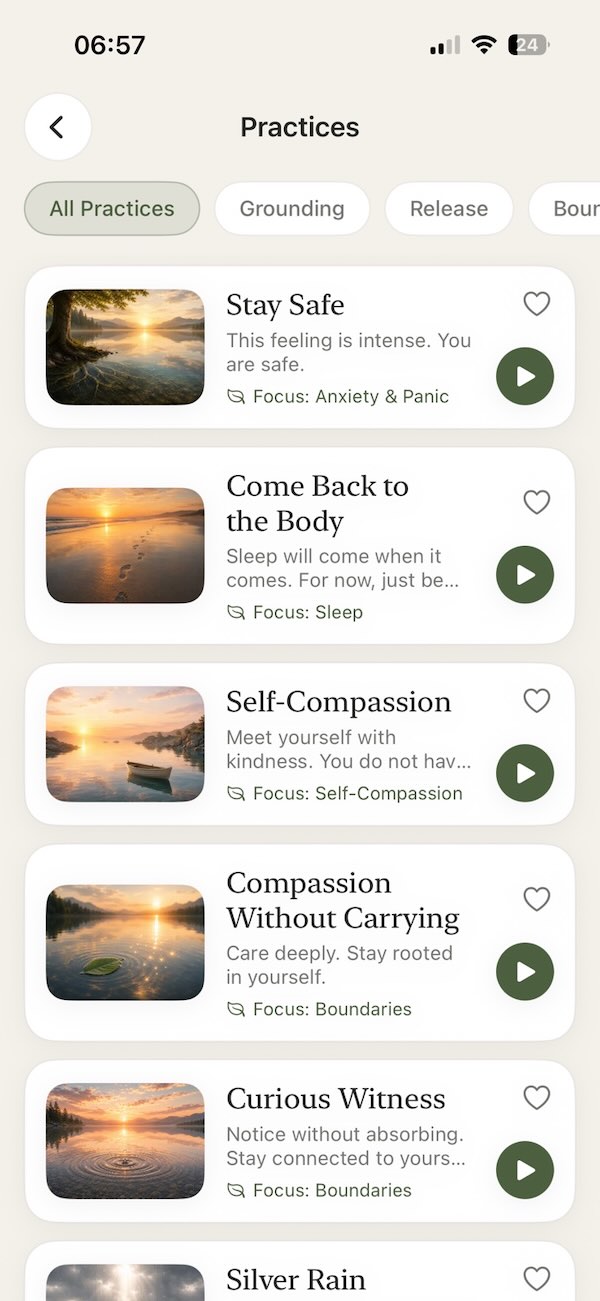
When panic feels overwhelming, you don't have to face it alone. Stay Safe is a gentle guided practice for exactly those moments — a way to slow your breath, ground through your senses, and reconnect with safety while the wave rises, peaks, and passes.

Try the practice
Stay Safe
Find solid ground when panic feels overwhelming.
Ready for more support?
Continue your journey in Aira
Access the full library of guided practices, tools, and resources anytime, anywhere.
- 10+Guided Practices
- AnxietyRelief Tools
- SleepSupport
- TrackYour Progress
- OfflineAccess
Available on iPhone and iPad