Panic Attacks at Night: Why They Happen and What to Do
Waking in the night in panic is common and frightening. Why nocturnal panic attacks happen, why they feel so intense, and how to settle your nervous system in the moment.

Few experiences feel as frightening as waking in the middle of the night in a state of panic. Your heart is racing, your body feels flooded with fear, your breathing feels different. You may sit up suddenly, confused about what's happening — and before you're fully awake, a terrifying thought may appear: "Something is wrong."
If you've experienced panic attacks at night, you are not alone. Nighttime panic attacks are surprisingly common, and although they can feel alarming, they're a recognized response of the nervous system. This article looks at nighttime panic specifically as a panic attack — what it is, why it happens, and what to do in the moment. (If your nights are more about lower-grade anxious wakefulness or worry about whether you'll sleep, that's a different experience, and the sleep-anxiety guides cover it better.)
What are nighttime panic attacks?
A nighttime panic attack — sometimes called a nocturnal panic attack — is a panic attack that occurs during sleep or shortly after waking. Unlike many daytime attacks, nighttime panic often seems to come out of nowhere. You may go to sleep feeling relatively normal, then suddenly wake with a racing heart, intense fear, chest tightness, shaking, sweating, dizziness, difficulty catching your breath, or a strong urge to escape or seek help. Because you wake up already in the middle of the experience, it can feel especially intense.
Why do panic attacks happen at night?
The answer usually involves the nervous system rather than anything dangerous happening during sleep. Even while you sleep, the nervous system stays active, continuing to process stress, emotions, memories, physical sensations, and unresolved tension. For some people, accumulated stress and anxiety can activate the body's alarm system during sleep, producing a panic attack without conscious warning.
Waking up with a panic attack
Many people describe waking up with a panic attack as one of the most confusing experiences they've had. Unlike daytime panic, there may be no obvious trigger — you wake already feeling terrified, disoriented, breathless, and physically activated. This often creates an additional layer of fear: "Was I having a nightmare? Did something happen to my heart? Am I in danger?" In most cases, what you're experiencing is a sudden activation of the nervous system rather than an actual emergency.
Panic attacks during sleep
People are often surprised that panic can happen during sleep — after all, if you're asleep, what could you be anxious about? But the nervous system doesn't only respond to conscious thoughts. It also responds to accumulated stress, emotional pressure, and patterns of activation built up over time. This is why panic while sleeping can occur even when life appears relatively calm on the surface.
How this differs from ordinary night-time anxiety
Nighttime anxiety and nighttime panic sit on a spectrum. Many people experience racing thoughts before bed, unease while trying to fall asleep, or waking in a low, anxious hum — that's anxious wakefulness rather than panic, and it's a different (and very common) experience. A nocturnal panic attack is the sharper end of the spectrum: a sudden surge of intense fear and strong physical symptoms that pulls you out of sleep. This article focuses on that panic end. If your nights are more about worry and restlessness than sudden terror, the sleep-anxiety guides will fit your experience better.
Why nighttime panic feels so intense
There are several reasons nighttime panic can feel especially frightening.
Darkness increases uncertainty
When you wake suddenly, your brain has less information about what's happening, and that uncertainty can amplify fear.
You're already disoriented
Sleep is a transition between states of consciousness; waking suddenly during panic can make symptoms feel more overwhelming.
Physical sensations feel stronger
In the quiet of the night, a racing heart or rapid breathing may feel more noticeable than during the day.
There are fewer distractions
At night, attention naturally turns inward, which can increase awareness of symptoms.
Common symptoms
Nighttime panic attack symptoms often include waking suddenly in fear, a racing heart, chest tightness, shortness of breath, sweating, shaking, dizziness, nausea, feeling detached from reality, fear of dying, and fear of losing control. They're often identical to daytime panic attacks — the difference is that they occur during sleep or immediately after waking.
What to do during a nighttime panic attack
If you wake in panic, the goal isn't to force yourself back to sleep immediately — it's to help your nervous system feel safe.
Remind yourself what's happening
Try saying: "This feels frightening, but this is panic. My nervous system is activated. This will pass."
Focus on your breathing
Try inhaling for 4 seconds and exhaling for 6. Don't force deep breathing — gentle breathing is enough.
Ground yourself in the room
Notice where you are, what you can see, what you can hear, and what you can touch. Grounding helps reconnect you with the present moment.
Let the wave pass
Panic often becomes more intense when we fight it. Instead, try allowing the sensations to be present while reminding yourself that they're temporary.
Fear of going back to sleep
Many people develop a second fear after nighttime panic: the fear of sleeping itself. You may worry, "What if it happens again?" That fear is understandable, but avoiding sleep or constantly monitoring yourself often increases nervous system activation. Recovery usually involves rebuilding trust in your body's ability to rest — one night at a time.
Can stress trigger nighttime panic?
Yes. Stress is one of the most common contributors to nocturnal panic. Periods of work pressure, relationship challenges, major life changes, grief, uncertainty, or chronic anxiety can all increase nervous system activation. Sometimes the panic appears at night because that's finally when the nervous system has space to process everything it's been carrying.
The fuller picture
Waking in panic tends to plant a particularly frightening thought: if it can hit me in my sleep, out of nowhere, then nowhere is safe — not even rest — and something must be physically wrong with me. It feels true because sleep is meant to be the one place the day can't reach you; being ambushed there, with no visible trigger, seems to prove the problem is inside your body rather than in anything happening around you.
But the nervous system doesn't switch off when you do. It keeps processing stress, emotion, and unresolved tension through the night — so 'out of nowhere' usually means the accumulated load finally found space to surface while your guard was down, not that your body malfunctioned. There's a reason night panic feels worse than daytime, too, and it isn't greater danger: you wake already mid-wave, disoriented, in the dark with little information and no distractions, so every sensation lands louder. That's amplification, not escalation. And the attack isn't your body failing while you rest — it's the same protective alarm firing when no protection is needed. Sleep wasn't invaded by something wrong with you; it was simply when your system, at last off duty, let out what it had been carrying. If nocturnal panic is frequent or distressing, it's worth speaking with a doctor or therapist, who can rule out other causes and offer personalized support.
Final thoughts
Panic attacks at night can feel frightening, confusing, and deeply unsettling — waking in fear, feeling out of control, wondering what's happening. These experiences can make the night feel unsafe. But nighttime panic attacks are a common nervous system response: intense and uncomfortable, but temporary. You don't need to solve everything in the middle of the night. For now, focus on one breath, one exhale, one moment of safety. The night will pass, and this wave will pass too.
Try a gentle practice
When panic wakes you in the night, sometimes the most soothing thing is simply to hold yourself. Butterfly Hug is a gentle guided practice for exactly those moments — crossing your arms, resting your hands on your shoulders, and tapping slowly from side to side, letting a steady, comforting rhythm and your own embrace carry you through the wave until it passes.

Try the practice
Butterfly Hug
Hold yourself through the wave.
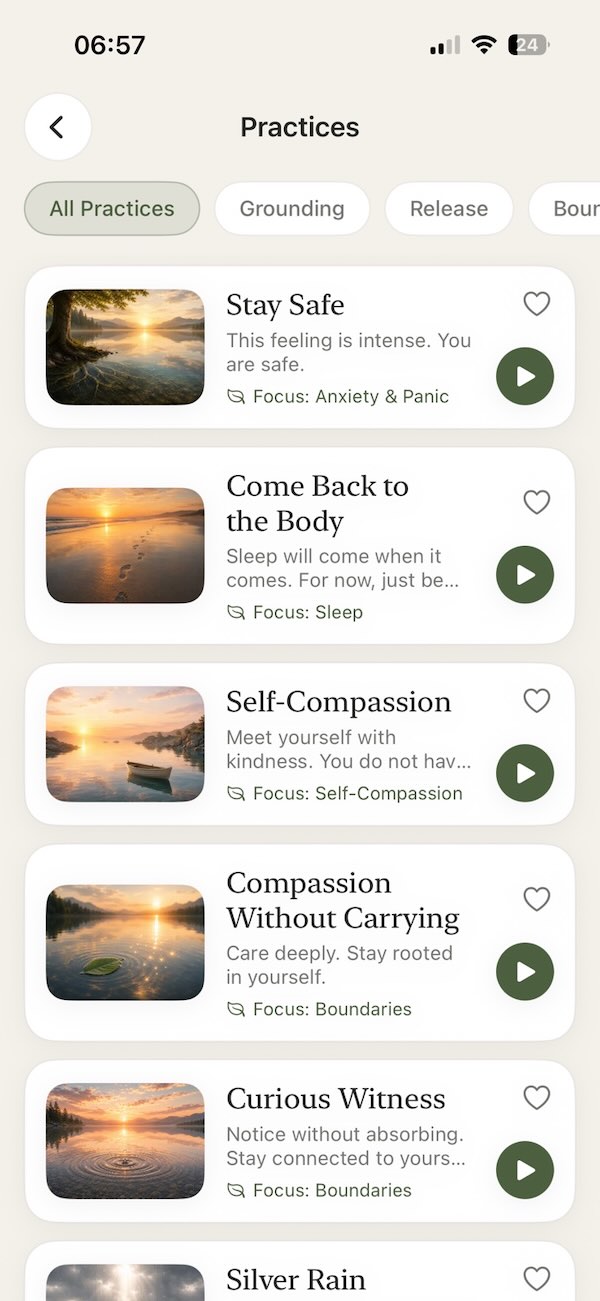
Ready for more support?
Continue your journey in Aira
Access the full library of guided practices, tools, and resources anytime, anywhere.
- 10+Guided Practices
- AnxietyRelief Tools
- SleepSupport
- TrackYour Progress
- OfflineAccess
Available on iPhone and iPad