Why Do I Wake Up in Panic in the Middle of the Night?
Why you wake suddenly in panic at night, what the racing heart and fear mean, how panic differs from a nightmare, and how to settle back into rest.

You're asleep, and then — suddenly — you're not. You wake up in panic: heart pounding, body tense, a wave of fear washing over you before you even understand what's happening. There was no nightmare you can remember, no noise, no danger. Just sudden panic in the dark.
Waking up in panic in the middle of the night is one of the most frightening experiences the body can produce, and many people quietly go through it. If you've found yourself asking "why do I wake up in panic for no reason?" or "why do I keep waking up panicking?", you're not alone — and in most cases, this is not a sign that anything is wrong with you.
Why do I wake up in panic?
One of the most confusing things about waking up in panic is that it can begin before your conscious mind has caught up. The body and the thinking brain don't always wake at the same speed. Your nervous system can trigger a full stress response — a racing heart, tense muscles, a surge of adrenaline — while your conscious awareness is still surfacing from sleep. By the time you're alert enough to ask "what's happening?", the alarm is already ringing. This is why so many people wake up panicking at night without any obvious cause: the body moved first, and the mind is left trying to catch up.
Why it feels like it happens for no reason
Many people describe it the same way: "I just wake up in panic for no reason." But panic rarely appears without any cause — it's simply that the cause isn't always a thought. Stress accumulates quietly over days and weeks. The brain continues processing emotions during sleep. And the nervous system can become activated without a single worried thought to explain it. So when you wake up feeling panic, there may genuinely be no frightening thought attached — only the physical sensations of an alarm that switched on while you slept. The absence of an obvious trigger doesn't mean the experience isn't real; it means the trigger was physical rather than mental.
Waking up with a racing heart, sweating, or shaking
The physical symptoms are often what frighten people most. You may wake up with a racing heart or a pounding chest, notice your heart racing in the middle of the night, wake up sweating, wake up shaking, or even wake up gasping for air. These sensations feel alarming, but they are the classic signature of a stress response. Adrenaline raises your heart rate and breathing to prepare you for action — the same mechanism that would help you respond to a real threat. A racing heart when waking up is usually a sign of nervous system activation rather than a sign that something is medically wrong. If you have ongoing concerns about your heart, it's always reasonable to get checked by a doctor — but for most people, these night-time symptoms are the body's alarm, not an emergency.
Is it panic, anxiety, or a nightmare?
It can be hard to know what just happened. A nightmare usually involves a remembered dream and tends to fade once you're awake — the difference between a nightmare and a panic attack is that panic often has no dream content at all. A nocturnal panic attack, or panic attack while sleeping, wakes you straight into physical fear, with a racing heart and a sense of dread, sometimes with no memory of anything beforehand. An anxiety attack during sleep, or a panic attack after waking up, may build more gradually — you wake feeling uneasy, and the fear grows from there. These experiences overlap, and you don't need to diagnose yourself in the moment. What they share is a common root: an activated nervous system.
Why do I wake up in panic at 3 a.m.?
Many people notice they wake up in panic at a similar time — often around 3 a.m., sometimes 4 a.m. A panic attack at 3 a.m. can feel especially strange because the night is so still. There are a few gentle explanations. Sleep moves through cycles, and the transitions between stages can be moments when the body is more easily roused. The middle of the night is also when awareness sharpens in the quiet, with no distractions and no daylight for context, so a body already carrying stress becomes easier to feel. Whether you wake up scared at 3 a.m., wake up anxious at 3 a.m., or wake up in panic at 4 a.m., the timing usually reflects the natural rhythm of sleep rather than anything being wrong.
Why waking up in panic feels so terrifying
Panic at night often feels far more frightening than panic during the day, and there are reasons for that. It's dark, so there are fewer grounding cues. The brain is disoriented, still catching up from sleep. There's no immediate context to explain the fear. And the body is already in full alarm before you can reassure yourself. Together, these make waking up terrified feel enormous — even though the underlying experience is the same false alarm that daytime panic produces.
What to do when you wake up panicking
Remind yourself what is happening
Try naming it: "this is panic. My nervous system is activated. These sensations are uncomfortable, but they will pass." Naming the experience helps the thinking brain catch up to the body.
Slow the exhale
Rather than forcing big, deep breaths, gently lengthen your exhale — for example, breathing in for about 4 seconds and out for about 6. A longer exhale gently signals safety to the nervous system. This can also help if you wake up gasping or feeling short of breath.
Ground yourself in the room
Bring your attention to what's physically around you: the bed beneath you, the blanket, the temperature of the air, the sounds in the room. Grounding helps reconnect you with the present moment instead of the fear.
Let the wave pass
Panic rises, peaks, and falls — it cannot stay at full intensity forever. As difficult as it is, allowing the wave to move through, rather than fighting it, often helps it pass more quickly.
What if I keep waking up in panic?
For some people, waking up in panic happens once or twice and fades. For others, it becomes a recurring pattern — and a new fear can develop: fear of going to sleep, fear of waking up panicking again. This is understandable, but it can also keep the cycle going, because anticipating panic keeps the nervous system on alert. The encouraging part is that this pattern can change. As the fear softens and the nervous system learns that these sensations are not dangerous, the cycle often loses its grip. If you regularly wake up in panic at night and it's frequent or distressing, speaking with a doctor or therapist can help rule out other causes and offer personalized support.
The fuller picture
When panic tears you out of sleep, the mind reaches one terrifying conclusion: something is really wrong — I'm in danger. It feels true because the body is in full alarm: pounding heart, dread, no thought to explain it, just raw fear in the dark.
But the fear is reading the alarm as proof of a threat, when the alarm is all there is. What woke you was a nervous system that switched on before your conscious mind caught up — the body moved first, and you surfaced into the middle of a stress response with no story attached. That's why there's no danger you can point to: there usually isn't one. The racing heart is real; what it seems to be warning of isn't. And like every surge of panic, this one is built to peak and fall — it cannot hold at full intensity, and it passes. So the truer question isn't "what's wrong with me?" but "why is my system working so hard to protect me?" The alarm is sensitive, not broken. It's firing when there's no danger — which means there's nothing here you have to survive, only a wave to let move through.
Final thoughts
If you wake up in panic in the middle of the night, it does not mean you are losing control, and it does not mean something dangerous is happening. More often, it's simply a nervous system that became activated before your conscious mind had a chance to understand what was going on. The racing heart is real, the fear is real — but the danger usually is not. With time, understanding, and gentle support, the night can begin to feel safe again. One breath. One wave. One quiet return to rest at a time.
Try a gentle practice
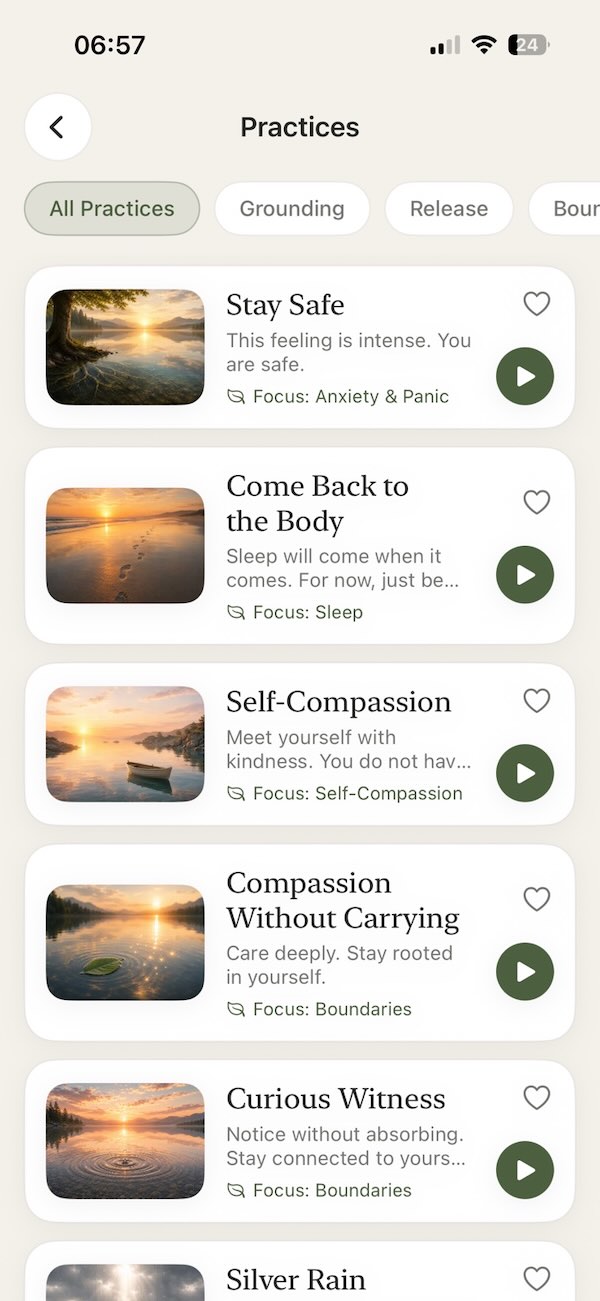
If panic wakes you during the night, you do not have to face it alone. Stay Safe is a guided grounding and breathing practice designed to help calm panic, settle the nervous system, and reconnect with a sense of safety — a steady companion for the moments when fear arrives in the dark.

Try the practice
Stay Safe
Find solid ground when panic feels overwhelming.
Ready for more support?
Continue your journey in Aira
Access the full library of guided practices, tools, and resources anytime, anywhere.
- 10+Guided Practices
- AnxietyRelief Tools
- SleepSupport
- TrackYour Progress
- OfflineAccess
Available on iPhone and iPad