Losing Yourself Around Others: How to Stay Yourself
Why you lose yourself around others, how it differs from healthy attunement, how it connects to boundaries, and how to stay a distinct person in close company.

You walk into a room and, without deciding to, you become whoever the room needs. Your opinions soften to match the people around you; your preferences quietly disappear; by the end you're not entirely sure what you think or feel anymore. Losing yourself around others — shapeshifting to fit, merging into whoever you're with — is one of the subtlest boundary problems there is, because it looks like being easy-going and feels like connection. But it slowly costs you yourself.
This is a guide to losing yourself around others: why it happens, what it really is, and how to stay a distinct person even in close company.
What does losing yourself look like?
It can be hard to spot, because it's so automatic. Common signs: your mood and opinions shift to match whoever you're with; you can't tell what you want until you know what they want; you feel like a different person in different company; after socialising you feel oddly blank or unsure who you are; and the idea of someone being displeased with you feels intolerable. None of this is fakeness or manipulation — it's a kind of self-erasure that usually happened to you long before you ever chose it.
Why do I lose myself around other people?
Disappearing into others is a learned strategy, usually from a time when being yourself felt unsafe. If, growing up, having your own feelings or needs led to conflict, criticism, or withdrawal of love, you learned to read the room and become what kept you safe. Merging with others, and abandoning yourself in the process, was once protective. The pattern made sense then — but as an adult it leaves you without a stable sense of who you are, because you've spent so long being a reflection of everyone else. This is where loss of self and self-abandonment quietly take root.
Losing yourself vs healthy attunement
Being attuned to others isn't the problem — it's a beautiful capacity. The difference is whether you stay yourself while you tune in. Healthy attunement is noticing what someone else feels while still knowing what you feel. Losing yourself is when their feelings overwrite yours, when their preferences become yours, when there's no longer a separate you in the interaction. The goal isn't to care less about others; it's to not vanish while you do.
How losing yourself connects to boundaries
This is fundamentally a boundary issue — the boundary being the line around your own self. With a weak self-boundary, other people's opinions, moods, and needs flow in and take over, and your own get displaced. Strengthening this line doesn't mean caring less or connecting less; it means staying a distinct person inside connection. The aim is two people in a room, not one person dissolving into the other. If you often wonder who am I without them?, this is the line that's gone missing.
How to stay yourself around others
You rebuild a self by staying connected to it, especially in company.
Check in with yourself first
Before deferring to what others want, pause and ask: what do I actually think or feel here? Even if you don't say it aloud, locating your own answer keeps you from disappearing.
Notice the urge to merge
Catch the moment you start shapeshifting — softening an opinion, abandoning a preference. Awareness is most of the work.
Tolerate small differences
Letting your view differ from the room, even quietly, teaches you that you can be yourself and still belong. Start small.
Spend time alone
Solitude is where you hear yourself without everyone else's signal. Knowing who you are when you're alone makes it easier to stay that person with others, and is part of finding yourself again.
The fuller picture
The shapeshifting runs on one belief: to connect and stay safe, I have to become whoever the room needs — staying myself would risk conflict, disapproval, or losing them. It feels true because it once was: if being yourself as a child led to criticism or withdrawn love, merging was genuinely protective.
But that strategy has outlived the danger. Being yourself isn't risky the way it was then, and disappearing now costs you the very thing it was meant to protect — a stable sense of who you are. Notice, too, the distinction the belief blurs. Attunement and self-erasure aren't the same: healthy attunement is sensing what someone else feels while still knowing what you feel; losing yourself is when their feelings overwrite yours until there's no separate you left in the room. You can keep the beautiful capacity to read people without vanishing into them. And connection never actually required disappearing — the richest closeness happens between two people who both stayed themselves, not one dissolving into the other. You're allowed to hold your own view, quietly or aloud, and discover you can be yourself and still belong. Belonging that costs you yourself was never the safety it promised.
Final thoughts
Losing yourself around others isn't a character flaw — it's usually a survival skill that's outlived its purpose, the strategy of someone who learned that being themselves was risky. You're allowed to take up space, to have your own opinions and preferences, and to stay fully yourself even in the presence of people you love. Connection doesn't require disappearing; the richest closeness happens between two people who both remained themselves. One what do I actually feel? at a time, you can come back to yourself.
Try a gentle practice
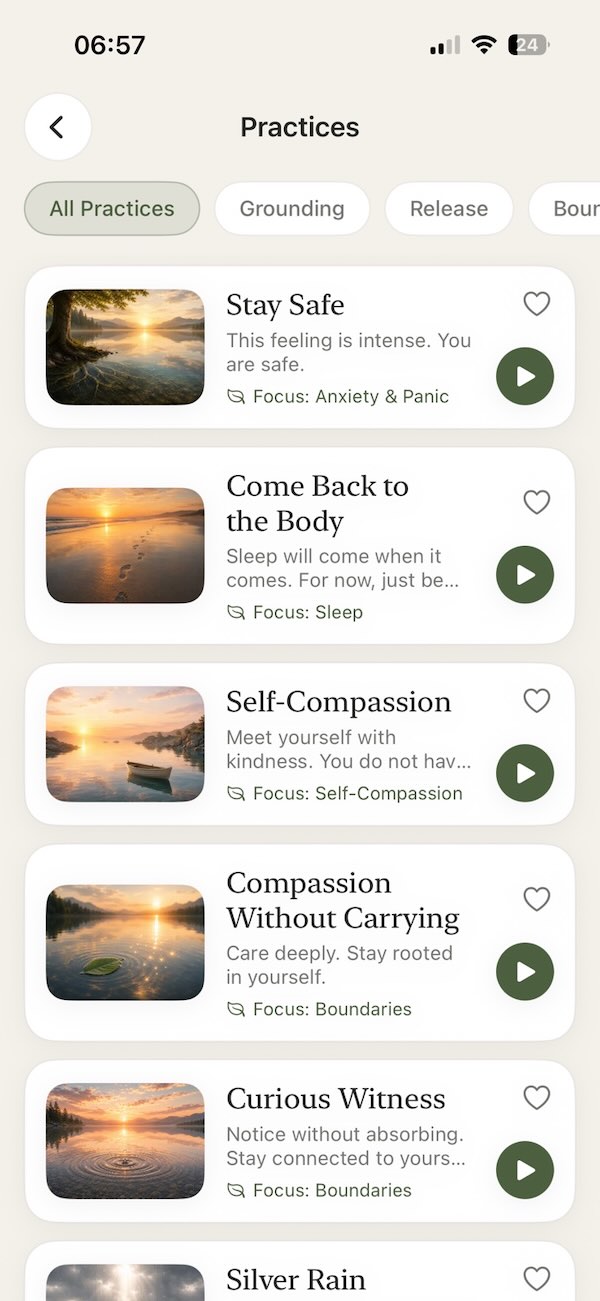
Staying yourself around others begins with staying in contact with your own inner world, even when someone else's is loud. Curious Witness is a gentle practice for exactly that — a way to notice your own feelings, thoughts, and reactions with steady interest, so you can be close to others without dissolving into them.

Try the practice
Curious Witness
Notice without needing to change.
Ready for more support?
Continue your journey in Aira
Access the full library of guided practices, tools, and resources anytime, anywhere.
- 10+Guided Practices
- AnxietyRelief Tools
- SleepSupport
- TrackYour Progress
- OfflineAccess
Available on iPhone and iPad