Racing Thoughts at Night: Why Your Mind Won't Stop and What Can Help
Why your mind speeds up the moment you lie down, how anxiety fuels nighttime overthinking, and how to step back from the stream of thoughts.

You finally get into bed. The lights are off. The day is over. Your body feels tired. But your mind seems to have other plans. One thought appears, then another, then another. Before long, you're replaying conversations from three years ago, planning tomorrow's schedule, worrying about the future, and wondering why you can't simply fall asleep.
If you've ever experienced racing thoughts at night, you're not alone. Many people find that their minds become most active at the exact moment they want to rest — and the harder they try to stop thinking, the louder their thoughts seem to become.
What are racing thoughts?
Racing thoughts are thoughts that feel rapid, repetitive, difficult to control, or impossible to turn off. They often feel like one thought leading to another, constant mental activity, overanalyzing, endless problem-solving, replaying events, or worrying about the future. Some people describe it as "my brain won't stop talking." Others say "it's like having twenty tabs open at once." Whatever form they take, racing thoughts can make rest feel frustratingly out of reach.
Why racing thoughts often happen at night
The answer often has less to do with the thoughts themselves and more to do with the environment. During the day, your attention is pulled in many directions — work, conversations, tasks, responsibilities. But at night, those distractions disappear. The mind finally has space, and what has been sitting quietly in the background becomes much easier to hear. The same thoughts that stayed manageable in daylight can suddenly feel loud the moment your head hits the pillow. (If your mind races like this much of the time and not only at bedtime, that points to a broader overthinking pattern, which has its own guide; here the focus is on the version that keeps you from sleeping.)
Anxiety and racing thoughts
Racing thoughts and anxiety are closely connected. An anxious mind is constantly trying to anticipate problems. It asks what if something goes wrong? what if I forgot something? what if tomorrow is difficult? what if I'm not prepared? The intention is protection — the brain believes that more thinking will create more safety. Unfortunately, anxiety rarely feels satisfied. Every answer creates another question. Every solution creates another possibility. And the cycle continues.
Intrusive thoughts at night
Some nighttime thoughts feel especially distressing. These are often called intrusive thoughts — unwanted thoughts that appear suddenly and often feel disturbing, strange, or upsetting. Many people become frightened by these thoughts, but intrusive thoughts are common. Having a thought does not mean you agree with it. Having a thought does not mean it will happen. And having a thought does not define who you are. The more frightened we become by intrusive thoughts, the more attention we give them — and attention often makes them feel stronger.
Why trying to stop thinking usually doesn't work
One of the most frustrating things about racing thoughts at night is that the harder you try to stop them, the more persistent they often become. Imagine someone saying "don't think about a pink elephant." What happens? Most people immediately think about a pink elephant. The same thing often happens with thoughts. The brain does not respond well to force, and trying to eliminate thoughts completely can actually increase attention toward them.
Mind racing before sleep
Many people notice that their minds race most intensely during the period just before sleep. This happens because sleep requires a shift into a state of letting go. The nervous system must move away from planning, monitoring, and problem-solving. For an anxious brain, this transition can feel uncomfortable, so the mind tries to stay busy, stay alert, and stay prepared — even when the body desperately wants rest.
What helps when you can't stop thinking at night?
Stop treating every thought as important
Not every thought deserves your attention. Some thoughts are useful; some are simply noise. Learning to notice thoughts without following them is a powerful skill.
Return attention to the present moment
Notice the feeling of the mattress, the weight of the blanket, your breathing, the sounds around you. Thoughts pull you into the future and past. The body brings you back to now.
Write thoughts down
Sometimes the mind keeps repeating thoughts because it fears you'll forget them. A simple notebook by the bed can help. Write the thought down and tell your brain "I don't need to hold this right now."
Let thoughts exist
This may sound surprising, but often the goal is not to stop thoughts — it's to stop fighting them. Thoughts can come. Thoughts can go. You do not have to chase them.
The fuller picture
Underneath the racing is a belief that feels like responsibility: I can't rest until I've thought this all through — I have to sort it out now. It feels true because the mind insists more thinking means more safety, so stopping seems careless, like leaving a door unlocked.
But night is the worst possible hour to solve anything, and the urgency is a trick. The thinking promises resolution and never delivers it — every answer breeds another question, because anxiety isn't really trying to finish, it's trying to feel certain, and certainty isn't available at 1 a.m. with no information and no daylight. Nothing on that list genuinely needs solving before morning; the mind only feels it does because the quiet let the worries grow loud. And thoughts aren't emergencies or commands — they can come and go without you acting on a single one. So the task tonight isn't to think your way to calm. It's to let the questions stay open until morning, when you'll have the resources to meet them — and they'll be a fraction of their nighttime size.
When racing thoughts become a nighttime habit
Over time, some people develop a nighttime pattern. The bed becomes associated with thinking, worrying, planning, and analyzing — instead of resting, relaxing, and sleeping. The good news is that these patterns can change. The nervous system can learn new associations. Sleep can become a place of rest again, and thoughts can lose some of their urgency.
A gentle reminder
If your mind is racing tonight, remember: you do not need to solve tomorrow before sleep. You do not need to answer every question. You do not need to finish every thought. The future can wait until morning. For now, your only job is to rest.
Final thoughts
Racing thoughts at night can make sleep feel impossible. But thoughts are not emergencies. They are not commands. And they are not always problems that need solving. Your mind may continue producing thoughts — that is okay. You do not have to follow every one of them. Tonight, let some thoughts remain unfinished. Let some questions remain unanswered. Let tomorrow be tomorrow. And gently return to what is here right now. One breath. One moment. One quiet return at a time.
Try a gentle practice
When your mind keeps racing at bedtime, you do not need to stop your thoughts or force yourself to sleep. Observe is a gentle practice for racing thoughts, mental overactivity, and a mind that won't slow down at night — a way to step back from the stream of thoughts and rest in simple awareness instead.

Try the practice
Observe
Let's step back and see more clearly
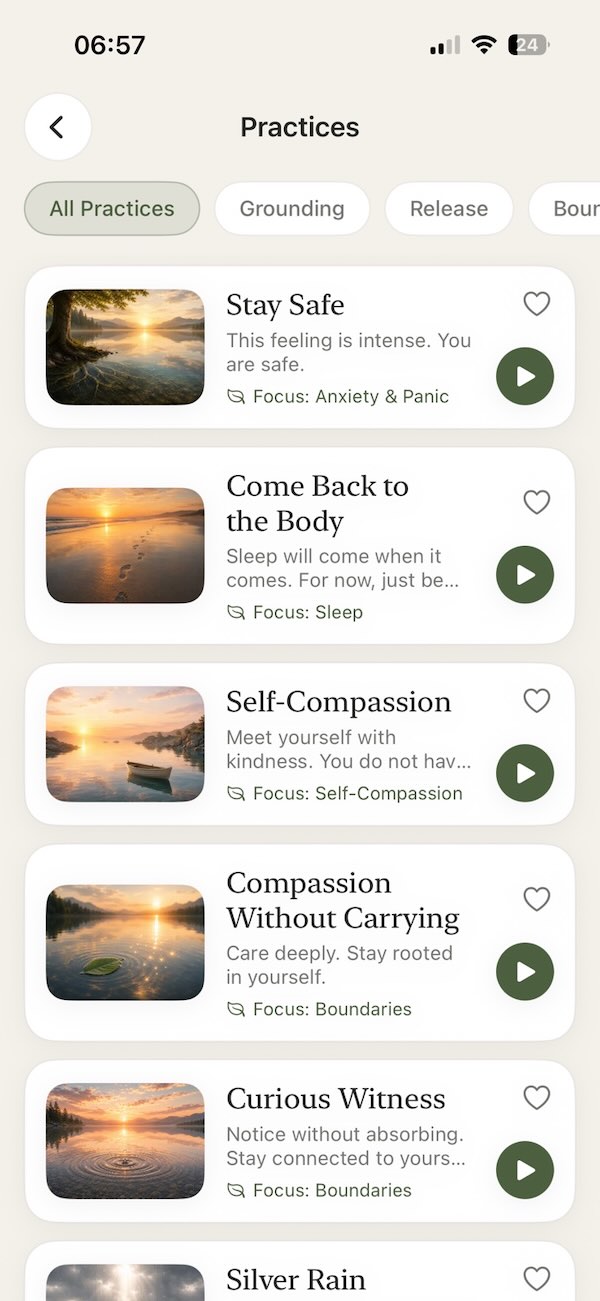
Ready for more support?
Continue your journey in Aira
Access the full library of guided practices, tools, and resources anytime, anywhere.
- 10+Guided Practices
- AnxietyRelief Tools
- SleepSupport
- TrackYour Progress
- OfflineAccess
Available on iPhone and iPad