Rebuilding Energy After Burnout: Coming Back Gently
How to rebuild your energy after burnout, why it takes time and patience, and the gentle, gradual steps that help your reserves slowly come back.

Once the worst of burnout begins to lift, a new challenge appears: your energy is still gone, and you have to rebuild it. This stage is slow and often frustrating, because the temptation is to leap back to full capacity the moment you feel slightly better — which usually triggers another crash. Rebuilding energy after burnout is a gradual, gentle process, more like convalescing than switching back on.
This is a guide to rebuilding energy after burnout: why it takes time, and how to come back without relapsing.
Why your energy doesn't just bounce back
Burnout depletes deep reserves — physical, emotional, and mental — worn down over a long time. Those don't refill overnight, any more than a body heals from a long illness in a weekend. The energy returns gradually, in fits and starts, and often more slowly than you'd like. Expecting an instant return to your old capacity sets you up for frustration and for pushing too hard too soon. Recovery runs on its own timeline, not your impatience.
The danger of doing too much too soon
The most common mistake in this stage is the 'boom and bust' cycle: you feel a bit better, immediately do too much, and crash back down. Each crash is demoralising and can set recovery back. Rebuilding energy means resisting the urge to return to full speed the moment you have a good day, and instead increasing your activity gradually, staying within your current (reduced) capacity rather than constantly testing its ceiling.
Rebuilding gently, in small doses
Energy comes back through gradual, sustainable steps. Start small and build slowly, doing a little less than you think you can rather than a little more. Pace yourself — alternate activity with rest, and stop before you're completely spent rather than after. Reintroduce restorative things in small amounts: gentle movement, time outdoors, real connection, the activities that genuinely refill you. The aim is steady, consolidated gains, not dramatic leaps followed by collapses.
Reconnecting with your body
Burnout often leaves people disconnected from their bodies — having overridden tiredness and ignored signals for so long. Part of rebuilding energy is relearning to listen: noticing when you're tired before you're depleted, when you're hungry, when you need to stop. Gentle reconnection with the body helps you pace yourself accurately, because you can feel your limits again rather than crashing through them unaware.
Be patient and kind with the process
Rebuilding energy after burnout is rarely linear — there will be good days and setbacks, and progress that's hard to see day to day. Meeting this with impatience or self-criticism (why am I not better yet?) only adds stress and slows things down. Patience and self-kindness aren't just nice; they're practical, because a calmer, less self-critical system recovers better. Trust that energy returns gradually, even when it's hard to feel the progress.
Final thoughts
Rebuilding energy after burnout takes time, and that's not a sign you're doing it wrong — it's the nature of deep depletion healing. Go gently, build slowly, resist the urge to leap back to full speed, and treat setbacks as part of the process rather than failures. Your energy will return, in its own time, if you stop demanding it return on command. One small, sustainable step, one well-paced day at a time.
Try a gentle practice
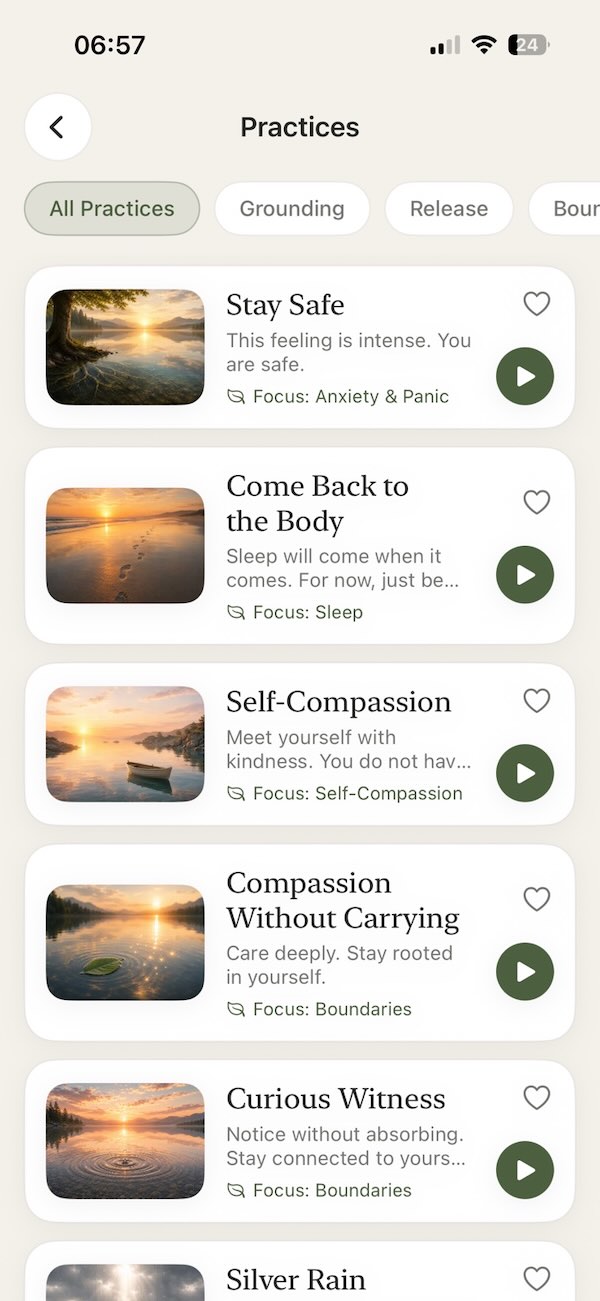
Rebuilding energy depends on being able to feel your limits again, rather than overriding them. Come Back to the Body is a gentle practice for exactly that — a way to reconnect with physical sensation, notice tiredness and need before they become depletion, and pace your recovery from a place of genuine contact with yourself.

Try the practice
Come Back to the Body
Come back from thoughts to sensation.
Ready for more support?
Continue your journey in Aira
Access the full library of guided practices, tools, and resources anytime, anywhere.
- 10+Guided Practices
- AnxietyRelief Tools
- SleepSupport
- TrackYour Progress
- OfflineAccess
Available on iPhone and iPad