Rest vs Recovery: Why Time Off Isn't Always Enough
The difference between rest and recovery, why passive downtime often isn't enough to restore you, and what truly replenishing recovery actually looks like.

You rested all weekend and still feel depleted. The reason may be that rest and recovery aren't the same thing. Rest is stopping; recovery is restoring — and while rest is part of recovery, it doesn't automatically deliver it. Understanding the difference is key to actually replenishing yourself, rather than just pausing between bouts of depletion.
This is a guide to rest versus recovery: how they differ, why time off often isn't enough, and what truly restorative recovery looks like.
Rest and recovery aren't the same
Rest is the absence of activity — stopping, pausing, doing nothing. Recovery is the active process of restoring what's been depleted: energy, capacity, motivation, wellbeing. You can rest without recovering — lying on the sofa while your mind churns, scrolling for hours and feeling no better — and you can recover through things that aren't strictly 'rest' at all. Rest creates the space; recovery is what fills it back up.
Why time off often isn't enough
This is why a weekend or even a holiday can leave you feeling unrestored. If you spend the time depleted in a different setting — still stressed, still mentally at work, still scrolling — you've paused without recovering. Passive downtime stops the immediate drain but doesn't necessarily replenish the deeper reserves, especially if what depleted them is still running in the background. Time off is necessary, but it isn't automatically restorative.
The different kinds of rest you actually need
Part of the problem is thinking of rest as one thing — usually sleep or doing nothing — when depletion comes in several forms. You can be physically rested but mentally fried, or emotionally drained but not physically tired. Real recovery means matching the restoration to what's actually depleted: quiet for an overstimulated mind, connection for loneliness, solitude for social exhaustion, movement for a body that's been still, stillness for one that's been driven. One kind of rest won't refill every kind of empty.
What restorative recovery looks like
Genuine recovery tends to share some features: it downshifts the nervous system rather than just distracting it; it replenishes rather than depletes (some 'fun' is actually draining); it's free of guilt and the background hum of the undone; and it reconnects you with meaning, ease, or the things that restore you specifically. Often it's the simple, unglamorous things — time in nature, real connection, gentle movement, genuine stillness — rather than the ways we numb out. Recovery is active replenishment, even when it looks like doing very little.
How to recover, not just rest
To recover rather than merely rest, be a little intentional. Notice what's actually depleted and choose restoration that matches it. Protect the conditions that let your system downshift — fewer demands, less input, real permission to be off. And include things that genuinely refill you, not just ones that pass the time. Even small, deliberate recovery beats large amounts of hollow downtime.
Final thoughts
If rest isn't leaving you restored, the missing piece is recovery — the active replenishment that rest makes room for but doesn't guarantee. You're allowed to rest, and you also deserve to actually recover: to match restoration to what's depleted, to downshift rather than just distract, and to refill the specific reserves that are empty. Time off matters, but it's the quality of recovery within it that brings you back. One intentional, genuinely restorative pause at a time.
Try a gentle practice
Recovery begins when the body and nervous system actually downshift, not just stop. Soften is a gentle practice for exactly that — a way to release the tension you've been holding, let your system come down from its activated state, and turn ordinary rest into something genuinely restorative.

Try the practice
Soften
Let's release what you are holding
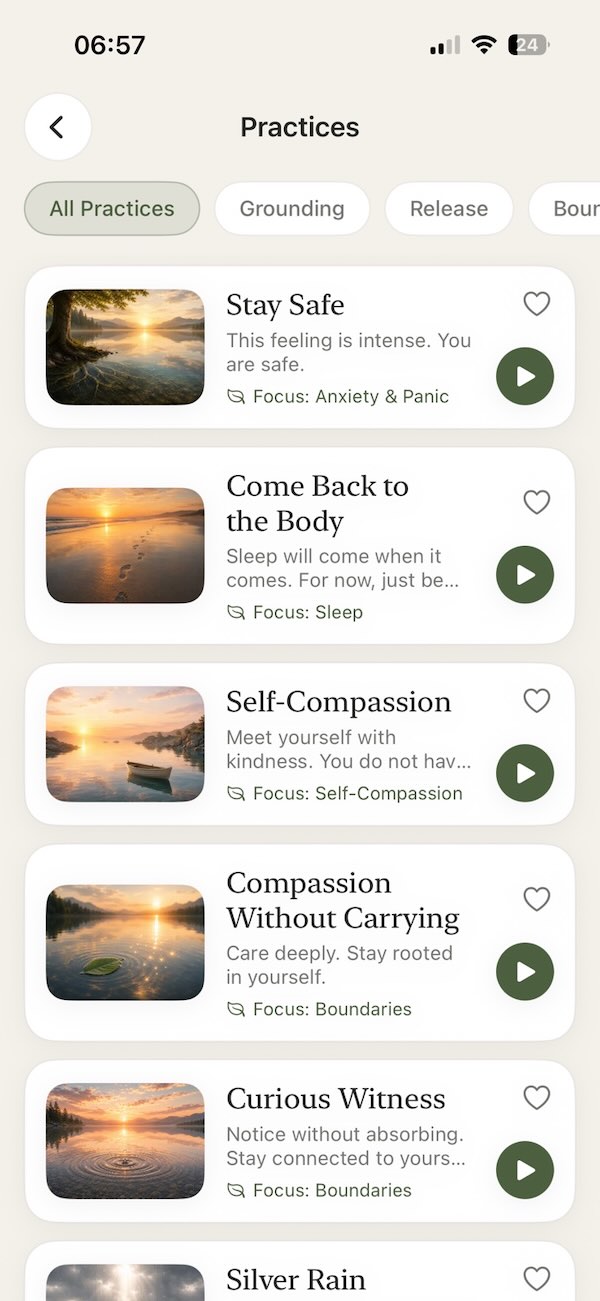
Ready for more support?
Continue your journey in Aira
Access the full library of guided practices, tools, and resources anytime, anywhere.
- 10+Guided Practices
- AnxietyRelief Tools
- SleepSupport
- TrackYour Progress
- OfflineAccess
Available on iPhone and iPad