Why Mistakes Feel So Dangerous
Why a small mistake can trigger hours of overthinking, how perfectionism and fear of criticism amplify it, and how to stop letting mistakes define you.

Most people dislike making mistakes. But for some people, mistakes feel much bigger than that. A small error can trigger hours of overthinking. A missed detail can ruin an entire day. A critical comment can feel impossible to let go of.
The mind keeps replaying what happened: "How could I have missed that? What if people think I'm incompetent? What if this causes problems? What if I should have done something differently?"
If this sounds familiar, you're not alone. Many people struggle not with mistakes themselves, but with the fear of making them — and that fear can create enormous anxiety.
Why do mistakes feel so painful?
Mistakes are a normal part of being human. Everyone makes them. Yet some people experience mistakes as deeply threatening. Why? Because the mistake becomes connected to something larger. Instead of "I made a mistake," the mind hears "I am a mistake." A simple action becomes linked to self-worth — and that's where the suffering begins.
The fear of being wrong
Many anxious people carry an unspoken belief: "if I'm wrong, something bad will happen." The consequences may vary — rejection, criticism, embarrassment, failure, disappointment, loss of approval. The nervous system starts treating mistakes as threats, which creates anxiety long before any mistake occurs.
How perfectionism fuels mistake anxiety
Perfectionism often teaches people that mistakes are unacceptable, and the goal becomes "avoid mistakes at all costs." The problem is obvious: mistakes are unavoidable. No matter how careful, intelligent, or hard-working you are, mistakes will happen. Trying to eliminate them completely creates constant tension, with the mind staying on alert, searching for flaws and errors.
Overthinking mistakes
Many people continue suffering long after a mistake is over. The event ends; the replay begins. The mind asks why did I do that? what should I have done instead? what if someone noticed? what if this creates problems later? This process often feels productive, but it rarely is. Most of the time, the brain isn't solving anything — it's trying to protect you from future mistakes by revisiting past ones.
Mistakes at work
Work is one of the most common triggers for mistake anxiety. A small error can feel enormous — an email typo, a missed deadline, a forgotten task, a misunderstanding. The anxious mind often jumps from "I made a mistake" to "my career is in danger." In reality, most workplaces expect mistakes. Competence isn't the absence of mistakes; it's the ability to respond to them.
Fear of criticism
Many people discover that they don't actually fear mistakes — they fear criticism. The real concern is "what will people think of me?" Humans are social beings, so we naturally care about acceptance. But when fear of criticism becomes excessive, it can prevent growth. Every new opportunity carries the possibility of imperfection, and avoiding all criticism often means avoiding life itself.
Why regret feels so powerful
Mistake anxiety is often fueled by regret. The mind imagines "if only I had chosen differently, if only I had known." But hindsight is misleading — you're judging a past version of yourself using information that only became available later. At the time, you made the best decision you could with what you knew. That matters.
The hidden cost of avoiding mistakes
People who fear mistakes often try to protect themselves by delaying decisions, avoiding risks, overpreparing, seeking reassurance, constantly checking their work, and staying inside their comfort zone. These strategies may reduce anxiety temporarily, but they often reduce confidence over time. Confidence is built by surviving mistakes, not by avoiding them.
How to stop fearing mistakes
Separate mistakes from self-worth
A mistake is something you did. It isn't who you are.
Remember that growth requires imperfection
Every skill you have today required mistakes. Learning and error are inseparable.
Focus on progress, not perfection
Most situations don't require perfection. They require participation.
Practice self-compassion
Speak to yourself the way you would speak to someone you care about. Most people offer others far more grace than they offer themselves.
Let the day be done
At some point, reviewing the mistake stops being helpful. The lesson has been learned — the mind simply hasn't noticed yet.
The fuller picture
What turns a small error into hours of dread is one quiet substitution: I made a mistake becomes I am a mistake. It feels true because the shame is so total — it doesn't feel like feedback about one action, it feels like a verdict on you.
But notice the leap the mind just made. A mistake is something you did, in one moment, with the information you had then — not a statement of who you are. The two got fused, and everything painful follows from the fusion, not from the error itself. Look at the evidence against it: competence was never the absence of mistakes; it's the ability to respond to them. Every skill you have required errors to build. And the version of you being judged made the best call available at the time — hindsight only looks obvious because it arrived later. So a mistake isn't proof you're failing; it's proof you're participating. You don't have to eliminate mistakes to be okay. You only have to stop letting one thing you did stand in for all of who you are.
The bottom line
Mistakes feel dangerous when they become linked to worth, safety, acceptance, or identity. But mistakes aren't evidence that you're failing — they're evidence that you're participating in life. Every meaningful path contains uncertainty; every meaningful life contains errors. The goal isn't to eliminate mistakes. The goal is to stop believing that mistakes define you.
Try a gentle practice
When you keep replaying a mistake, it can feel as though there's still something left to fix — the mind continues reviewing, analyzing, and searching for certainty long after the moment has passed. Nothing Left to Do is a gentle practice for mistake anxiety, perfectionism, fear of being wrong, and overthinking past decisions, designed to help you release the pressure to get everything right, soften self-criticism, and remember that you don't need to carry today's mistakes into tomorrow.

Try the practice
Nothing Left to Do
Release the day. Prepare for deep restorative sleep.
Ready for more support?
Continue your journey in Aira
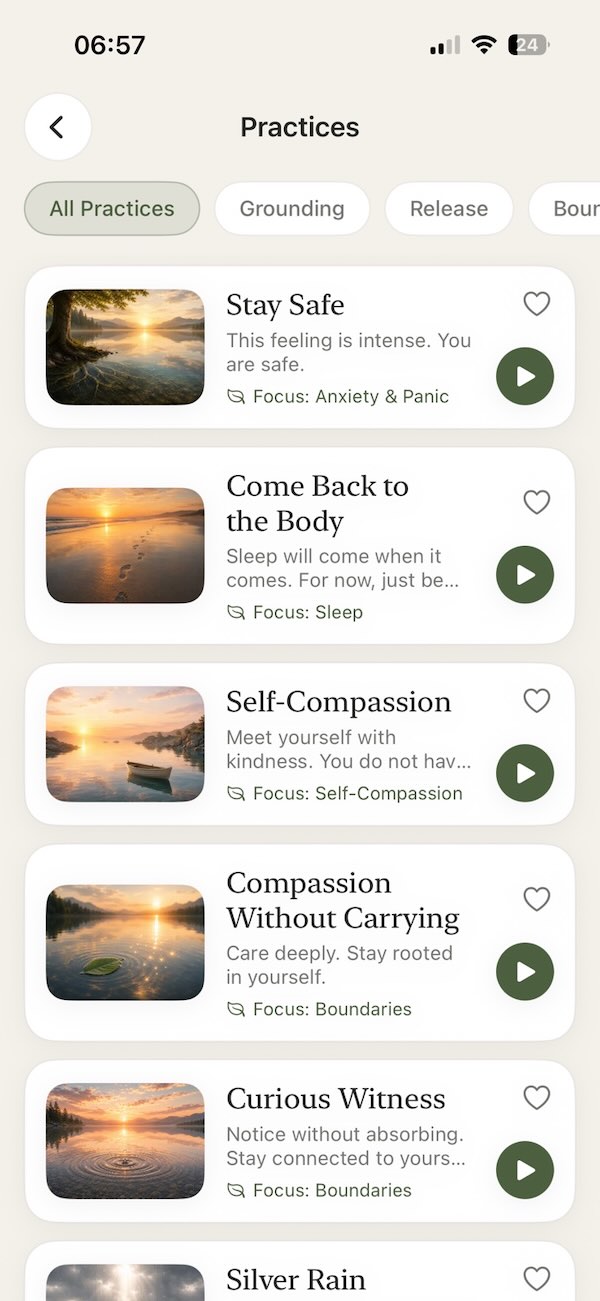
Access the full library of guided practices, tools, and resources anytime, anywhere.
- 10+Guided Practices
- AnxietyRelief Tools
- SleepSupport
- TrackYour Progress
- OfflineAccess
Available on iPhone and iPad