Self-Love: What It Actually Means (and What It Doesn't)
What self-love actually means (and what it isn't), how it differs from self-compassion and self-worth, why it's so hard, and how to build it through action.

Self-love is one of those phrases that can sound either profound or faintly ridiculous, depending on the day — bubble baths and affirmations on one hand, something genuinely steadying on the other. Stripped of the clichés, self-love is simply the ongoing choice to be on your own side: to treat yourself as someone worth caring for, even when you're far from your best. This is a look at what self-love actually means, what it doesn't, and how it's built.
If the idea makes you slightly uncomfortable, you're in good company. Many people find self-love far harder to extend to themselves than to anyone else — which is usually a sign it's needed, not a sign it's indulgent.
What is self-love?
Self-love is a stable, caring relationship with yourself — valuing your own wellbeing, treating yourself with respect, and acting in your own long-term interest. It isn't a constant feeling of adoration; no one likes themselves every minute. It's more a baseline stance: I matter, my needs count, and I'll look after this person I'm going to be with for life. Less a mood, more a quiet commitment.
Self-love vs self-compassion vs self-worth
These overlap but aren't identical. Self-worth is the belief that you have value. Self-compassion is how you treat yourself in hard moments. Self-love is the broader, ongoing relationship that contains both — the day-to-day practice of caring for yourself across good times and bad. You can think of self-worth as the foundation, self-compassion as the response to pain, and self-love as the overall way you tend to yourself over time.
What self-love is not
A lot of resistance to self-love comes from misunderstanding it. It isn't arrogance, vanity, or thinking you're better than others — that's ego, which often hides insecurity. It isn't selfishness; caring for yourself is what lets you show up for other people without resentment or burnout. And it isn't constant indulgence — real self-love sometimes looks like rest and gentleness, and sometimes like discipline, boundaries, or doing the hard thing because it serves you. Self-love is not selfish; it's the opposite of self-neglect.
Why self-love is so hard
If loving yourself feels unnatural, there's usually a reason. Many people learned that worth had to be earned, that putting themselves first was wrong, or that being hard on themselves was the only way to stay on track. A lack of self-love is rarely a personal failing — it's often the residue of environments where care felt conditional. The encouraging part is that self-love is learned, which means it can be learned now, even if it wasn't modelled early.
Signs you may be low on self-love
Low self-love tends to show up in behaviour more than in words: chronically putting everyone else first, neglecting your own needs, harsh self-talk, struggling to rest without guilt, staying in situations that drain you, and finding it hard to accept kindness or care. None of these mean something is wrong with you — they're simply signs that the relationship with yourself could use some tending.
How to build self-love
Self-love grows through action more than feeling — you often behave your way into it rather than think your way into it.
Treat yourself as someone you're responsible for
Ask what a person you loved would need — rest, food, a boundary, encouragement — and offer yourself the same, even before the warm feeling arrives.
Speak to yourself with respect
The tone of your inner voice is self-love in practice. Swapping contempt for basic respect changes the relationship more than any grand gesture.
Honour your own needs and limits
Letting yourself have needs, say no, and take up space is self-love in concrete form — not the feeling of it, but the doing.
Let yourself receive
Accepting care, rest, and good things without earning them first teaches the part of you that doubts it deserves them that it does.
The fuller picture
The discomfort usually comes from one belief: loving myself is selfish or indulgent — and anyway, I'd have to earn it first. It feels true because somewhere you learned that worth is conditional and putting yourself first is wrong, so caring for yourself trips a quiet alarm of who do you think you are?
But look at what self-love actually is versus what the belief assumes. It isn't vanity or thinking you're better than others — that's ego, which usually hides insecurity. It isn't selfishness — tending to yourself is precisely what lets you show up for others without resentment or burnout, so it's the opposite of taking from anyone. And it isn't constant indulgence; often it looks like rest, sometimes like a boundary or the hard-but-good thing. The alarm you feel isn't a moral signal — it's the residue of environments where care felt conditional. Worth was never something you had to earn your way into before you were allowed to treat yourself decently. And because this was learned, it can be learned differently now: not by waiting to feel adoration, but by starting to act like someone worth caring for, in small ordinary ways, until the feeling catches up.
Final thoughts
If self-love feels out of reach, it doesn't mean you're broken or self-indulgent for wanting it — it usually means you learned to put yourself last and called it normal. But the relationship you have with yourself is the one relationship you can't walk away from, and it's allowed to be a kind one. You don't need a rush of affection to begin; you only need to start treating yourself as someone worth caring for, in small, ordinary ways, until the feeling slowly catches up. One kind choice, one met need, one day at a time.
Try a gentle practice
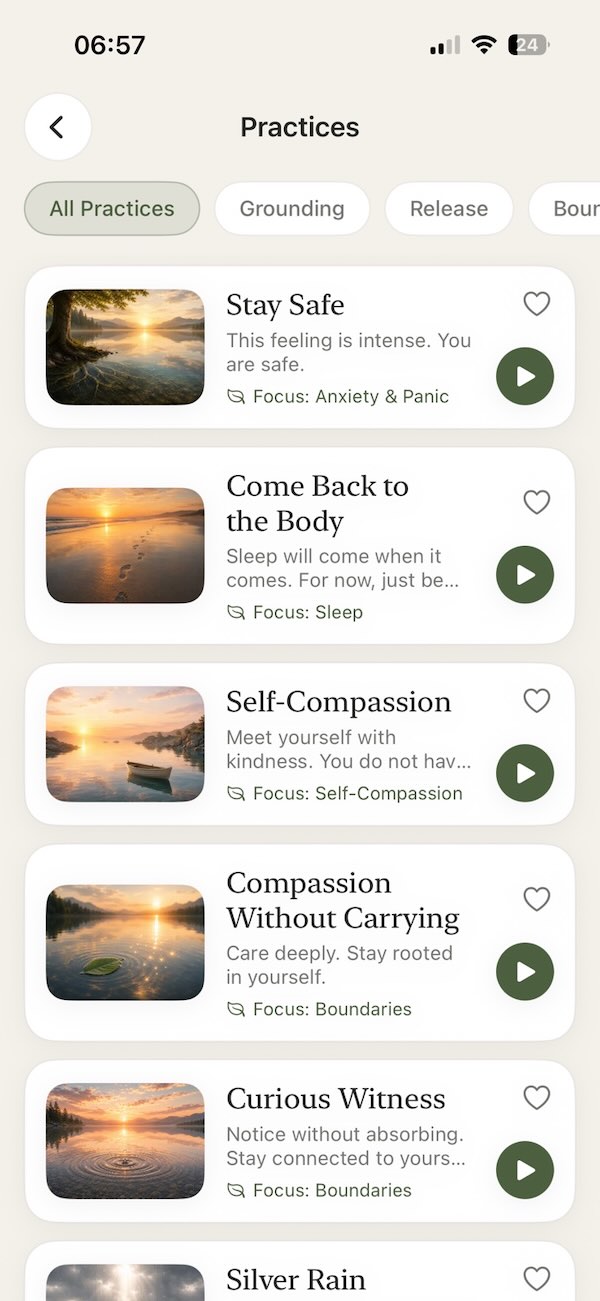
Self-love grows in the tone you take with yourself when no one is watching. Self-Compassion is a gentle practice for turning that tone warmer — a way to meet yourself with the same care you so readily give others, and to begin building the steady, on-your-own-side relationship that self-love really is.

Try the practice
Self-Compassion
Offer yourself the kindness you need.
Ready for more support?
Continue your journey in Aira
Access the full library of guided practices, tools, and resources anytime, anywhere.
- 10+Guided Practices
- AnxietyRelief Tools
- SleepSupport
- TrackYour Progress
- OfflineAccess
Available on iPhone and iPad