Stress Relief Exercises: How Movement Relieves Stress
Why movement relieves stress, and simple stress relief exercises — walking, stretching, shaking, and mindful movement — to move stress through and out.

When you're stressed, sitting still and trying to think your way calm often doesn't work — because stress is energy in the body, and the body wants to move. Stress relief exercises use this directly: gentle movement that helps discharge stress, release tension, and shift your system back toward calm. You don't need a gym or a routine, just a willingness to move a little.
This is a guide to stress relief exercises: why movement helps, and simple physical ways to move stress through and out.
Why movement relieves stress
The stress response prepares your body for action — to fight or flee — by flooding it with energy and tension. In modern life that energy usually has nowhere to go, so it stays stuck in the body as tension and restlessness. Movement gives it an outlet: it literally discharges the stress chemistry, releases held tension, and signals to your nervous system that the threat has passed. This is why a walk or a stretch can clear your head so effectively — you're completing the stress cycle the body started.
Gentle movement to shift stress
You don't need intense exercise to relieve stress — gentle movement often works best. A walk, especially outdoors, is one of the most reliable stress relievers there is. Stretching releases the tension stress packs into your muscles. Gentle yoga or simple mobility movements combine movement, breath, and body awareness. Rolling your shoulders, rotating your neck, or moving your spine slowly eases the spots where stress collects. Even a few minutes of easy movement can noticeably shift your state.
Shaking and discharging
One of the body's most natural stress-relief mechanisms is shaking — animals literally shake off the energy after a threat passes, and we can do the same. Deliberately shaking out your hands, arms, legs, and whole body for a minute or two helps discharge stuck stress energy and release tension. It can feel a little odd at first, but it's remarkably effective at shifting an activated, wound-up state. Bouncing gently, dancing, or vigorously shaking your limbs all tap into the same release.
Movement that uses up stress energy
When stress has you really wound up — restless, agitated, full of nervous energy — more vigorous movement can help burn it off. A brisk walk or run, climbing stairs, or any activity that gets your body working uses up the stress chemistry and often leaves you calmer and clearer afterwards. This is why exercise is such a well-established stress reliever: it gives the fight-or-flight energy somewhere productive to go, so it doesn't just churn inside you.
Pairing movement with breath and awareness
Movement relieves stress even more when you bring attention to it. Moving slowly and feeling your body — the stretch, the contact, the rhythm — grounds you in the present and out of the stressed, spinning mind. Coordinating movement with slow breathing deepens the calming effect. Even a mindful walk, where you feel your feet and notice your surroundings, combines the benefits of movement, grounding, and presence. The point isn't to push hard; it's to come back into your body as you move.
Final thoughts
Stress relief exercises work because they meet stress where it lives — in the body — and give it a way out. Whether it's a walk, a good stretch, a deliberate shake-out, or simply moving until the restless energy settles, movement helps complete the stress cycle and bring your system back to calm. You don't need a workout plan; you just need to let your body do what it wants to when stressed — move. One walk, one stretch, one shake-out at a time.
Try a gentle practice
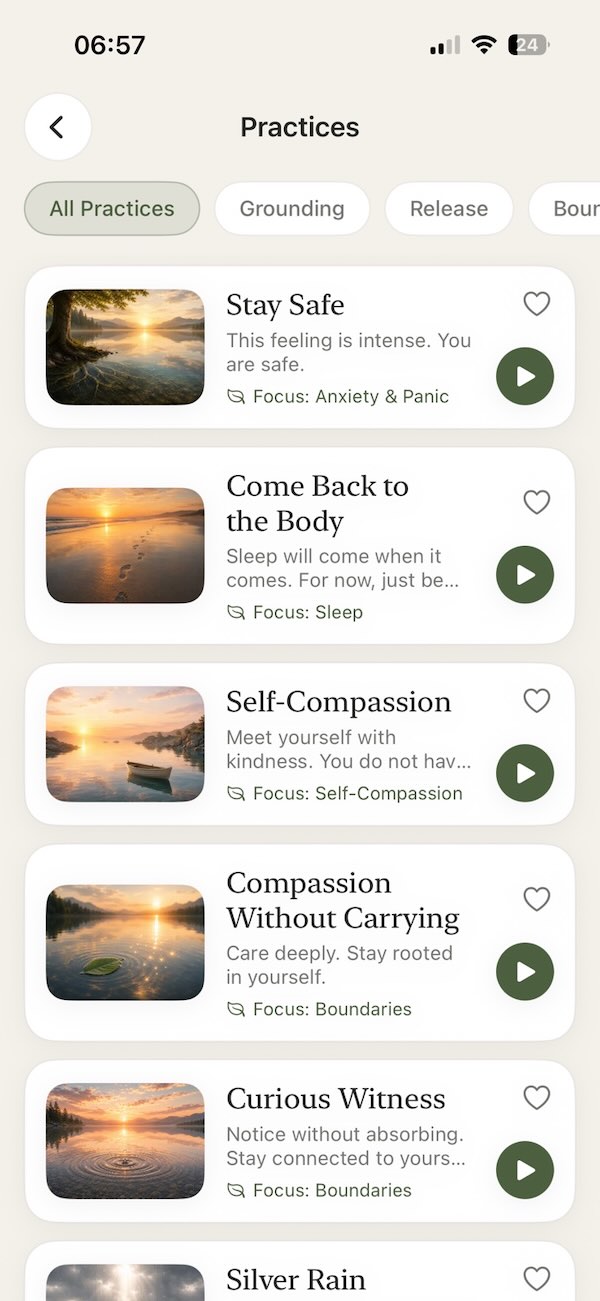
Moving stress through the body works best when you stay connected to the body as you go. Come Back to the Body is a gentle practice for exactly that — a way to drop into physical sensation and the present moment, so movement becomes a path back into a calmer, more grounded body.

Try the practice
Come Back to the Body
Come back from thoughts to sensation.
Ready for more support?
Continue your journey in Aira
Access the full library of guided practices, tools, and resources anytime, anywhere.
- 10+Guided Practices
- AnxietyRelief Tools
- SleepSupport
- TrackYour Progress
- OfflineAccess
Available on iPhone and iPad