Stress Relief Techniques That Work: A Practical Guide
A practical tour of stress relief techniques that actually work — breathing, grounding, releasing tension, movement, and calming — and where to go deeper.

When stress hits, you don't need theory — you need something to actually do. The good news is there are many simple, proven stress relief techniques, and most work by sending your body the same basic message: you're safe, you can come down now. This guide gathers the most useful ones in one place, so you can find what works for you.
This is a practical tour of stress relief techniques — fast tools for the moment, and where to go deeper on each.
How stress relief techniques work
Almost all stress relief techniques work through the body, not by reasoning with the stress. They send your nervous system signals of safety — through breath, the senses, movement, or release of tension — that tell it the threat has passed and it can switch off the stress response. This is why 'just calm down' doesn't work but a long exhale does: you're speaking to your body in its own language. Understanding this makes the techniques feel less random and more like tools you can reach for on purpose.
Breathing techniques
Breathing is the fastest, most reliable route to calm, because the exhale directly switches on your body's relaxation response. Slow your breathing and make your out-breath longer than your in-breath — even a minute helps. Breathing is portable, invisible, and always available, which makes it the single best place to start with stress relief. (Breathing for stress has its own dedicated guides, with specific techniques to try.)
Grounding and the senses
When stress pulls you into a spinning mind, grounding brings you back to the present through your senses — feeling your feet, naming what you can see and hear, holding something textured. This interrupts the stress spiral and anchors you in the here and now, where things are usually more manageable. It's especially useful for acute stress and anxiety. (Grounding techniques have their own dedicated guides too.)
Releasing physical tension
Stress lives in the body as tension, so releasing it physically brings relief. Consciously dropping your shoulders, unclenching your jaw, and softening tight muscles signals safety to your system. Deeper methods like progressive muscle relaxation — tensing and releasing muscle groups in turn — work especially well for the physical side of stress, and have their own guide. Even a good stretch or shake-out helps discharge stored stress.
Movement and stepping away
Movement is one of the most underrated stress relievers — a walk, a stretch, or shaking out your limbs helps discharge stress energy and shift a stuck state. So does simply stepping away from the stressor, even briefly, to give your system a chance to come down. A change of scene, a few minutes outside, or a short walk can reset your state more effectively than pushing through.
Calming and soothing
Gentler, soothing techniques help too: a warm drink, a comforting scent, soft music, a hand on your heart, or anything that signals comfort and safety. These work especially well for winding down and lowering your baseline over time. Pairing in-the-moment tools with regular calming practices builds a system that's more resilient to stress in the first place. (Calming your nervous system has its own dedicated section.)
Final thoughts
The best stress relief technique is the one you'll actually use — so it's worth trying a few and noticing what works for you. Most people end up with a small handful of reliable go-tos: a breathing pattern, a grounding move, a way to release tension, a walk. Together they give you something concrete to reach for whenever stress rises, instead of just trying to endure it. You have more tools than you think. One technique, one calmer moment at a time.
Try a gentle practice
The most reliable, portable stress relief technique of all is the slow, long exhale. Breathe is a gentle practice for exactly that — a simple guided way to put the single most effective stress-relief tool to work, calming your body whenever stress rises.

Try the practice
Breathe
Help me slow down and find calm.
Ready for more support?
Continue your journey in Aira
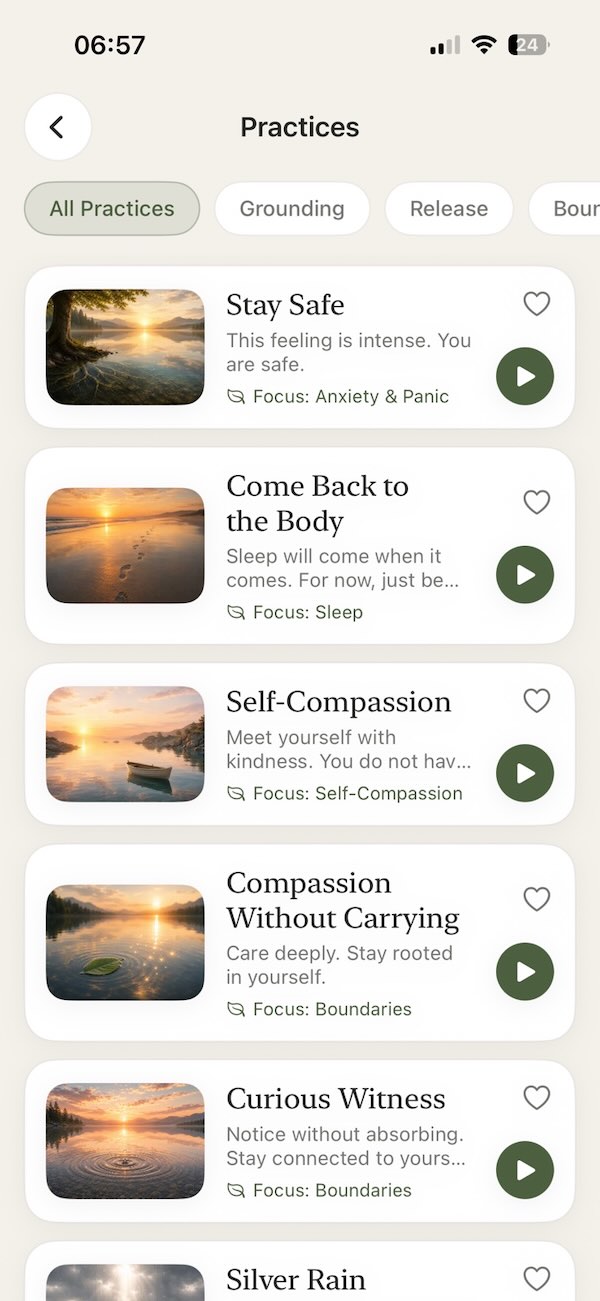
Access the full library of guided practices, tools, and resources anytime, anywhere.
- 10+Guided Practices
- AnxietyRelief Tools
- SleepSupport
- TrackYour Progress
- OfflineAccess
Available on iPhone and iPad