Toxic Productivity: When Being Productive Becomes Harmful
What toxic productivity is, why the constant need to be productive harms you, where the guilt around rest comes from, and how to break the cycle.

There's a belief, woven deep into modern culture, that your worth is measured by how much you produce — that every hour should be optimised, every pause justified, every bit of rest earned. When that belief takes hold, it becomes toxic productivity: a compulsive need to always be doing something useful, with guilt as the price of stopping. It looks like dedication, but it quietly drives people into exhaustion and burnout.
This is a guide to toxic productivity: what it is, why it's so harmful, and how to step out of the cycle.
What is toxic productivity?
Toxic productivity is an unhealthy, compulsive need to be productive at all times — where doing 'enough' is never possible and rest feels like failure. It goes beyond healthy ambition or a good work ethic: it's the inability to stop without guilt, the treating of every moment as something to be optimised, and the quiet sense that you're only valuable when you're producing. Where healthy productivity serves your life, toxic productivity consumes it.
What it looks like
Toxic productivity shows up as feeling guilty when you rest or relax; struggling to do nothing without a sense of wasting time; measuring your worth by your output; turning hobbies into side-hustles and downtime into 'self-improvement'; and a constant, low-level pressure to be doing more. Even rest becomes a task to be done efficiently so you can get back to being productive. There's no point of 'enough' — the bar simply keeps moving.
Where it comes from
The roots are both cultural and personal. Culturally, hustle culture glorifies busyness and equates rest with laziness, so the pressure is in the water we swim in. Personally, toxic productivity often grows from a belief that your worth must be earned through achievement — frequently learned early, when approval or love seemed conditional on doing and achieving. If you absorbed the idea that you're only valuable when useful, stopping will feel unsafe, because on some level it threatens your sense of worth.
Why it's so harmful
Toxic productivity is a direct route to burnout. By treating rest as failure, it removes the recovery that keeps you functioning, so depletion accumulates unchecked. It erodes wellbeing, relationships, and the simple capacity to enjoy life, since nothing is ever allowed to just be enjoyed — it all has to be productive. And cruelly, it doesn't even deliver lasting satisfaction, because the goalposts always move; no amount of doing ever quiets the feeling that you should be doing more.
How to break the cycle
Stepping out of toxic productivity starts with separating your worth from your output. Practise resting without earning it, and notice the guilt that arises without obeying it — it's a learned reaction, not a truth. Let some things be 'good enough,' and let some time be genuinely unproductive, enjoyed for its own sake. Remind yourself that rest is part of a functioning life, not a reward for productivity, and that you are valuable simply as a person, not as a unit of output. It's safe to have time, rest, and ease, even when you haven't 'earned' them.
The fuller picture
At the base of toxic productivity is one equation the mind treats as fact: my worth is measured by what I produce — rest has to be earned, and if I stop, I'm lazy and worth less. It feels true because it's everywhere — hustle culture repeats it, and if approval once seemed to depend on achieving, it was installed early, before you could question it.
But notice the tell: the equation never actually pays out. However much you do, 'enough' never arrives — the bar just slides forward again. A real measure of worth would settle somewhere; one that can never be satisfied isn't a ledger, it's a moving goalpost you were handed, and no amount of output will ever close it. That's the clue that worth was never really the thing being measured. And rest isn't the prize you collect once you've done enough — it's part of the machinery of being a functioning person, the recovery without which the doing eventually collapses. So the guilt that rises when you stop isn't a verdict that you're lazy; it's the old rule protesting a change it isn't used to. You are worth something as a person, not as a unit of output — and it's safe to have rest and ease you never had to earn.
Final thoughts
Toxic productivity dresses up as virtue, but it's a fast track to burnout and a thief of the very life you're working so hard to build. You are not a machine whose value is measured in output; you're a person who's allowed to rest, to enjoy things for their own sake, and to be worth something even when you're doing nothing. Breaking the cycle is slow, because the belief runs deep — but every guilt-free rest loosens its grip. One unproductive, unearned, genuinely restful moment at a time.
Try a gentle practice
Toxic productivity makes rest and ease feel unsafe, like something you'll be punished for. It's Safe to Have This is a gentle practice for exactly that — a way to let yourself receive rest, time, and ease without guilt, and to remind the part of you that fears stopping that it's safe to have good things you haven't had to earn.

Try the practice
It's Safe to Have This
Stop standing in your own way.
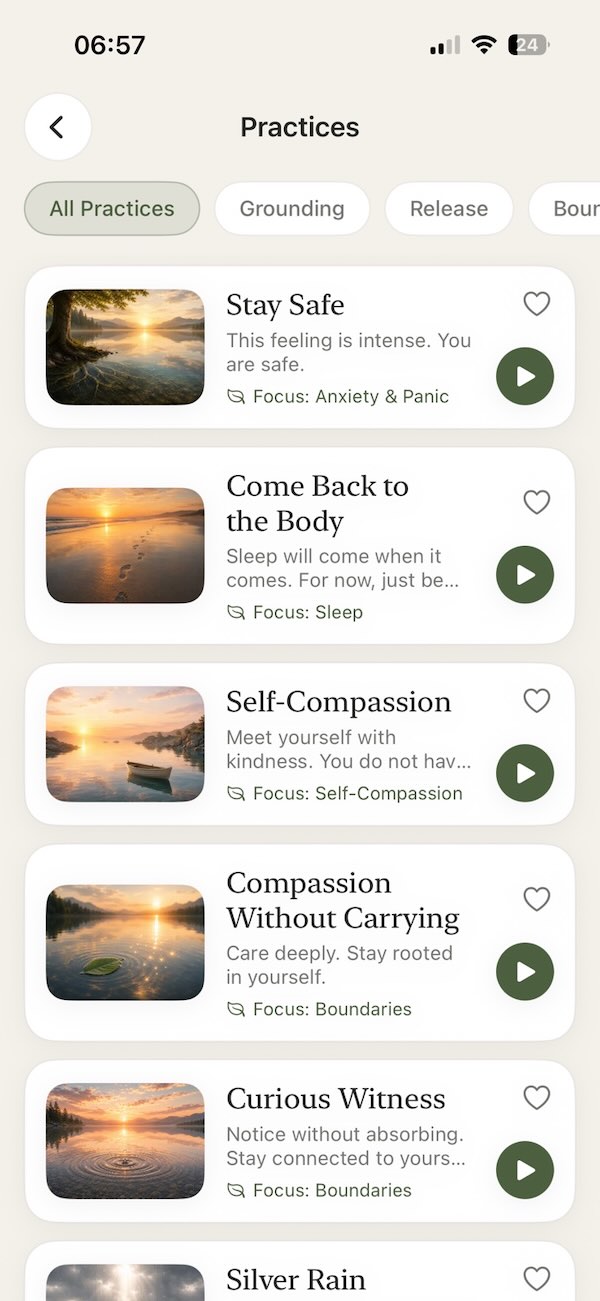
Ready for more support?
Continue your journey in Aira
Access the full library of guided practices, tools, and resources anytime, anywhere.
- 10+Guided Practices
- AnxietyRelief Tools
- SleepSupport
- TrackYour Progress
- OfflineAccess
Available on iPhone and iPad