Waking Up Too Early: Why You Wake at 4 a.m. and Can't Get Back to Sleep
Why anxiety and stress wake you at 4 or 5 a.m. and won't let you fall back asleep, what early-morning waking can signal, and gentle ways to settle again.

You fall asleep fine. You stay asleep for a few hours. And then, far too early — 4 a.m., 5 a.m., sometimes before — your eyes open and won't close again. The house is dark, the alarm hasn't gone off, and you lie there wide awake, watching the hours you have left to sleep tick away. If you keep waking up too early and can't get back to sleep, this is one of the most draining sleep patterns there is, and it has understandable causes.
This kind of early-morning awakening is its own thing — different from struggling to fall asleep at the start of the night, and different from waking in the small hours and drifting back off. Here you wake near the end of the night and simply can't return to sleep, then face the day already short on rest.
What early-morning awakening is
Early-morning awakening means waking earlier than you want to and being unable to fall back asleep, even though you haven't had enough rest. It's sometimes called terminal insomnia — not because anything is seriously wrong, but because it happens at the terminal, or final, part of the night. The defining feature is the combination: you're still tired, there's still time to sleep, and yet you're fully, frustratingly awake.
Why anxiety wakes you up early
Sleep is lightest in its final hours. By early morning you've moved through most of your deep sleep, and the night is dominated by lighter, more easily interrupted stages — so it takes less to wake you. Layer stress on top of that and the effect grows: an activated nervous system surfaces more readily during those light phases, and once you're awake, the anxious mind switches straight on, making a return to sleep much harder. So waking at 4 or 5 a.m. isn't random; it's the point in the night when light sleep and a sensitive nervous system most easily meet.
The cortisol connection
There's also a hormonal piece. In the hours before waking, your body begins ramping up cortisol to prepare you for the day. For a system already carrying stress, that natural rise can tip you from light sleep into full wakefulness earlier than you'd like — and bring a wave of alertness or unease with it. This is part of why early waking and that early-morning surge of anxiety so often arrive together. (Why that surge feels so strong is worth understanding in its own right, and it has its own guide.)
When early waking points to something more
Occasional early waking is normal, especially during stressful stretches. But a persistent pattern of waking very early and being unable to return to sleep is also one of the classic signs associated with depression, not only anxiety. If early-morning waking is frequent and comes alongside low mood, loss of interest, or a persistent sense of hopelessness, that's worth raising with a doctor — not as a cause for alarm, but because it's a pattern that responds well to support, and you don't have to sort it out alone.
What helps when you wake too early
The same principle that governs the rest of the night applies here: you can't force your way back to sleep, and trying tends to wake you further. If you've been lying there a while, watching the clock and calculating lost hours, the clock-watching itself is worth stopping — it raises the pressure without buying any sleep. Sometimes the gentlest option is to accept you may be awake, keep the lights low, and rest rather than fight for sleep; rest still has value, and lowering the stakes sometimes lets sleep return on its own. Bringing your attention out of the racing mind and into the body — the weight of you on the mattress, the slow rhythm of a longer exhale — gives the nervous system a signal of safety that arguing with yourself never will. And as with every sleep pattern, the daytime matters: daylight early, movement, and a steadier wind-down make the whole night, including its final hours, a little more settled.
The fuller picture
After enough early mornings, the mind lands on a verdict before the sun is even up: I've lost those hours, the day is already ruined, and I have to get back to sleep right now. It feels true because you're tired and the clock is right there, counting down.
But notice what that verdict skips. The demand to reclaim sleep is itself a jolt of pressure — and pressure is alertness, the exact opposite of what sleep needs, so the harder you chase those hours the more awake you become. Early waking isn't your body sabotaging you; it's a sensitive, alert system surfacing at the lightest part of the night, often carrying more than it's had a chance to set down. And the day isn't decided at 5 a.m. — lying quietly and resting still restores you, people function on a short night far more often than the dark hours admit, and "ruined" is the tiredness talking, not a forecast. You don't have to win the hours back. You only have to stop fighting for them.
Final thoughts
If you keep waking up too early and can't get back to sleep, it doesn't mean you're broken or destined to be exhausted forever. It usually means light sleep, a natural cortisol rise, and an activated nervous system are meeting at the quietest part of the night. The pattern tends to soften as stress eases and the system feels safer — and where it doesn't, support genuinely helps. For now, you don't have to force the last hour of sleep. One breath, one return to the body, one gentler morning at a time.
Try a gentle practice
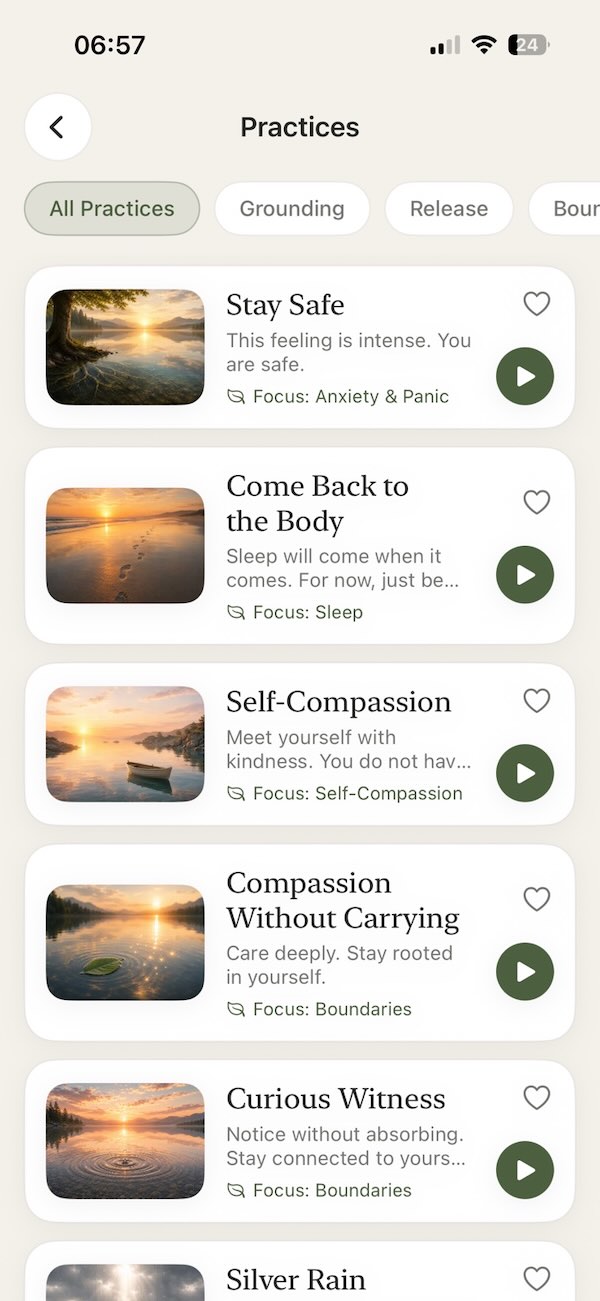
Waking before you're ready, it's easy to get caught in the mind's calculations — the hours lost, the day ahead. Come Back to the Body is a gentle practice for early-morning waking — a way to step out of that anxious arithmetic and into the quiet of physical sensation, so your nervous system can settle and rest can have another chance to come.

Try the practice
Come Back to the Body
Come back from thoughts to sensation.
Ready for more support?
Continue your journey in Aira
Access the full library of guided practices, tools, and resources anytime, anywhere.
- 10+Guided Practices
- AnxietyRelief Tools
- SleepSupport
- TrackYour Progress
- OfflineAccess
Available on iPhone and iPad