Why Anxiety Makes Us Want More Control
When life feels uncertain, we often reach for more control — yet the harder we grip, the more anxious we become. A gentle look at why, and how trust offers more freedom than control.

When life feels uncertain, many people respond by trying to gain more control. They plan, they prepare, they double-check, they think through every possible outcome. At first this can feel helpful, but when anxiety is involved, the search for control can become exhausting. The more uncertain life feels, the more control seems necessary — and yet the more control we seek, the more anxious we often become.
The Connection Between Anxiety and Control
Anxiety is deeply connected to uncertainty. The nervous system prefers predictability, because predictability feels safe: when we know what's happening, what comes next, and how things will turn out, we can relax. When we don't know, the brain starts searching for answers. This is why anxiety and control are so often closely linked — control becomes an attempt to reduce uncertainty. The goal usually isn't power; it's safety.
Why Uncertainty Feels So Difficult
For an anxious mind, uncertainty can feel like danger. The future is full of unanswered questions — what if something goes wrong? what if I make the wrong decision? what if I'm not prepared? what if I can't handle what happens next? — and the mind begins trying to solve problems that don't yet exist. This is understandable; the brain believes it's helping. But many of these problems can never be fully solved in advance.
The Fear of the Unknown
Fear of the unknown is one of the most common drivers of anxiety. When outcomes are unclear, the mind naturally wants certainty, but life rarely offers complete certainty. Relationships change, plans change, health changes, jobs change, circumstances change. Trying to eliminate all uncertainty usually creates more stress rather than less.
Anxiety and Predictability
Predictability can feel comforting, and routines, schedules, and planning can provide genuine stability and structure. There's nothing wrong with wanting predictability. Problems arise when it becomes a requirement rather than a preference, because life eventually presents something unexpected — and when it does, anxiety may react with intense discomfort, since the nervous system has become dependent on certainty.
Anxiety and Planning
Planning is often useful: it helps us organize, prepare, and make thoughtful decisions. But anxiety can turn planning into something else, so that instead of preparing for likely situations, the mind begins preparing for every possible one. You may find yourself rehearsing conversations repeatedly, imagining worst-case scenarios, making backup plans for backup plans, constantly reviewing decisions, and struggling to stop thinking about the future. At that point, planning has become a way of managing anxiety rather than solving practical problems.
Anxiety and Future Thinking
Anxiety naturally pulls attention toward the future, where the mind asks what might happen? what could go wrong? what should I prepare for? Future thinking isn't inherently bad. The problem is that anxiety often treats imagined possibilities as if they were present realities, so the body begins reacting to future fears as though they're happening now — which creates real stress in the present moment.
Controlling Behavior and Anxiety
Controlling behavior often develops because uncertainty feels uncomfortable. People may try to control outcomes, schedules, relationships, conversations, decisions, and even other people's reactions. This usually comes from fear rather than manipulation: the nervous system believes if I can control enough variables, I can prevent discomfort. Unfortunately, many important parts of life remain outside our control, and the harder we fight that reality, the more tension we create.
Anxiety and Change
Change creates uncertainty, and even positive changes can trigger anxiety — a new relationship, a new job, moving to a new city, starting a family, making an important decision. The anxious mind tends to focus on what could go wrong rather than what might go right. This doesn't mean change is dangerous; it means the nervous system is trying to protect you from uncertainty.
Unexpected Events and Anxiety
Life includes unexpected events, and no amount of planning can eliminate every surprise. This can feel frustrating for people who rely on control to feel safe. But resilience doesn't come from predicting everything — it comes from trusting that you can respond when challenges appear. There's an important difference between the two: one seeks certainty, the other builds confidence.
Anxiety and Trust
Learning to trust is often part of anxiety recovery — not blind trust, and not pretending uncertainty doesn't exist, but trust that you can adapt, that you can learn, that you can cope, that you can respond when needed, and that you don't need every answer today. This kind of trust creates more freedom than constant control ever can.
Letting Go of Control Anxiety
Letting go of control doesn't mean becoming careless. It means recognizing the difference between what you can influence and what you can't. You can influence your actions, your choices, your effort, and your responses. You can't control the future, other people's thoughts, every possible outcome, or every unexpected event. Accepting this distinction can reduce enormous amounts of anxiety.
Control and the Nervous System
The need for control is often misunderstood as a personality trait, when sometimes it's simply a nervous system trying to feel safe. When anxiety is high, uncertainty feels threatening; when the nervous system feels calmer, the same uncertainty becomes easier to tolerate. This is why anxiety recovery often focuses less on controlling life and more on supporting the nervous system itself.
The fuller picture
Underneath all the planning and double-checking sits one quiet promise the mind keeps making: if I can just control enough — plan it, prepare for it, see it coming — then I'll finally feel safe. It makes complete sense, because uncertainty feels like danger and control feels like the cure.
But notice the trap. The relief control gives is real, and it's tiny, and it never lasts — there's always one more variable, so the project has no finish line, and the gripping itself wears you out. The deeper truth is that safety was never going to come from controlling life, because you can't control most of it. It comes from trusting you can handle life when it doesn't go to plan. And here's the strange part: the tighter you grip, the more anxious you tend to feel — so loosening it, even a little, is often the thing that finally lets the anxiety set down.
Final Thoughts
If you struggle with the need for control, it doesn't mean you're weak, rigid, or doing something wrong. Often it means anxiety is trying to protect you from uncertainty. The challenge is that life will always contain unknowns, and no amount of planning can remove them completely. Real peace doesn't come from controlling everything — it comes from learning that you can handle life even when everything isn't under control. And that confidence grows one moment, one choice, and one act of trust at a time.
Try a gentle practice
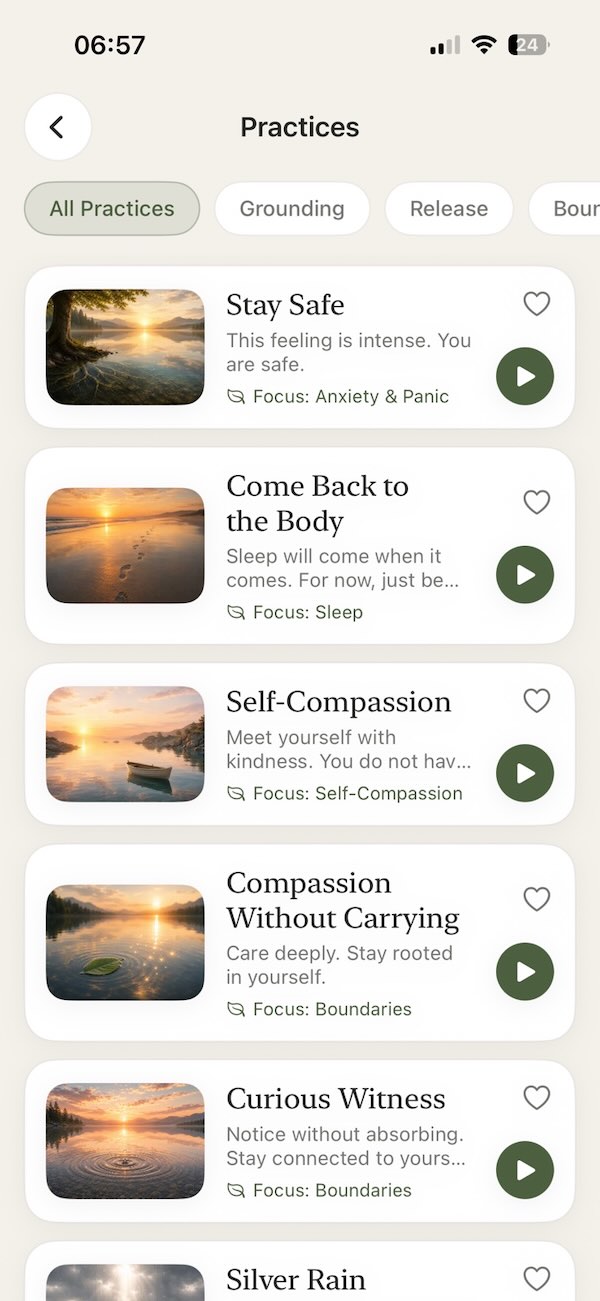
When anxiety wants control, our attention often leaves us — caught up in other people's reactions, future outcomes, and everything that feels uncertain. Curious Witness is a gentle practice for those moments: a way to let go of what's happening around you, come back to yourself, and stay connected to who you are while allowing the world to be exactly as it is.

Try the practice
Curious Witness
Notice without needing to change.
Ready for more support?
Continue your journey in Aira
Access the full library of guided practices, tools, and resources anytime, anywhere.
- 10+Guided Practices
- AnxietyRelief Tools
- SleepSupport
- TrackYour Progress
- OfflineAccess
Available on iPhone and iPad