Why Does Anxiety Feel Stronger in the Morning?
The mechanism behind the morning anxiety peak — the cortisol awakening response, why activation comes before thought, and why the feeling eases as the day goes on.

Many people notice a frustrating pattern: they wake up feeling anxious, their chest feels tight, and their mind immediately starts worrying. But as the day goes on, something shifts. The anxiety softens, and by afternoon or evening they often feel more like themselves again.
This leads to a very common question: "why is my anxiety always worse in the morning?" The answer is less about what's happening in your life and more about what happens inside your body during the first hours of the day. This article is about that mechanism — the why behind the morning peak. For the practical side — what actually helps — the companion guide to easing morning anxiety is the place to go.
Anxiety often begins with activation, not thoughts
Many people assume anxiety starts with a worried thought. In reality, it often starts with activation. Before you're fully awake, your body is already preparing for the day — your heart rate shifts, your nervous system grows more alert, and your brain begins moving from sleep into wakefulness. For most people this feels normal. For an already stressed or sensitive nervous system, the same activation can feel almost identical to anxiety. The body becomes alert, the mind notices, and then the mind goes looking for a reason to explain the feeling.
The morning cortisol response
A large part of the answer is a natural process called the cortisol awakening response. Shortly after you wake, your body releases a surge of cortisol. This is completely normal and healthy — cortisol helps you wake up, feel alert, gain energy, and prepare for the day. For many people it simply feels like motivation. But for someone living with anxiety, burnout, or chronic stress, that same surge can register as nervousness, tension, restlessness, dread, or unease. Nothing dangerous is happening; the nervous system is just interpreting normal activation as a sign that something is wrong.
Why the morning peak can feel so intense
Mornings also strip away the things that usually buffer anxiety. The day hasn't started, so there are no tasks to absorb your attention. You're not busy, not occupied — just aware, which gives anxiety more room to be noticed. At the same time, the morning is full of uncertainty: the brain immediately starts running through responsibilities, decisions, conversations, and deadlines, often trying to prepare for the entire day at once. Activation plus open-ended uncertainty is a combination that can feel genuinely overwhelming.
Why anxiety often eases later in the day
This is the part that confuses people most: if the anxiety is real, why does it fade by afternoon? The answer is that the conditions change. As the day unfolds, uncertainty decreases, the brain gathers more information, attention moves toward concrete tasks, and the early cortisol surge naturally settles. The future becomes the present, and anxiety loses much of its fuel. This is also why a hard morning doesn't predict a hard day — the morning peak is a starting state, not a forecast.
When the pattern points to an overloaded nervous system
Morning anxiety is usually less about weakness and more about accumulated load. Common contributors include chronic stress, burnout, poor sleep, emotional overwhelm, major life transitions, ongoing uncertainty, and constant pressure to perform. The nervous system doesn't fully reset overnight, so it can carry yesterday's stress straight into a new morning. When mornings are consistently the hardest part of the day, it's often a signal that the system is holding more than it can comfortably process.
The fuller picture
The morning feeling is so physical that it arrives as a verdict: if I wake up this anxious, something must genuinely be wrong — with my life, or with me. It feels true because the dread is in your body before you've had a single thought, which makes it seem like your body knows something you don't.
But the order of events is the opposite of what it seems. The activation comes first — a normal surge of cortisol your body releases to wake you — and only then does the mind go hunting for a reason to explain it, landing on whatever worry is nearest. So the dread isn't evidence that something is wrong; it's information that your nervous system is carrying a lot and waking up loud. The proof is in what happens next: the same feeling that seemed like proof at 7 a.m. quietly fades by afternoon — not because your life improved in four hours, but because the surge settled and the day gave the mind something concrete to hold. A hard morning is a starting state, not a forecast. You don't have to trust what the morning tells you about your life. It's the hour your body is loudest — not the hour the truth is clearest.
Final thoughts
If your anxiety feels strongest in the morning, you're not alone, and you're not broken. A surge of anxiety shortly after waking that softens as the day goes on is one of the most common patterns there is. More often than not, it's simply a nervous system moving from rest into readiness while carrying more stress than it can comfortably hold. Understanding why it happens is the first step; gentle, practical ways to ease it are the natural next one.
Try a gentle practice
Waking up anxious can make it feel as though the day has already begun before you're ready for it. Before following anxious thoughts into the future, take a moment to reconnect with what's here right now. Ground is a gentle practice for morning anxiety, waking with a sense of dread, and that early-morning surge of nervous-system activation — a way to steady yourself at the start of the day.

Try the practice
Ground
Let's come back to what's real
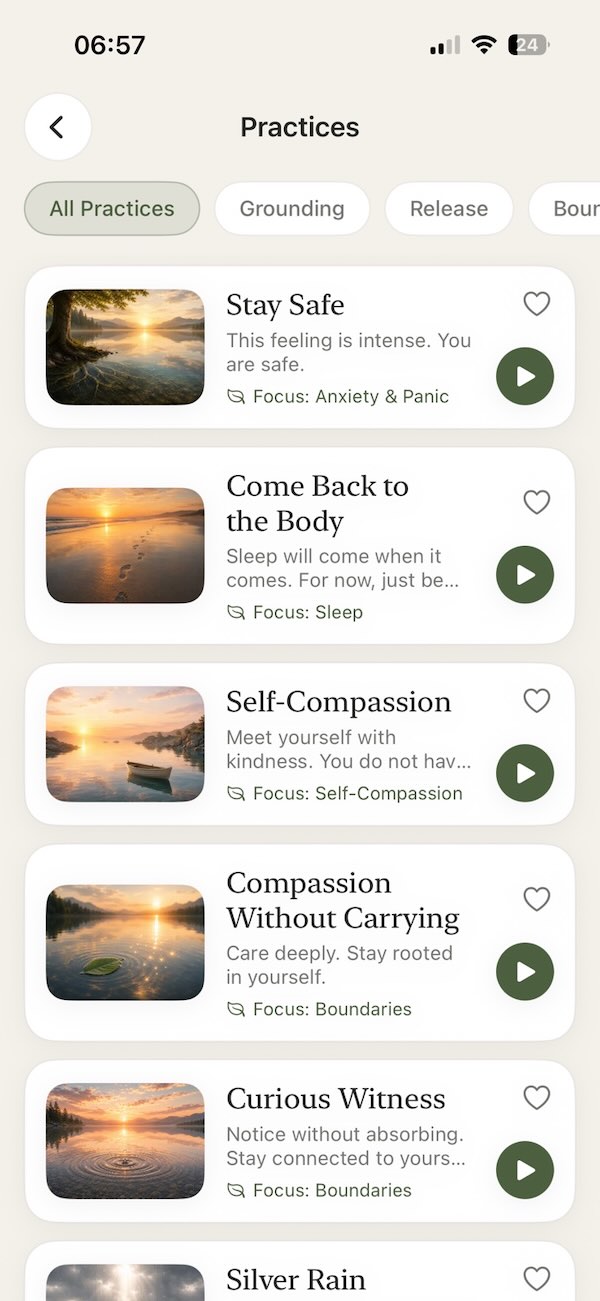
Ready for more support?
Continue your journey in Aira
Access the full library of guided practices, tools, and resources anytime, anywhere.
- 10+Guided Practices
- AnxietyRelief Tools
- SleepSupport
- TrackYour Progress
- OfflineAccess
Available on iPhone and iPad