Coming Home: Why Familiar Places Calm Your Nervous System
Why familiar, home-like places calm your nervous system, why safety and belonging settle the body, and how to build that feeling of home wherever you are.

There's a particular kind of relief that comes with walking into a place that feels like home. Your shoulders drop, your breath goes deeper, something in you unclenches. You might feel it returning to your own home after a trip, going back to a childhood town, or simply stepping into a room that feels unmistakably yours. That relief isn't just sentimental — it's your nervous system responding to safety. Understanding why familiar places calm you can help you find that settling feeling more often, and even create it where you are.
This is a guide to why familiar places calm you: how safety and belonging settle the body, what the relief of coming home is telling you, and how to build that feeling wherever you are.
Why familiar places calm you
Your nervous system is constantly, quietly assessing whether you're safe — and familiarity is one of the strongest safety signals it has. In a place you know well, everything is predictable: the sounds, the layout, the routines, what's likely to happen next. That predictability means your system doesn't have to stay on guard, scanning for the unexpected. It can lower its alert level and let you rest. A familiar place essentially tells your body you know this, nothing here needs watching — and the body believes it, because experience has proven it true. That's why the known place soothes while the unknown one keeps you subtly braced.
Safety and belonging as nervous-system needs
We tend to think of safety and belonging as emotional luxuries, but to the nervous system they're closer to basic needs. A body that feels it belongs somewhere — that it's in its place, among its people, on its ground — can finally stand down from the low vigilance that unfamiliar or unwelcoming environments provoke. This is why home is such a powerful word: it names not just a location but a state your system can drop into, where you don't have to prove, brace, or watch. Feeling that you belong isn't indulgence; it's one of the conditions under which your body knows how to rest.
Why the relief of coming home is information
The sharpness of the relief when you get home is worth paying attention to, because it measures something you couldn't feel while you were away. If arriving somewhere familiar brings a big exhale, that exhale is the size of the tension your system had been quietly holding elsewhere. It's the same principle in reverse as noticing how braced you were only once you leave a stressful place: the contrast reveals the load. This isn't a reason to never leave home — novelty and growth matter too — but it is useful data about what settles you and what costs you, and it's worth listening to when you're deciding where and how to spend your energy.
You can build the feeling of home anywhere
The encouraging part is that the calm of home comes from cues your system can learn, which means you can create them in new or temporary places too. Familiarity is buildable: keep consistent routines, return to the same spots until they become known, and surround yourself with a few anchors — objects, smells, sounds, rituals — that your body already associates with safety. Making even a small space unmistakably yours gives your system a base to settle into. Over time, repetition turns an unfamiliar place into a familiar one, and the same relief you feel coming home starts to arrive there too. You're not stuck waiting for a place to feel like home; you can teach your system that it does.
When home itself doesn't feel safe
For some people, home isn't a place of calm — because of who's there, what happened there, or a chronic lack of safety within it. If that's true for you, the absence of relief makes complete sense: a place can't soothe your nervous system if it doesn't actually signal safety, no matter how familiar it is. In that case, the work is less about returning to a particular place and more about finding or building somewhere — even a single room, or time with certain people — where your system genuinely can stand down. That's worth taking seriously, and worth getting support with.
When to seek support
If nowhere feels safe enough for your system to settle — if you can't find that exhale anywhere, or if the lack of a safe base is tied to past harm or ongoing difficulty — please consider reaching out for support. A therapist can help you build an internal and external sense of safety, especially when a felt sense of home has been missing or damaged. Everyone deserves somewhere their nervous system can rest, and it's okay to need help finding or creating that.
Final thoughts
Familiar places calm you because familiarity is safety to the nervous system — predictable, known, requiring no vigilance. The relief of coming home is your body recognising that it can finally stop watching and rest. That feeling isn't only tied to one location; it's built from cues you can recreate, so you can carry a sense of home into new and unfamiliar places over time. Your system is always looking for somewhere to belong and settle. You can help it find that — and build it — wherever you are. One familiar routine, one known corner, one safe exhale at a time.
Try a gentle practice
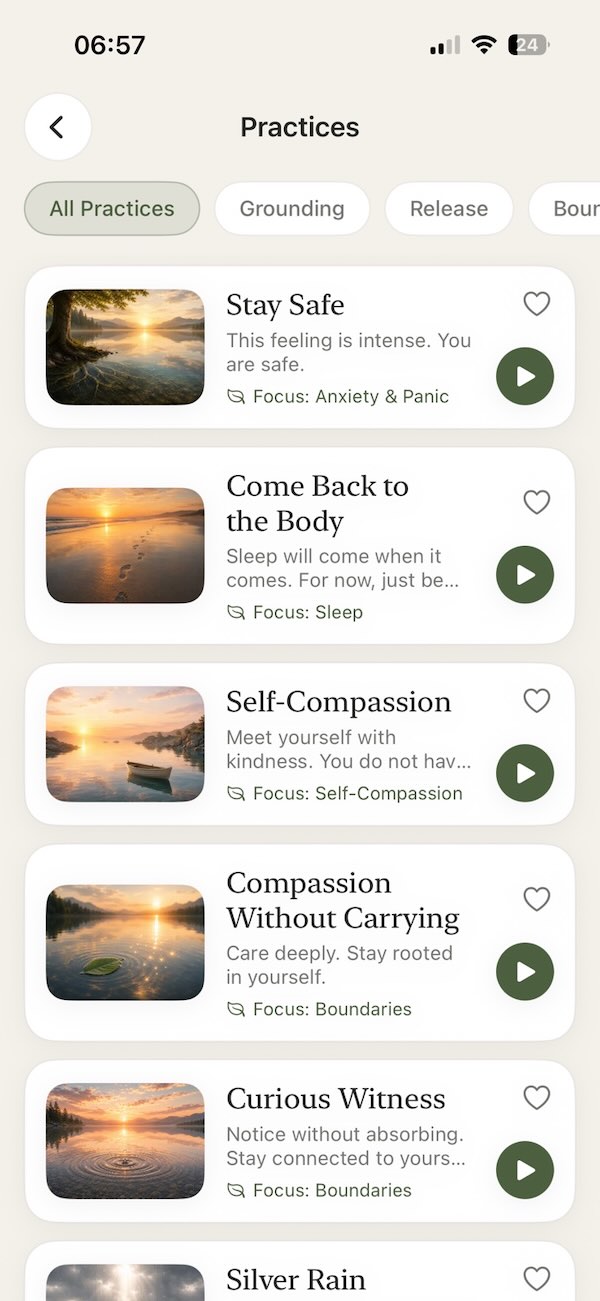
The calm of a familiar place is really a felt sense of safety — and you can offer your system that sense deliberately. Stay Safe is a gentle practice for exactly that: a way to help your body find solid ground and a feeling of safety in the present moment, so you can access that settled, home-like calm even when you're somewhere new.

Try the practice
Stay Safe
Find solid ground when panic feels overwhelming.
Ready for more support?
Continue your journey in Aira
Access the full library of guided practices, tools, and resources anytime, anywhere.
- 10+Guided Practices
- AnxietyRelief Tools
- SleepSupport
- TrackYour Progress
- OfflineAccess
Available on iPhone and iPad