Boundaries with Difficult and Toxic People
How to set and hold boundaries with difficult, manipulative, or toxic people — spotting manipulation, the gray rock approach, limiting access, and protecting yourself.

Most boundary advice assumes good faith — that the other person, once they understand your limit, will respect it. But some people don't operate that way. With someone manipulative, controlling, or what's often called toxic or narcissistic, a clear boundary can be met with guilt-trips, anger, charm, or simply being ignored. Holding limits with these people takes a different, firmer approach.
This is a guide to boundaries with difficult and toxic people: how to recognise manipulation, how to hold a line that's being worked around, and how to protect yourself without losing your footing. A note first: this is about patterns of behaviour, not labels for people — the goal is to protect yourself, not to diagnose anyone.
What makes someone 'difficult' for boundaries?
The defining feature isn't that the person is unpleasant — it's that they don't respect a no. Where most people accept a clear limit, a difficult or manipulative person treats your boundary as an obstacle to get around. Common signs: guilt-tripping when you decline, anger or punishment in response to limits, ignoring what you've said and repeating the request, twisting things until you end up apologising, or warmth that appears right when they want something. The pattern, not a single moment, is what tells you you're dealing with this dynamic.
Why boundaries feel impossible with these people
With a manipulative person, your normal boundary tools can seem to stop working — and that's partly the point. Emotional manipulation is designed to make you doubt yourself: to feel guilty for reasonable limits, responsible for their feelings, and unsure whether you're the problem. If you already tend to over-give and self-blame, this hooks directly into those patterns. Knowing that the confusion is part of the dynamic, not a sign you're being unfair, is the first protection.
How to hold boundaries with difficult people
The approach here is firmer and less explanatory than usual.
Keep it short and don't justify
Explanations are material a manipulative person can argue with. The less you justify, the less there is to twist. No and that doesn't work for me, repeated calmly, give them nothing to grab.
Don't take the bait
Guilt-trips, anger, and provocation are invitations to abandon your boundary. You can notice the hook and simply not bite — staying steady rather than defending or escalating.
Try the 'gray rock' approach
With genuinely toxic people, becoming less reactive and less interesting — calm, brief, unemotional — removes the fuel they're looking for. You're not performing; you're just declining to feed the dynamic. The gray rock method works precisely because it gives provocation nowhere to land.
Limit access
Some boundaries with difficult people are less about words and more about exposure — how much time, information, and emotional access they get. You don't owe everyone unlimited access to you.
Protecting yourself from manipulation
Beyond individual boundaries, protecting yourself from toxic people often means rebuilding trust in your own perception. Keeping a clear sense of what was actually said, checking your read with people you trust, and noticing the gap between someone's words and their actions all help counter the self-doubt manipulation creates. You're allowed to trust the pattern you see, even when someone insists you're imagining it.
When to step back entirely
Sometimes the healthiest boundary with a toxic person is distance — significantly reducing contact, or stepping away from the relationship altogether. This is hardest with family, where obligation runs deep, but the principle holds: you are not required to keep offering unlimited access to someone who repeatedly harms you. Choosing distance isn't cruelty or failure; sometimes it's the only boundary that actually protects you.
The fuller picture
With a manipulative person, one thought keeps surfacing: maybe I'm the problem — my boundary is unfair, I'm overreacting, maybe I'm imagining the whole pattern. It feels true because you keep ending up apologising, unsure, somehow at fault — and if you already tend to over-give and self-blame, it hooks straight into that.
But that self-doubt isn't a sign you're being unreasonable — it's often the intended effect. Emotional manipulation works precisely by making you feel guilty for reasonable limits and unsure whether you're the one at fault; the confusion is part of the dynamic, not evidence about your boundary. So their reaction — the guilt-trip, the anger, the sudden warmth — is not a verdict on whether your limit is fair. It's the pushback of someone who benefits from you having none. You're allowed to trust the pattern you actually see, even when someone insists you're imagining it, and to check your read with people you trust when your own perception has been worn down. You don't have to win the argument or convince them the boundary is justified. You only have to protect yourself — shorter contact, less access, a calm unjustified no — and let their displeasure be theirs.
Final thoughts
Boundaries with difficult and toxic people ask more of you than ordinary limits do — more firmness, less explanation, and a willingness to tolerate their displeasure without caving. It helps to remember that their reaction is not a verdict on whether your boundary is fair. You're allowed to protect your time, your energy, and your sense of reality, even from people who insist you shouldn't. You don't have to convince them. You only have to protect yourself. One unjustified no, one limited access, one steady refusal to take the bait at a time.
Try a gentle practice
Holding a line with someone who pushes, guilt-trips, or manipulates takes steadiness under real pressure. Hold the Line is a gentle practice for exactly that — a way to stay rooted when someone is working to move you, let their reaction be theirs, and keep your boundary standing without harshness, defence, or apology.

Try the practice
Hold the Line
Stay steady when you hold a boundary.
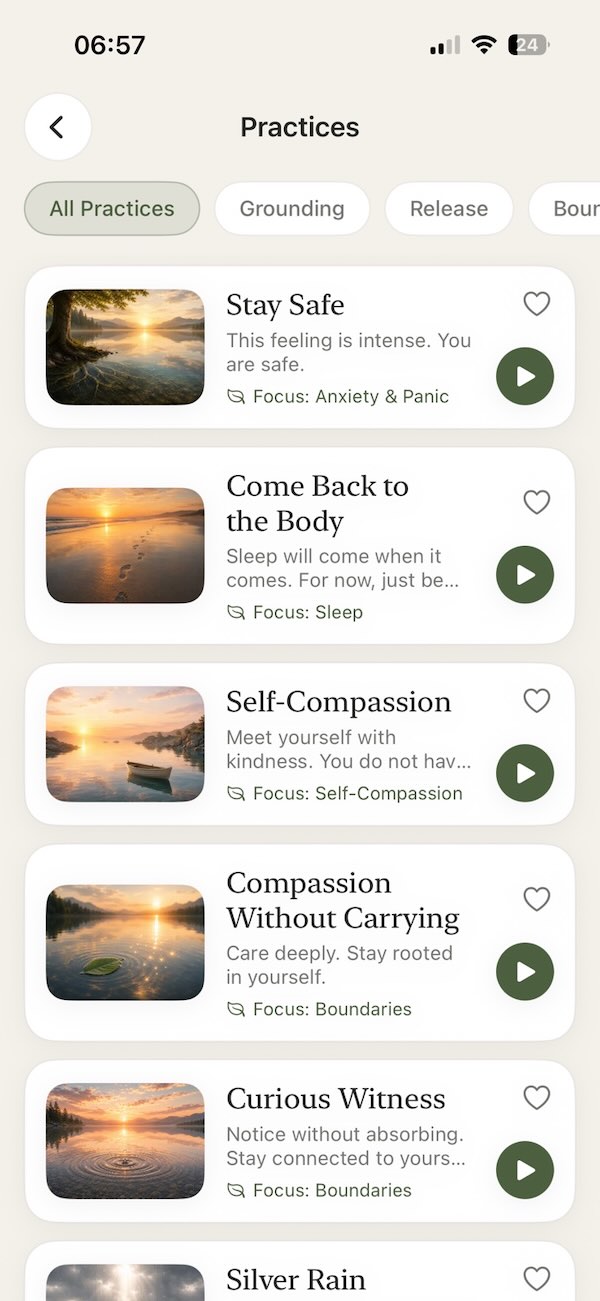
Ready for more support?
Continue your journey in Aira
Access the full library of guided practices, tools, and resources anytime, anywhere.
- 10+Guided Practices
- AnxietyRelief Tools
- SleepSupport
- TrackYour Progress
- OfflineAccess
Available on iPhone and iPad