Panic Attacks in Public: Coping in Shops, Crowds, and Public Places
Why panic strikes in shops, crowds and public places, the fear of having an attack in front of others, how to cope in the moment, and how to keep your world from shrinking.

A wave of panic in your own living room is hard enough. A panic attack in a supermarket queue, on a busy train, in a meeting, or in the middle of a crowd can feel even more overwhelming — because now there's a second fear layered on top of the first: what if people see? If panic tends to strike when you're out in the world, you're far from alone, and there are gentle, practical ways to cope.
Let's look at why public panic happens, and how to handle it without letting your world shrink.
Why do panic attacks happen in public?
Panic attacks in public usually aren't caused by the place itself, but by a nervous system that's already sensitive meeting a situation that feels harder to escape or control. Crowds, queues, shops, and transport can carry a subtle sense of being trapped or exposed, and the brain can read that as a reason to sound the alarm. Often there's also the memory of a previous attack: once panic has happened somewhere public, the brain tags similar places as risky and watches for danger there — which makes another attack more likely.
The fear of having a panic attack in public
For many people, the hardest part isn't the panic itself but the fear of having it in front of others: the fear of being judged, embarrassing yourself, making a scene, or not being able to escape. This fear is completely understandable — and it's also self-feeding. Worrying about panicking in public keeps the nervous system on alert in public, which makes the sensations more likely to appear. The dread of an attack becomes part of what invites one.
Why certain places trigger it more
Some environments tend to provoke public panic more than others: crowded or enclosed spaces, long queues, public transport, big shops, and anywhere that feels hard to leave quickly. What these share is a sense of reduced control or escape. When avoidance of these places starts to build and spread, it can edge toward agoraphobia — anxiety about situations that feel difficult to get out of. That's a recognised and treatable pattern, not a personal failing, and naming it can be the first step to addressing it.
What to do during a panic attack in public
Stay where you are if you safely can
The urge to flee is strong, but escaping teaches the brain the place was dangerous. If it's safe to do so, try to stay put and let the wave pass where you are — even just for a little longer than feels comfortable. You don't have to prove anything; you're simply showing your nervous system that you can be here and be okay.
Slow your breathing
Let your exhale become longer than your inhale — a quiet, gentle out-breath. You can do this without anyone noticing. Slowing the breath is one of the fastest ways to signal safety to the nervous system.
Ground through your senses
Bring your attention to what's around you: a few things you can see, sounds you can hear, the feeling of your feet on the floor or a textured object in your hand. Grounding pulls attention out of the spiral of fear and back into the present, where you're safe.
Remind yourself it will pass
Quietly tell yourself: "this is panic, it's uncomfortable but not dangerous, and it will pass." Panic peaks and falls; you don't have to make it stop, only let it move through.
Will people actually notice?
One of the biggest fears is that everyone can see you're panicking. In reality, panic is usually far less visible than it feels. The sensations are overwhelming on the inside, but from the outside most people appear simply quiet or still. Others are also generally absorbed in their own day and not closely watching strangers. And if someone does notice, the most common human response is concern, not judgement.
How to stop avoidance taking over
The most natural response to public panic is to start avoiding the places it happened — but that's also what gradually shrinks your world. Each avoidance reinforces the idea that the place was dangerous. The way back out is gentle and gradual: returning to public situations in small, manageable steps, at your own pace, so your nervous system slowly relearns that these places are safe. You're not aiming to feel no anxiety — only to show yourself, step by step, that you can be out in the world and get through it.
The fuller picture
What makes public panic uniquely awful is a second belief stacked on the first: if I panic here, everyone will see, I'll humiliate myself — and I'll be trapped with no way out. It feels true because you're flooded with sensations that seem impossible to hide, in a place you can't instantly leave, so exposure and entrapment both feel certain.
But check each half against what's actually so. Panic is dramatically less visible than it feels: the storm is entirely internal, and from the outside you mostly look quiet or still — and the people around you are absorbed in their own day, not studying a stranger. On the rare occasion someone does notice, the usual human response is concern, not contempt. As for trapped: that's the sensitised alarm misreading 'hard to leave quickly' as 'dangerous,' not a real cage — the queue, the train, the meeting were never actually a threat. And here's the twist the fear hides — fleeing to escape the humiliation is exactly what teaches your brain the place was dangerous, so it shrinks your world one exit at a time. Staying, even a little longer than is comfortable, quietly proves the opposite: you can be here, be seen, and be okay.
When to seek support
If fear of public panic is leading you to avoid shops, transport, work, or social situations — or your world is narrowing around the places you feel you can't go — it's worth speaking with a therapist. Cognitive behavioural therapy (CBT), often with gradual exposure, is highly effective for public panic and agoraphobia. Reaching out early can stop avoidance from taking root and help you reclaim the places that matter to you.
Frequently asked questions
Why do I have panic attacks in public?
Usually it's not the place itself but a sensitive nervous system meeting a situation that feels hard to escape or control — crowds, queues, shops, transport. The memory of a past attack can also make the brain tag similar places as risky and watch for danger there, which makes panic more likely.
How do I deal with a panic attack in public?
If it's safe, stay where you are rather than fleeing, slow your exhale, and ground your attention in what you can see, hear, and feel. Remind yourself that it's panic — uncomfortable but not dangerous — and that it will pass. You can do all of this discreetly.
Will people notice if I have a panic attack?
Usually far less than you fear. Panic feels overwhelming inside but is often nearly invisible outside, where you may simply look quiet or still. Most people are absorbed in their own day, and if someone does notice, they typically respond with concern rather than judgement.
Why am I scared of having a panic attack in public?
Because public panic adds a second fear — of being judged, embarrassed, or unable to escape — on top of the panic itself. This fear is understandable, but it also keeps the nervous system on alert in public, which can make attacks more likely. The dread becomes part of what triggers it.
What if I'm avoiding public places because of panic?
Avoidance brings short-term relief but gradually shrinks your world and strengthens the fear. The way back is gradual: returning to public situations in small steps at your own pace. If avoidance is spreading or limiting your life, a therapist can help, as this can edge toward agoraphobia, which is very treatable.
Try a gentle practice
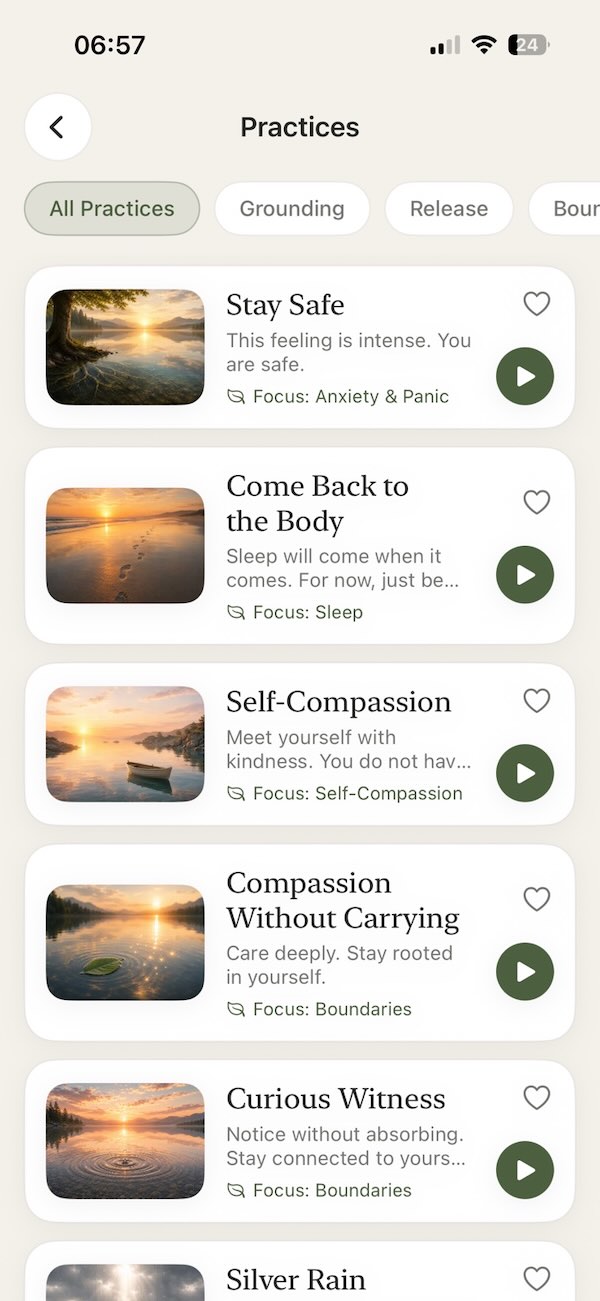
Having a calm, familiar practice you can lean on makes facing public situations feel more possible. Stay Safe is a gentle guided practice designed to calm the body, slow the breath, and rebuild a sense of safety — something you can use beforehand to steady yourself, or return to afterward to help your nervous system settle.

Try the practice
Stay Safe
Find solid ground when panic feels overwhelming.
Ready for more support?
Continue your journey in Aira
Access the full library of guided practices, tools, and resources anytime, anywhere.
- 10+Guided Practices
- AnxietyRelief Tools
- SleepSupport
- TrackYour Progress
- OfflineAccess
Available on iPhone and iPad