Comparison and Insecurity: Why Measuring Yourself Against Others Hurts
Why you compare yourself to others, how social media and the comparison trap fuel insecurity, why it feels like everyone's ahead, and how to step out of it.

You're having a perfectly fine day until you see it — someone else's achievement, relationship, body, home, milestone — and within seconds the fine day curdles into I'm behind, I'm not doing enough, what's wrong with me. The comparison happens almost before you notice it, and it leaves a residue of insecurity that can last for hours. If measuring yourself against other people is a near-constant background activity, you're caught in one of the most reliable thieves of contentment there is.
This is a guide to comparison and insecurity: why the mind does it, why it hurts so much, why social media makes it worse, and how to loosen its grip.
Why do I compare myself to others?
Comparison isn't a character flaw — it's built into us. The human brain evolved in small groups where status and belonging mattered for survival, so it constantly, automatically measures where you stand relative to others. This is social comparison, and everyone does it. The problem isn't that you compare; it's who you compare to and what you do with the result. The modern world hands the brain an endless supply of people to measure against, and a mind already prone to insecurity will reliably pick the comparison that makes it feel worst.
The comparison trap
What makes comparison so painful is that it's rigged. You compare your inside to other people's outside — your private doubts, struggles, and unfinished business against their visible highlights and curated surfaces. You know everything that's hard about your own life and almost nothing that's hard about theirs, so the contest is never fair. This is the comparison trap: it feels like gathering information about how you're doing, but it's really just feeding insecurity a stream of selectively chosen evidence.
Social media and comparison
Social media pours fuel on all of this. It's a continuous, scrollable feed of everyone's best moments, achievements, and most flattering angles — a highlight reel presented as ordinary life. Spend enough time there and a distorted baseline forms, where it seems as though everyone else is thriving, succeeding, and certain, while you're the only one struggling. Heavy social comparison online is increasingly linked with lower mood and higher anxiety, and most people can feel it directly: the scroll that leaves you flatter, smaller, more behind, and somehow inferior to where you were before you started.
Feeling behind in life
One of comparison's favourite stories is that you're behind — that there's a schedule for life (career, relationship, money, milestones) and everyone else is further along it than you. But there is no universal timeline; the idea of being behind assumes a single track that doesn't actually exist. People move through life on wildly different paths and timings, and the ones who look ahead in one area are often behind in another you can't see. Feeling behind is comparison disguised as fact.
Comparison, insecurity, and self-worth
Comparison hurts most when self-worth is shaky. If your sense of being okay depends on measuring up, then every comparison becomes a referendum on your value, and other people's success starts to feel like your failure. This is also where jealousy and envy come from — not badness, but the painful sense that someone has the worth or the life you fear you lack. The comparison and the insecurity feed each other: low self-worth drives the comparing, and the comparing deepens the insecurity.
How to step out of comparison
You can't switch off a survival instinct, but you can change your relationship with it.
Catch it and name it
The moment you feel that downward lurch, label it: I'm comparing. Naming interrupts the automatic slide from a single comparison into a whole story about your inadequacy.
Curate your inputs
If certain accounts, feeds, or even people reliably leave you feeling worse, that's real data. Reducing the supply of comparison material isn't avoidance; it's protecting your attention.
Compare inside to inside, or not at all
Remember you're seeing a highlight reel, not a life. Better still, measure against your own past rather than someone else's present — the only fair comparison is with where you used to be.
Build worth that isn't relative
The deepest antidote is a sense of worth that doesn't depend on ranking. When you're okay regardless of where you place, other people's wins stop feeling like your losses.
The fuller picture
The lurch always lands on the same conclusion: everyone else is ahead and thriving — I'm behind, and something is wrong with me. It feels true because the evidence looks overwhelming: post after post, life after life, all seemingly further along than yours.
But the contest is rigged, and seeing how is most of the relief. You're comparing your inside to other people's outside — your private doubts and unfinished business against their visible highlights and curated surfaces. You know everything hard about your own life and almost nothing hard about theirs, so the match was never fair. Social media makes it worse by presenting a highlight reel as ordinary life, until it seems everyone is thriving and you're the only one struggling. And behind assumes a single timeline that doesn't exist — people move on wildly different paths, and whoever looks ahead in one area is usually behind in another you can't see. So the feeling isn't information about your worth; it's comparison disguised as fact. Someone else's bloom doesn't make yours less real. The only fair comparison is with where you used to be.
Final thoughts
If you compare yourself constantly and feel chronically insecure, you're not vain or ungrateful — you have a normal human brain in an environment engineered to exploit it, layered on a sense of worth that hasn't yet found steady ground. The goal isn't to never notice other people; it's to stop letting an unfair, selective contest set the value of your life. Someone else's bloom doesn't make yours less real, and there is no timeline you're failing. One caught comparison, one breath, one return to your own path at a time.
Try a gentle practice
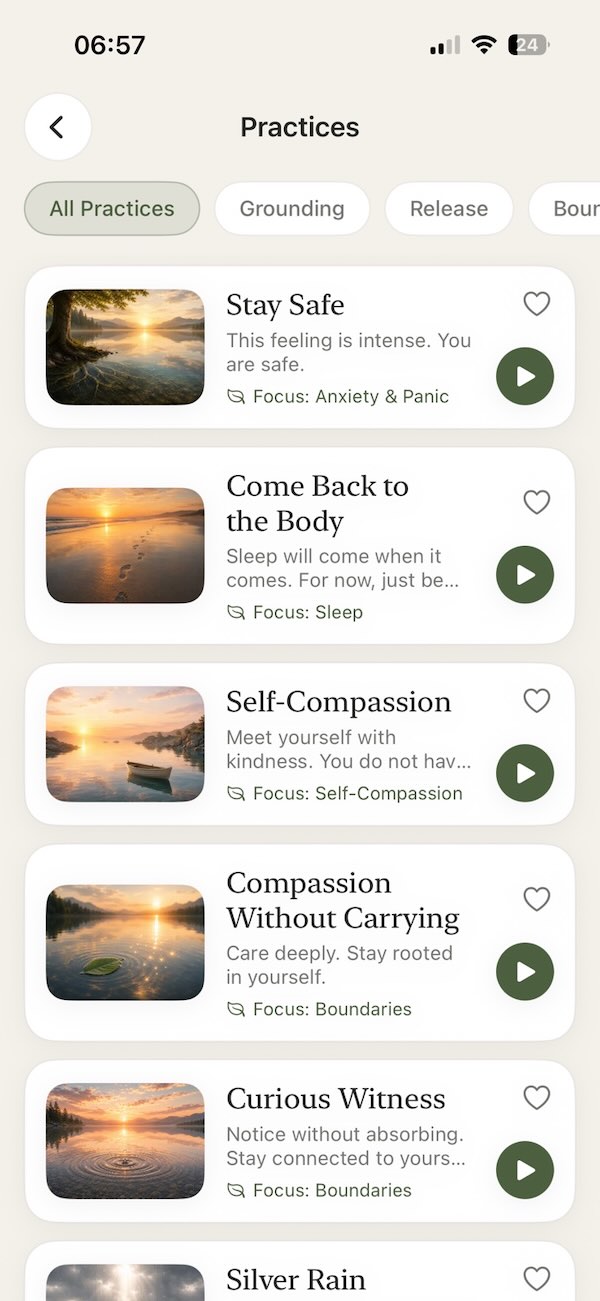
Comparison pulls your attention outward and upward — onto everyone else's life and how you measure against it. Curious Witness is a gentle practice for stepping back from that — a way to notice the comparing mind without being run by it, let others' lives be theirs, and return to your own, where your worth was never up for ranking.

Try the practice
Curious Witness
Notice without needing to change.
Ready for more support?
Continue your journey in Aira
Access the full library of guided practices, tools, and resources anytime, anywhere.
- 10+Guided Practices
- AnxietyRelief Tools
- SleepSupport
- TrackYour Progress
- OfflineAccess
Available on iPhone and iPad