Panic Attack vs Anxiety Attack: What's the Difference?
Panic attack or anxiety attack? Why one is a clinical term and the other isn't, how they differ in onset, intensity and duration, and how to tell which you experienced.

"Was that a panic attack or an anxiety attack?" It's one of the most common questions people ask after a wave of intense fear or worry — and a confusing one, because the two terms get used interchangeably all the time. The short answer may surprise you: one of them is a clearly defined experience, and the other is an everyday phrase rather than a clinical term. Understanding the difference can make what you felt less frightening and easier to respond to.
If you've been trying to work out which one you experienced, you're not alone. Let's gently untangle the two.
Is there really a difference?
Yes — though not quite the difference most people expect. Panic attack is a recognised clinical term with a specific meaning. Anxiety attack is not a formal diagnostic term at all; it's a phrase people use to describe a period of intense anxiety. So when we compare them, we're really comparing a defined experience (panic) with a common, looser description (anxiety that has become overwhelming). They overlap — but they tend to feel different.
What is a panic attack?
A panic attack is a sudden surge of intense fear or discomfort that rises quickly and usually peaks within about ten minutes. It tends to come with strong physical symptoms — a racing heart, chest tightness, shortness of breath, dizziness, shaking, sweating, nausea, tingling, or a feeling of unreality — along with frightening thoughts such as "I'm losing control" or "something is seriously wrong." Panic attacks can be expected (triggered by a known fear) or seem to arrive out of nowhere. Their defining features are how sudden, how intense, and how physical they are.
What is an anxiety attack?
"Anxiety attack" is an informal phrase rather than a clinical diagnosis. People usually use it to describe a stretch of intense, overwhelming anxiety — the kind that builds in response to a stressor like a deadline, a conflict, a health worry, or a difficult situation. Compared with panic, an anxiety attack often builds more gradually, feels more tied to a specific worry, and can simmer for a longer period rather than spiking and falling. Physical symptoms are usually present, but they tend to be less overwhelming than those of a full panic attack.
Panic attack vs anxiety attack: the key differences
Although they overlap, a few patterns usually set them apart:
- Onset: Panic tends to arrive suddenly, sometimes out of nowhere; anxiety usually builds more gradually.
- Intensity: Panic peaks at a very high, often overwhelming level; anxiety is typically less acute, though it can still be very distressing.
- Duration: A panic attack usually peaks within minutes and then eases; anxiety can persist for hours, days, or longer at a lower intensity.
- Trigger: Anxiety is often tied to an identifiable worry or stressor; panic can occur with no obvious trigger at all.
- Focus: Panic is intensely physical — heart, breathing, body; anxiety often leans more toward worried, racing thoughts.
These are tendencies, not strict rules. Real experiences don't always fit neatly into one box.
How to tell which one you experienced
A few gentle questions can help. Did it come on suddenly, or build slowly? Did it peak and pass within minutes, or linger? Was it mostly overwhelming physical sensations, or mostly worried thoughts? Was there a clear trigger, or did it seem to arrive from nowhere?
Sudden, intense, physical, and short usually points toward panic. Gradual, persistent, thought-heavy, and tied to a stressor usually points toward anxiety. You don't need to label it perfectly — noticing the pattern is what helps.
Can you have both at once?
Often, yes. Anxiety and panic sit on the same spectrum, and one can lead into the other. A period of mounting anxiety can build until the nervous system tips into a full panic attack; equally, a panic attack can leave behind lingering anxiety and a fear of the next one. Many people experience the two woven together — which is part of why the terms get used interchangeably in the first place.
What helps in the moment
For panic, the most reliable tools are slowing the breath, so the exhale is longer than the inhale, and grounding your attention in your senses and surroundings — both signal safety to an activated nervous system. For anxiety, it often helps to meet the worry more directly: naming it, gently questioning catastrophic predictions, and bringing attention back to the present. In both cases, the aim isn't to force the feeling away, but to help your body and mind feel safe enough to settle.
When to seek support
If panic attacks or anxiety are happening often, feel hard to manage, or are affecting your daily life, it's worth speaking with a doctor or therapist. Panic-focused therapy such as CBT is well established and effective, and a professional can help rule out other causes and offer support tailored to you. And because intense physical symptoms can occasionally have medical causes, any new or unexplained symptoms are always worth getting checked for peace of mind.
Frequently asked questions
Is an anxiety attack the same as a panic attack?
Not exactly. "Panic attack" is a defined clinical term for a sudden, intense surge of fear that peaks within minutes, while "anxiety attack" is an informal phrase for a period of overwhelming anxiety that usually builds more gradually. They overlap and often occur together, but they tend to feel different.
What's the main difference between a panic attack and an anxiety attack?
The clearest differences are speed and intensity. Panic arrives suddenly, peaks very high, and is intensely physical before easing within minutes; anxiety tends to build gradually, stay at a lower intensity, lean more toward worried thoughts, and linger much longer.
How long does each last?
A panic attack usually peaks within about ten minutes and then begins to subside, though you may feel drained afterward. Anxiety can persist for hours or even days at a lower level, rising and falling rather than spiking and passing.
Can anxiety turn into a panic attack?
Yes. Mounting anxiety can build until the nervous system tips over into a full panic attack. This is common, and it's one reason the two experiences are so often confused.
Is "anxiety attack" a real medical term?
Not formally. It's a widely used everyday phrase rather than a clinical diagnosis, whereas "panic attack" is the recognised clinical term. Using "anxiety attack" in conversation is completely fine — it simply describes intense anxiety rather than naming a specific diagnosis.
Try a gentle practice
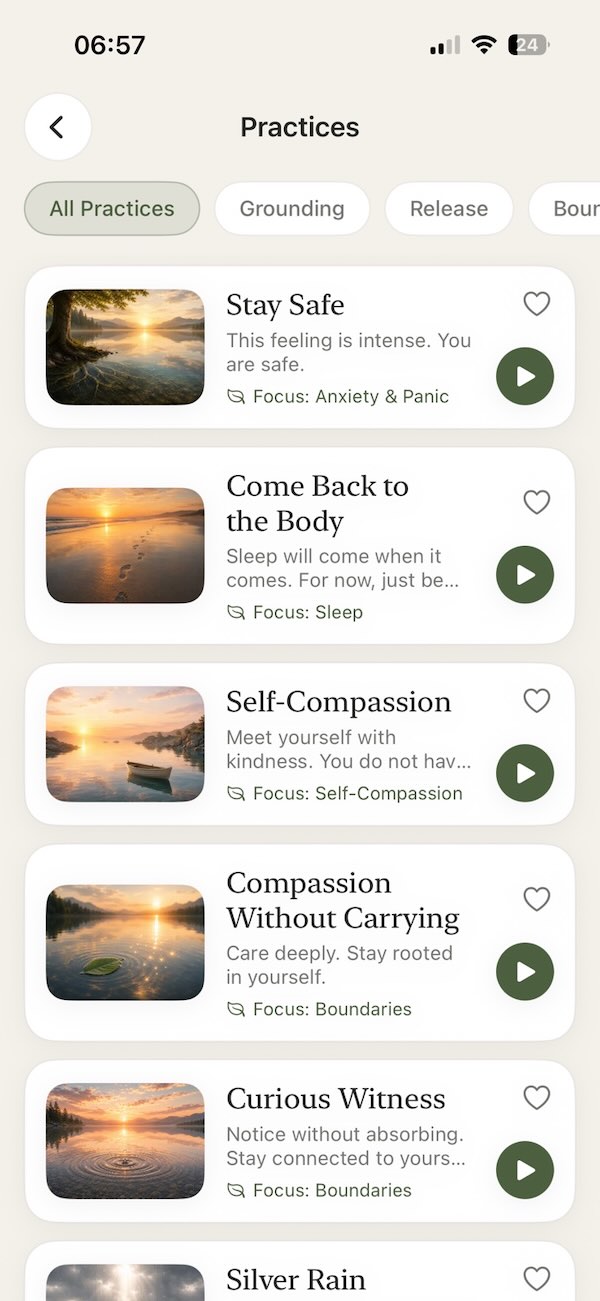
Whether what you felt was panic, anxiety, or a mix of both, the nervous system responds to the same thing: a sense of safety. Stay Safe is a gentle guided practice designed to calm the body, slow the breath, and steady you through moments of panic and overwhelm — a place to return to whenever the wave feels too big.

Try the practice
Stay Safe
Find solid ground when panic feels overwhelming.
Ready for more support?
Continue your journey in Aira
Access the full library of guided practices, tools, and resources anytime, anywhere.
- 10+Guided Practices
- AnxietyRelief Tools
- SleepSupport
- TrackYour Progress
- OfflineAccess
Available on iPhone and iPad