Panic Disorder: Symptoms, Causes, and How It's Treated
What panic disorder is, how it differs from having an occasional panic attack, its symptoms and causes, and the treatment and support that genuinely help.

Having a panic attack is frightening. Wondering whether you now have panic disorder can be frightening in a different way. If you've started having repeated panic attacks — and found yourself living in fear of the next one — you may be wondering whether this has a name, what it means, and whether it can get better.
It does have a name, it is well understood, and it is one of the most treatable anxiety conditions there is. Let's walk through what panic disorder actually is, gently and clearly.
What is panic disorder?
Panic disorder is a recognised anxiety condition defined by recurring, often unexpected panic attacks, together with ongoing worry about having more of them. It isn't the same as having a single panic attack, or even a few during a stressful time. What makes it a disorder is the pattern: the attacks keep returning, and the fear of them begins to shape how a person lives — what they do, where they go, and how closely they watch their own body.
In other words, panic disorder is less about the attacks alone and more about the cycle of fear that grows around them.
Panic disorder vs an occasional panic attack
Many people have a panic attack at some point and never develop panic disorder. A single attack, or a handful during a hard period, is common and usually passes as life settles. Panic disorder is different in three ways: the attacks recur, at least some arrive unexpectedly rather than only in response to an obvious trigger, and the person develops persistent anxiety about when the next one will strike. It's this third part — the fear of fear — that most distinguishes the disorder from an isolated experience.
Symptoms of panic disorder
The panic attacks themselves bring the familiar physical surge: a racing heart, chest tightness, shortness of breath, dizziness, shaking, sweating, nausea, tingling, a feeling of unreality, and intense fear — often a fear of dying, losing control, or going crazy. But panic disorder also includes symptoms between attacks:
- persistent worry about having another attack
- changes in behaviour to avoid attacks (avoiding places, situations, or activities)
- constant monitoring of physical sensations
- a background sense of dread or being on edge
The attacks are the visible part; the ongoing anticipatory anxiety is the quieter engine underneath.
The fear-of-fear cycle
At the heart of panic disorder is a self-reinforcing loop. A panic attack is so unpleasant that the brain becomes determined to prevent the next one. So it starts scanning the body for early warning signs — a slightly fast heartbeat, a moment of dizziness — and treats those normal sensations as threats. That vigilance creates anxiety, anxiety produces more physical sensations, and those sensations can tip into another attack. The fear of panic becomes a cause of panic. Understanding this loop is often the first real step toward loosening it.
What causes panic disorder?
There's rarely a single cause. Panic disorder usually emerges from a combination of factors: a genetic or temperamental tendency toward anxiety, periods of high or prolonged stress, a nervous system that has become highly sensitive to its own signals, and sometimes a frightening first attack that sets the fear-of-fear cycle in motion. None of these mean something is wrong with you as a person — they describe a system that has become over-protective, not a personal failing.
How panic disorder is diagnosed
Only a qualified professional can diagnose panic disorder. A doctor or therapist will usually ask about the pattern of attacks, the worry between them, any avoidance, and how long it's been going on, and will often rule out physical causes first. If you recognise yourself in this article, that isn't a diagnosis — but it may be a sign that talking to a professional could help.
How panic disorder is treated
Here's the genuinely hopeful part: panic disorder responds very well to treatment. The most established approach is cognitive behavioural therapy (CBT), often including gentle, gradual exposure that helps the nervous system relearn that the sensations of panic are not dangerous. Many people also benefit from breathing and grounding skills, nervous-system regulation, lifestyle support such as sleep, reduced stimulants and movement, and, for some, medication — which is a decision to make with a doctor. Treatment doesn't usually aim to make you never feel anxious again; it aims to break the fear-of-fear cycle so panic loses its grip.
Can panic disorder go away?
For many people, yes — panic disorder can improve significantly or resolve with the right support. Because so much of it is driven by the fear-of-fear loop, learning that panic is survivable and not dangerous can change the whole pattern. Recovery isn't always perfectly linear, and setbacks are normal, but the overall direction for most people who get support is toward far less fear and far more freedom.
Living with panic disorder
While you're working through it, small things help: steadying routines, enough sleep, easing off caffeine and other stimulants, gentle movement, and practices that signal safety to the nervous system. Just as importantly, try to meet yourself with patience rather than frustration. Panic disorder isn't weakness or drama — it's an over-active alarm system, and alarm systems can be retuned.
Frequently asked questions
What is panic disorder?
Panic disorder is an anxiety condition defined by recurring, often unexpected panic attacks plus ongoing worry about having more of them. It's the pattern — repeated attacks and persistent fear of the next one — that distinguishes it from a single panic attack.
What's the difference between a panic attack and panic disorder?
A panic attack is a single episode of intense fear and physical symptoms. Panic disorder is the ongoing condition in which attacks recur, some arrive unexpectedly, and the person develops lasting anxiety about them. Having one panic attack doesn't mean you have panic disorder.
What causes panic disorder?
It usually comes from a mix of factors: a genetic or temperamental tendency toward anxiety, prolonged stress, a nervous system that has become highly sensitive to its own signals, and sometimes a frightening first attack that starts a fear-of-fear cycle. There's rarely one single cause.
Is panic disorder treatable?
Very much so. It's one of the most treatable anxiety conditions, and cognitive behavioural therapy (CBT) is especially effective. Breathing and grounding skills, nervous-system regulation, and sometimes medication decided with a doctor also help.
Can panic disorder go away on its own?
Sometimes it eases as stress lifts, but because it's driven by a self-reinforcing fear-of-fear cycle, it often persists without support. The encouraging news is that treatment works well, so you don't have to wait and hope — help is available and effective.
Try a gentle practice
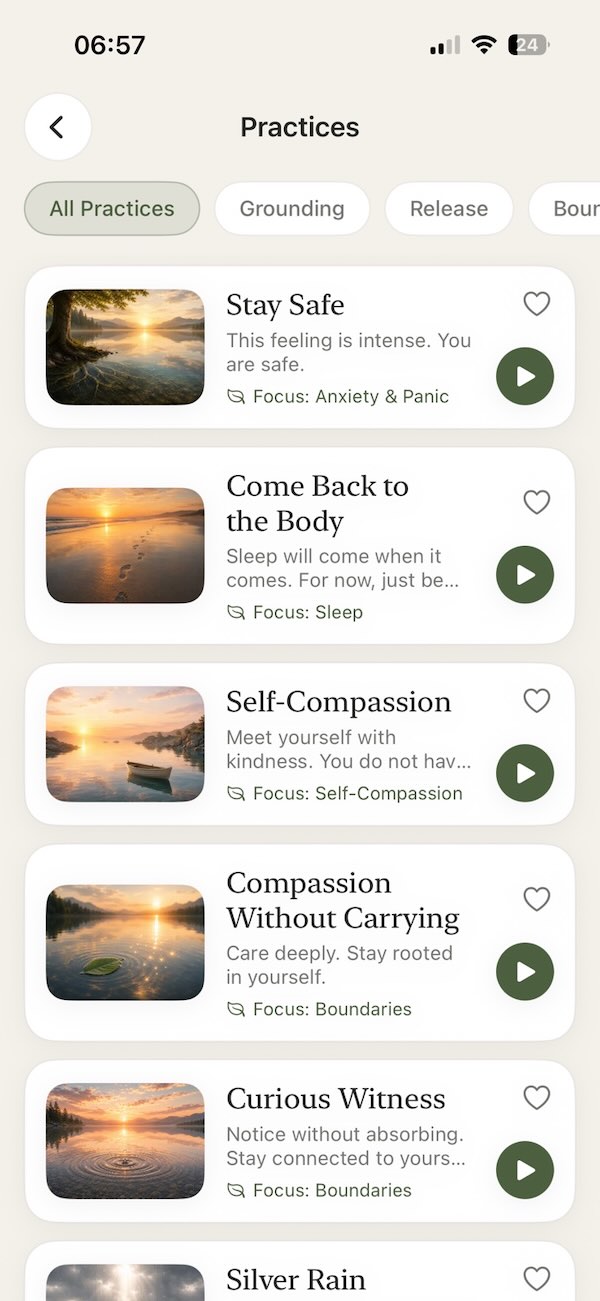
Much of panic disorder is the nervous system learning that its own sensations aren't dangerous. Stay Safe is a gentle guided practice designed to calm the body, slow the breath, and rebuild a felt sense of safety — a steadying companion alongside any support you're working through.

Try the practice
Stay Safe
Find solid ground when panic feels overwhelming.
Ready for more support?
Continue your journey in Aira
Access the full library of guided practices, tools, and resources anytime, anywhere.
- 10+Guided Practices
- AnxietyRelief Tools
- SleepSupport
- TrackYour Progress
- OfflineAccess
Available on iPhone and iPad