Panic Attacks While Driving: Why They Happen and How to Stay Safe
Why panic strikes in the car — in traffic, on the highway, driving alone — how to stay grounded and safe in the moment, and how to rebuild driving confidence afterward.

Few experiences feel more frightening than having a panic attack while driving. You're moving, you may be surrounded by traffic, you may be far from home — and suddenly your body begins reacting as though something dangerous is happening. Your heart races, your chest tightens, your hands feel shaky, your breathing changes. And one terrifying thought may appear: "What if I lose control?"
If you've experienced panic while driving, you are not alone. Many people experience panic attacks in cars, on highways, at traffic lights, or during longer trips — and while these experiences can feel overwhelming, they're far more common than most people realize.
What does it feel like?
A panic attack while driving often includes the same symptoms as any other: racing heart, chest tightness, dizziness, shaking, nausea, sweating, tingling sensations, shortness of breath, intense fear. But driving adds another layer. Many people also experience fear of crashing, fear of losing control, fear of being trapped, fear of not being able to escape, or fear of causing harm. This is why driving anxiety and panic often feel especially intense.
Why do panic attacks happen while driving?
The answer is usually not about driving itself. Driving simply creates conditions that can activate an already stressed nervous system. Common factors include chronic anxiety, stress, exhaustion, previous panic attacks, fear of being trapped, fear of losing control, and hyperawareness of bodily sensations. For some people the first panic attack while driving seems completely unexpected; for others, anxiety gradually builds until panic eventually appears.
Panic in traffic
Traffic is one of the most common situations where panic occurs, because traffic removes options. You can't simply leave. You can't always pull over immediately. You may feel stuck, and the nervous system often interprets this lack of perceived escape as danger. This can create panic in traffic, anxiety in traffic jams, fear of being trapped, and increased body tension. The feeling of being unable to leave often becomes more frightening than the traffic itself.
Panic on the highway
Highways can be particularly challenging, because exits feel far away, traffic moves quickly, stopping is difficult, and there are fewer immediate escape options. As a result, some people develop a fear of highways after experiencing panic. That fear is understandable — but it's often the fear of panic itself, rather than the highway, that becomes the problem.
Fear of another panic attack
For many people, the first panic attack isn't what changes their driving — the fear of another one is. You may begin thinking: "What if it happens again? What if I panic on the highway? What if I can't pull over? What if I'm alone?" Over time, the nervous system starts scanning constantly for danger, and ironically, this fear often increases anxiety.
Driving alone
Driving alone can feel particularly vulnerable. When another person is present, there may be a sense of support; when you're alone, the mind may begin asking, "What if nobody can help me? What if something happens? What if I panic and I'm by myself?" These thoughts can increase nervous system activation. But remember: millions of people drive safely every day while experiencing anxiety symptoms. Anxiety does not automatically make you unsafe.
What's actually happening?
During panic, your nervous system enters a state of protection. The body behaves as though danger is present — the heart beats faster, breathing changes, muscles tense, attention narrows. The problem is that the alarm system becomes activated when no actual emergency exists. The sensations feel dangerous, but panic attacks themselves are not causing you to lose control of the vehicle. The fear often feels far larger than the actual risk.
How to stay grounded while driving
If panic begins while you're driving, your first goal is not to eliminate it immediately — it's to stay grounded and safe.
Remind yourself what's happening
Try saying: "This is panic. My nervous system is activated. These feelings will pass. I can continue one moment at a time."
Slow your breathing
Try inhaling for 4 seconds and exhaling for 6. Don't force large breaths — gentle breathing works better.
Keep your eyes on the road
Avoid monitoring your body constantly. Instead, notice the road ahead, the color of nearby vehicles, road signs, and the feeling of your hands on the steering wheel. Grounding in the environment helps reduce panic.
Pull over if necessary
If symptoms feel overwhelming, it's perfectly okay to pull over somewhere safe. Taking a few minutes to regulate your nervous system isn't failure — it's self-care.
Why avoidance makes it worse
After a panic attack, many people start avoiding situations that feel risky — highways, driving alone, long distances, traffic. At first, avoidance creates relief. But over time, it teaches the nervous system that "driving is dangerous." The fear grows larger and the safe zone becomes smaller. This is why recovery often involves gradually rebuilding confidence rather than shrinking your world.
Rebuilding trust
Recovery isn't about forcing yourself into terrifying situations — it's about rebuilding trust slowly. You might begin with short drives, familiar roads, low-traffic times, or nearby destinations. Each successful experience teaches your nervous system: "I can do this. I can handle anxiety. I am capable of driving safely." Confidence usually returns through repetition, not by waiting for fear to disappear.
The fuller picture
Behind the white-knuckle grip is one specific fear: if panic hits while I'm driving, I'll lose control of the car and crash — maybe hurt someone. It feels true because panic makes you feel wildly out of control on the inside, and it seems obvious that inner chaos must spill out into the hands on the wheel.
But feeling out of control and being out of control are two different things. Panic is an internal alarm — a surge of sensation and fear — not a force that seizes the steering or the brakes; the proof is that huge numbers of people drive safely through anxiety every single day. The 'trapped, can't escape' feeling that makes car panic so intense is the sensitised alarm misreading 'hard to pull over' as 'in danger,' not an actual trap — and you always have the option to slow down and stop somewhere safe, which is a choice, not a failure. Notice, too, the belief hiding underneath: I have to feel calm before I can drive. It's usually backwards. Confidence doesn't arrive first and grant permission to drive; it's built by driving — short, familiar trips at first — while some anxiety is still along for the ride, until your nervous system learns the road was never the threat. You don't have to wait for the fear to go. You only have to let it come along while you keep steering.
Final thoughts
A panic attack while driving can feel terrifying. It can make roads feel unsafe, driving feel impossible, and your world feel smaller. But panic is not proof that you're incapable of driving — more often, it's proof that your nervous system became overwhelmed. The road is not the enemy. The car is not the enemy. Even panic is not the enemy. The goal isn't to eliminate every anxious feeling; it's to learn that you can move through those feelings safely. One mile. One breath. One drive at a time.
Try a gentle practice
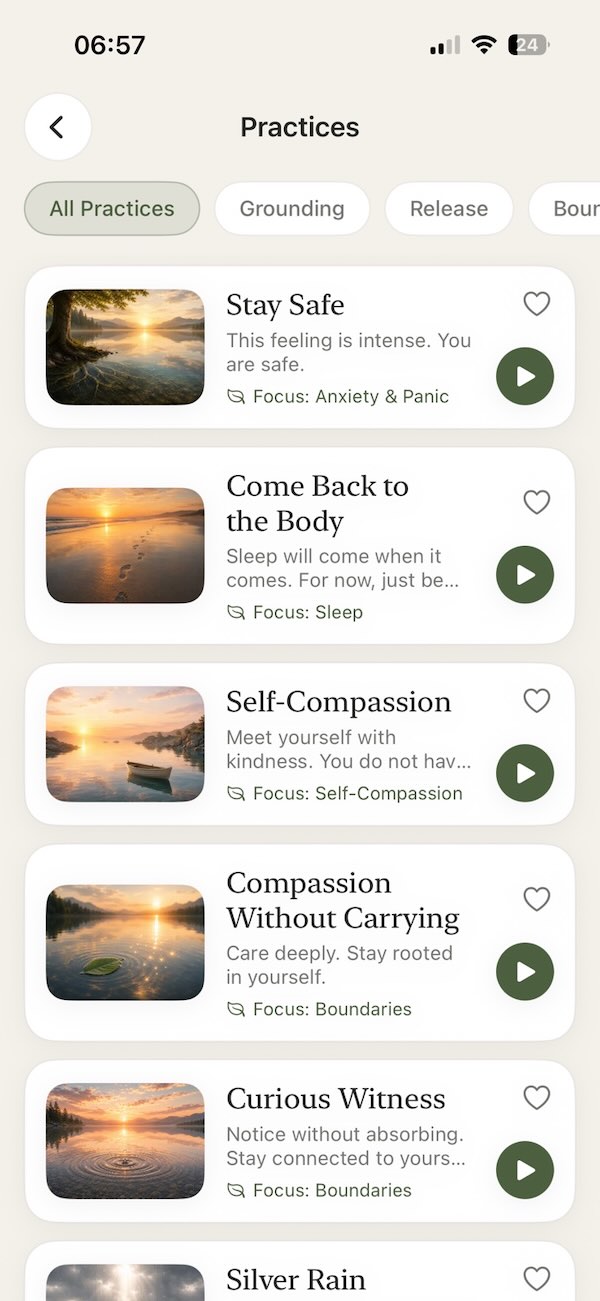
When panic appears behind the wheel, it can feel like there's nowhere to go. Stay Safe is a guided grounding and breathing practice designed to help calm panic, reduce fear, and reconnect with a sense of safety wherever you are — a supportive companion for moments when anxiety feels bigger than the road ahead. (When you're driving, use it only once you've safely stopped.)

Try the practice
Stay Safe
Find solid ground when panic feels overwhelming.
Ready for more support?
Continue your journey in Aira
Access the full library of guided practices, tools, and resources anytime, anywhere.
- 10+Guided Practices
- AnxietyRelief Tools
- SleepSupport
- TrackYour Progress
- OfflineAccess
Available on iPhone and iPad