Why One Bad Night of Sleep Undoes You
Why one bad night of sleep can send a sensitive or recovering nervous system back to square one, why the next day feels so fragile, and how to recover without spiralling.

You sleep badly for a single night, and the next day you're barely functioning — anxious, fragile, tearful, tense, thrown by things you'd normally take in stride. It can feel wildly out of proportion: it was just one night, so why does it undo you so completely? If a single bad night sends you back to square one while other people seem to shrug it off, there's a real reason, and understanding it changes how much power that bad night has over you.
This is a guide to why one bad night hits so hard: what it does to a sensitive or recovering nervous system, why the next day feels like a step backward, and how to recover without spiralling.
Why one bad night hits so hard
Sleep isn't only physical rest — it's when your nervous system does its emotional recovery, processing the day and resetting your capacity to cope. Miss it, and you start the next day with a narrower window of tolerance: less buffer between calm and overwhelm, so smaller things tip you over. For most well-resourced systems there's enough slack to absorb one rough night. But a sensitive or already-depleted system is running with little reserve to begin with, so removing a night's recovery has an outsized effect. You're not overreacting; you genuinely have less capacity that day, because the thing that rebuilds it didn't happen.
Why the next day feels like a step back
Running on a narrowed window, your whole system becomes more reactive. Your threat-detection is more trigger-happy, your emotions are closer to the surface, your tolerance for noise and stimulation drops, and the background tension you'd been easing comes back louder. Things you'd handled fine the day before suddenly feel like too much. This is why a bad night can feel like it erased your progress overnight — not because the progress is gone, but because a tired system can't access it as easily. The capacity is still there; it's just temporarily harder to reach.
Why it feels like you've undone your progress
The most demoralising part is the story that comes with it: I've ruined everything, I'm back to the beginning. It's worth seeing this clearly, because it isn't true. One bad night is a dip, not a reset. Recovery isn't a straight line — it moves through better and worse days, and a rough night is one of the worse ones, not a return to zero. Your baseline hasn't collapsed; it's just dipped for a day, and it re-widens as soon as you sleep again. Treating a dip as a catastrophe adds a second layer of stress on top of the tiredness, which is often what actually drags the day down further.
How to recover from a bad night
The single most useful thing is to not catastrophise it — to meet the tired, fragile day with this is a dip, it will pass rather than alarm. From there, be gentle: lower your demands where you can, expect to have less capacity, and don't schedule the hardest things for a day you're running on empty. Protect the next night without gripping at it — keep your usual rhythms, get daylight and gentle movement during the day, and resist over-correcting with panic-naps or an anxious early bedtime that just adds pressure. Let yourself rest without guilt; a depleted system is asking for recovery, not criticism. And where the tension has crept back, discharge it gently rather than bracing against it. The aim is to ride out one low day without turning it into three.
Protecting sleep so bad nights get rarer
Because sleep sets your capacity for everything else, it's worth protecting as a genuine first priority rather than the thing that gets sacrificed. You can't guarantee a perfect night, but consistent rhythms, a protected wind-down, and an environment your system feels safe in all tilt the odds toward good sleep and make the bad nights rarer and less severe. Over time, as your overall system steadies and your window widens, a single bad night also stops hitting quite so hard — a more resourced system has more slack to absorb one. Protecting sleep isn't fussiness; it's maintaining the foundation the rest of your recovery stands on.
The fuller picture
Underneath the bad-day spiral is one belief: one bad night has undone all my progress — I'm back to square one. It feels true because the fragile, reactive feeling the next day is so vivid and so familiar, exactly like the state you worked hard to climb out of.
But the feeling is a dip, not a verdict. Your progress isn't stored in last night's sleep; it's in a system that's been slowly widening its capacity, and one missed night narrows that window temporarily without erasing the widening. What you're feeling isn't your baseline collapsing — it's a resourced system running low on resources for a day, which is a completely different thing from starting over. And the catastrophe story does real damage of its own: believing you're back to zero adds a fresh layer of stress that narrows the window further, turning one hard day into several. So the accurate read isn't "I've ruined everything" — it's "I'm tired today, and tired passes." You don't have to rebuild anything. You just have to get through one low day gently and let the next night's sleep restore what this one missed.
When to seek support
If bad nights are frequent rather than occasional, if your sleep rarely restores you, or if the day-after crashes are severe or affecting your ability to function, it's worth getting support. A doctor can help with persistent sleep problems, and a therapist can help with the anxiety and depletion that both disrupt sleep and make its loss hit harder. If one bad night reliably undoes you, that's often a sign your overall reserves are running low — and that's worth tending to, not toughing out.
Final thoughts
One bad night undoes you because sleep is what rebuilds your capacity, and a sensitive or depleted system has little to spare when a night's recovery goes missing. But a bad night is a dip, not a demolition. Your progress is still there, just temporarily harder to reach, and it comes back as soon as you sleep. Meet the tired day gently, resist the story that you're back to the start, and protect the night ahead — and one hard night stays one hard night. The window narrows for a day. Then it widens again. One gentle recovery at a time.
Try a gentle practice
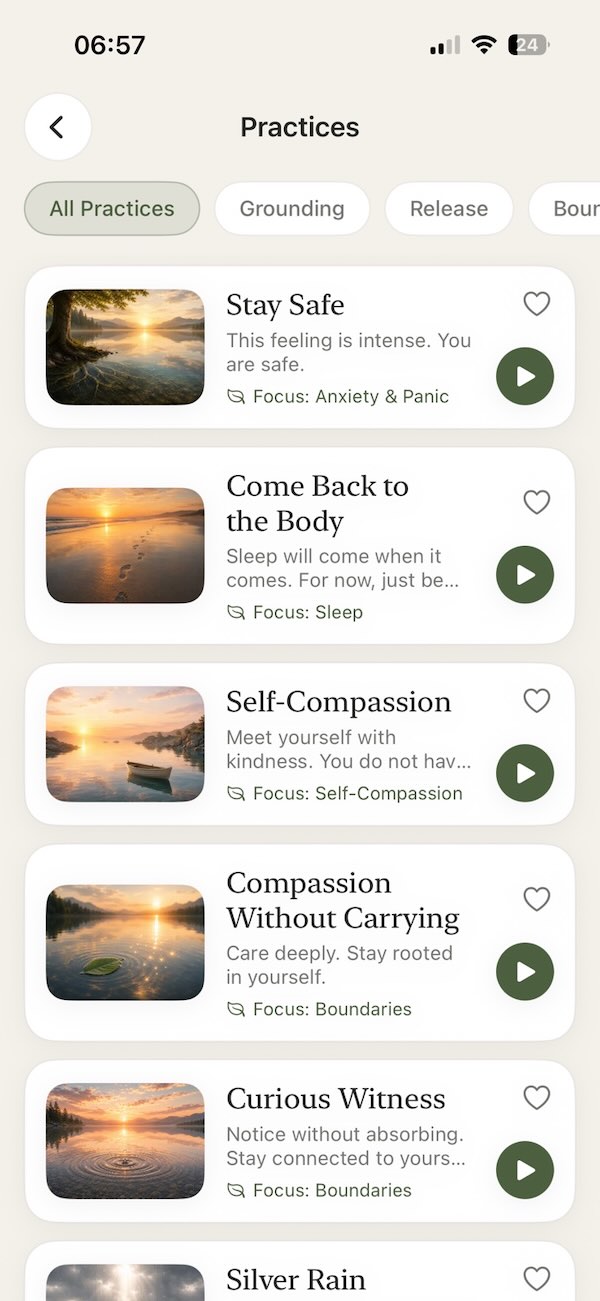
After a bad night, the hardest thing is often letting yourself rest instead of pushing through in a panic. Permission to Rest is a gentle practice for exactly that — a reminder that a depleted system deserves recovery rather than criticism, that you don't have to earn rest by getting everything done first, and that letting yourself replenish is how a bad day stays just one day.

Try the practice
Permission to Rest
You've done enough. You're allowed to rest.
Ready for more support?
Continue your journey in Aira
Access the full library of guided practices, tools, and resources anytime, anywhere.
- 10+Guided Practices
- AnxietyRelief Tools
- SleepSupport
- TrackYour Progress
- OfflineAccess
Available on iPhone and iPad