Work Stress: How to Manage Stress at Your Job
Why your job causes stress, how work stress affects you, and practical ways to manage stress at work — breaks, in-the-moment tools, and boundaries.

For many people, work is the single biggest source of stress — deadlines, workload, pressure, difficult people, the feeling of never being quite caught up. Some pressure at work is normal, but when stress becomes constant, it follows you home, wears you down, and can eventually lead to burnout. The good news is there's a lot you can do to manage stress at work, even when you can't change the job itself.
This is a guide to work stress: why your job stresses you, and how to manage it day to day.
What causes work stress?
Work stress usually comes from a mismatch between the demands on you and the resources or control you have to meet them. Common drivers include too much workload or too little time; long hours with not enough recovery; lack of control over how you work; unclear expectations; difficult relationships with colleagues or managers; job insecurity; and the pressure to always be available, especially with remote and digital work. Often it's not one thing but several stacking up, with too little respite in between.
How work stress affects you
Because work takes up so much of life, its stress spills over. It can leave you tense, exhausted, and irritable; make it hard to switch off or sleep; follow you into evenings and weekends; and steadily drain your energy and motivation. Left unchecked, chronic work stress is one of the most common routes to burnout — the deep depletion that comes from prolonged, unmanaged stress (burnout has its own dedicated guides). Noticing work stress early, before it reaches that point, makes it far easier to manage.
Managing stress during the workday
There's more within your control than it can feel like. Take real breaks — even short pauses to breathe, move, or step away reset your system and improve focus. Use quick stress-relief tools between tasks: a few slow breaths, a stretch, a moment of grounding. Work in focused blocks rather than constant multitasking, which raises stress and lowers output. Tackle one thing at a time when overwhelmed, rather than trying to hold everything at once. And protect small moments of recovery through the day, instead of running flat-out until you crash.
Boundaries and the bigger picture
Managing work stress also means boundaries. Where you can, protect your time — not checking email around the clock, taking your actual breaks and leave, and pushing back on unrealistic demands (boundaries at work have their own guide). It helps to be realistic about what's achievable and to ease the extra pressure perfectionism adds. And it's worth stepping back periodically to ask whether the level of stress is sustainable — sometimes managing work stress means smaller daily adjustments, and sometimes it means bigger conversations about workload, role, or, occasionally, the job itself.
When work stress is too much
If work stress is constant, following you everywhere, and affecting your health, sleep, mood, or relationships, it's worth taking seriously rather than just pushing through. That might mean talking to your manager about workload, using support available through work, or speaking to a doctor if it's affecting your health — especially if you're heading toward burnout. Persistent work stress that won't ease isn't a sign you're not coping well enough; it's a signal that something in the balance needs to change.
Final thoughts
Work stress is one of the most common stresses there is — and while you can't always change the job, you usually have more room than it feels to manage how it affects you. Real breaks, in-the-moment tools, boundaries, and a periodic honest look at what's sustainable all help keep work stress from taking over. Your job is part of your life, not the whole of it, and protecting your wellbeing within it is both reasonable and necessary. One break, one boundary, one steadier day at a time.
If work stress is seriously affecting your health or wellbeing, please consider speaking with your doctor or a professional — it's worth taking seriously.
Try a gentle practice
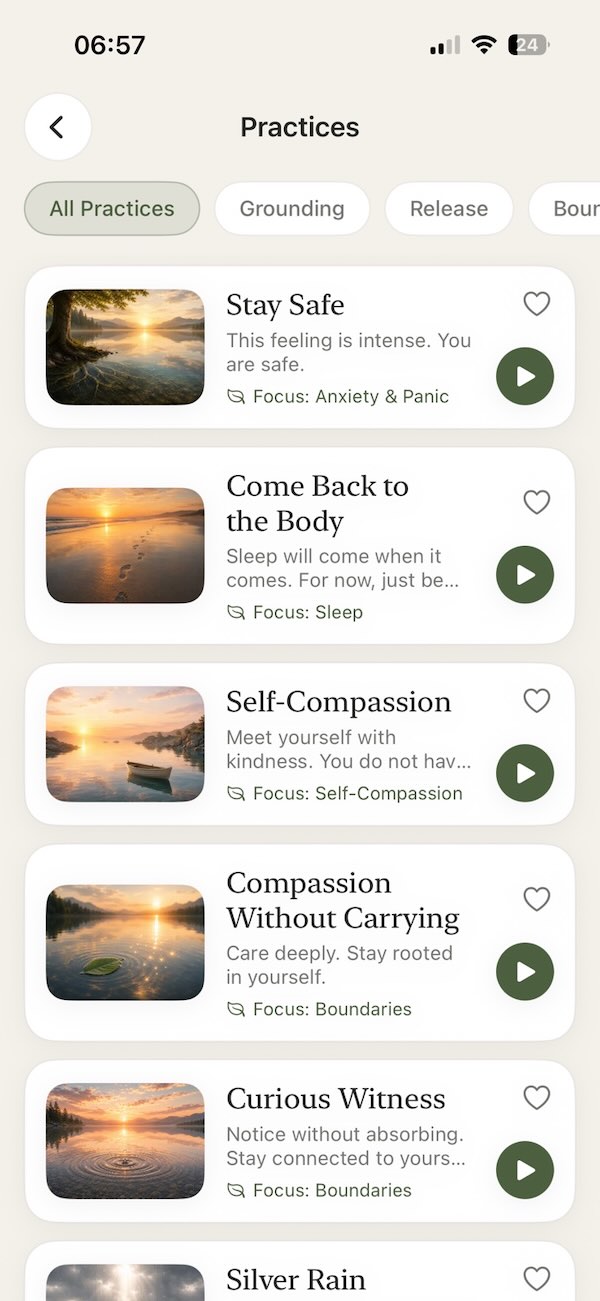
Managing work stress means finding moments of steadiness in a demanding day. Stay Safe is a gentle practice for exactly that — a way to settle your system and return to a felt sense of safety and calm, even in the middle of a pressured, stressful workday.

Try the practice
Stay Safe
Find solid ground when panic feels overwhelming.
Ready for more support?
Continue your journey in Aira
Access the full library of guided practices, tools, and resources anytime, anywhere.
- 10+Guided Practices
- AnxietyRelief Tools
- SleepSupport
- TrackYour Progress
- OfflineAccess
Available on iPhone and iPad